ADVERTISEMENT

Philippine agricultural trade surges in July

Published Aug 30, 2025 02:28 pm
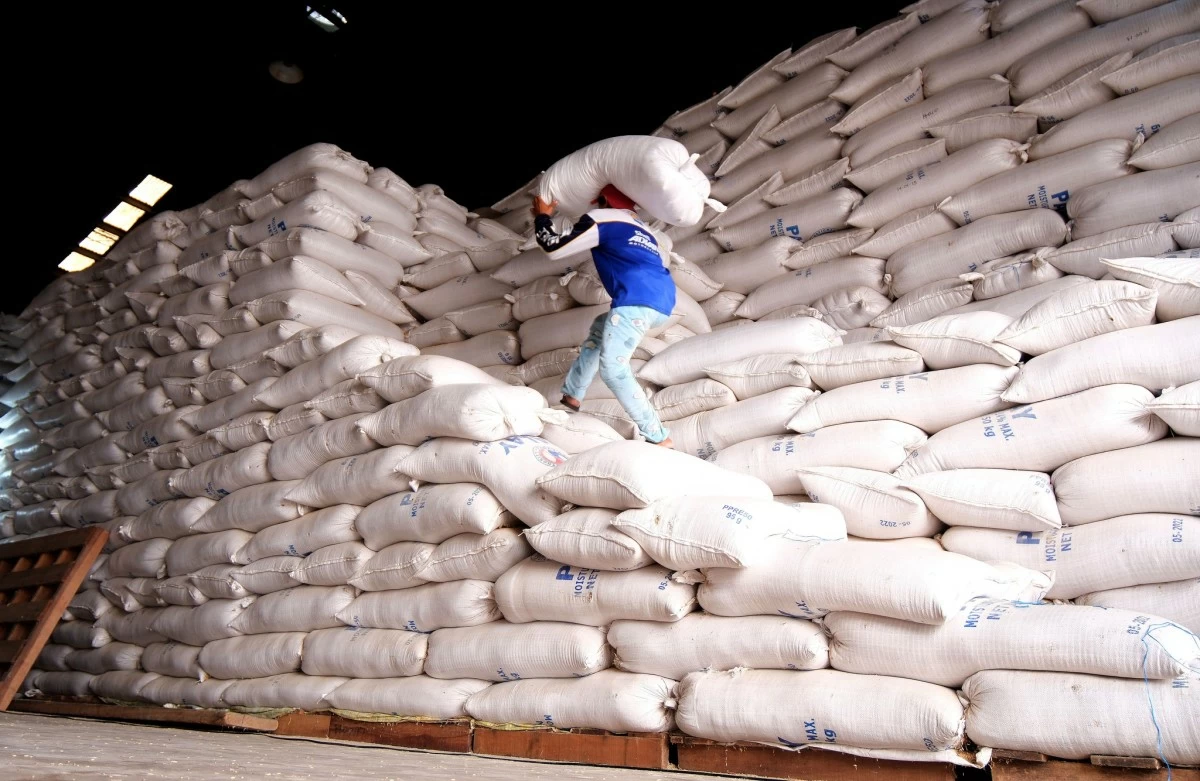
Department of Agriculture (DA) photo
Total agricultural goods trade between the Philippines and its trading partners grew 12.4 percent year-on-year to $2.5 billion in July, as both exports and imports rose by double digits.
Preliminary Philippine Statistics Authority (PSA) data released last Friday, Aug. 29, showed that the value of two-way agricultural merchandise trade in July rose from $2.3 billion in June and $2.2 billion in July last year.
The annual growth rate quickened from 6.6 percent a year ago but slowed from 13.1 percent a month ago.
The country’s agricultural exports grew by 17.5 percent to $779.3 million in July from $663.4 million in the same month last year. That month’s sales of agricultural products abroad were also higher than June’s $732.4 million.
In July, agricultural exports accounted for 10.6 percent of the country’s total export sales, which reached $7.3 billion.
Edible fruit and nuts, and peel of citrus fruit or melons were the Philippines’ top agricultural exports that month, with increased overseas sales valued at $246.2 million, compared with $160.9 million a year ago.
These products accounted for 31.6 percent of July’s total agricultural exports.
Meanwhile, PSA data showed that agricultural imports reached $1.7 billion in July, making up 15 percent of the country’s total imports that reached $11.4 billion.
Agricultural imports that month were 10.3-percent higher than the $1.5 billion recorded in July 2024.
Imported agriculture goods in July also rose from the $1.5 billion worth in June.
Cereals, which include the Filipino staple rice, were the top imported agricultural commodity at the start of the second half of the year, with $319.7 million worth in July, up from $283.5 million a year ago.
Cereals accounted for 18.7 percent of July’s total agricultural imports.
Earlier, the United States Department of Agriculture (USDA) warned that despite record rice production in the Philippines during the first half of 2025, domestic supply may still fall short during the 60-day import ban set to begin on Sept. 1, as ordered by President Ferdinand R. Marcos Jr. to stabilize local prices.
Despite producing 9.08 million metric tons (MT) of palay from January to June, USDA estimates that import demand will remain at similar levels to previous years, when over 750,000 MT were brought in during the September to November period.
Since the Philippines is a net importer of the goods it consumes, including food and agricultural products, it recorded an agricultural goods trade deficit of $929.8 million in July, 4.9-percent wider than the $886.2 million a year ago and also larger than the $812.9 million a month ago.
(Ricardo M. Austria)
ADVERTISEMENT
.most-popular .layout-ratio{ padding-bottom: 79.13%; } @media (min-width: 768px) and (max-width: 1024px) { .widget-title { font-size: 15px !important; } }

{{ articles_filter_1561_widget.title }}

.most-popular .layout-ratio{ padding-bottom: 79.13%; } @media (min-width: 768px) and (max-width: 1024px) { .widget-title { font-size: 15px !important; } }

{{ articles_filter_1562_widget.title }}

.most-popular .layout-ratio{ padding-bottom: 79.13%; } @media (min-width: 768px) and (max-width: 1024px) { .widget-title { font-size: 15px !important; } }

{{ articles_filter_1563_widget.title }}

{{ articles_filter_1564_widget.title }}

.mb-article-details { position: relative; } .mb-article-details .article-body-preview, .mb-article-details .article-body-summary{ font-size: 17px; line-height: 30px; font-family: "Libre Caslon Text", serif; color: #000; } .mb-article-details .article-body-preview iframe , .mb-article-details .article-body-summary iframe{ width: 100%; margin: auto; } .read-more-background { background: linear-gradient(180deg, color(display-p3 1.000 1.000 1.000 / 0) 13.75%, color(display-p3 1.000 1.000 1.000 / 0.8) 30.79%, color(display-p3 1.000 1.000 1.000) 72.5%); position: absolute; height: 200px; width: 100%; bottom: 0; display: flex; justify-content: center; align-items: center; padding: 0; } .read-more-background a{ color: #000; } .read-more-btn { padding: 17px 45px; font-family: Inter; font-weight: 700; font-size: 18px; line-height: 16px; text-align: center; vertical-align: middle; border: 1px solid black; background-color: white; } .hidden { display: none; }
function initializeAllSwipers() { // Get all hidden inputs with cms_article_id document.querySelectorAll('[id^="cms_article_id_"]').forEach(function (input) { const cmsArticleId = input.value; const articleSelector = '#article-' + cmsArticleId + ' .body_images'; const swiperElement = document.querySelector(articleSelector); if (swiperElement && !swiperElement.classList.contains('swiper-initialized')) { new Swiper(articleSelector, { loop: true, pagination: false, navigation: { nextEl: '#article-' + cmsArticleId + ' .swiper-button-next', prevEl: '#article-' + cmsArticleId + ' .swiper-button-prev', }, }); } }); } setTimeout(initializeAllSwipers, 3000); const intersectionObserver = new IntersectionObserver( (entries) => { entries.forEach((entry) => { if (entry.isIntersecting) { const newUrl = entry.target.getAttribute("data-url"); if (newUrl) { history.pushState(null, null, newUrl); let article = entry.target; // Extract metadata const author = article.querySelector('.author-section').textContent.replace('By', '').trim(); const section = article.querySelector('.section-info ').textContent.replace(' ', ' '); const title = article.querySelector('.article-title h1').textContent; // Parse URL for Chartbeat path format const parsedUrl = new URL(newUrl, window.location.origin); const cleanUrl = parsedUrl.host + parsedUrl.pathname; // Update Chartbeat configuration if (typeof window._sf_async_config !== 'undefined') { window._sf_async_config.path = cleanUrl; window._sf_async_config.sections = section; window._sf_async_config.authors = author; } // Track virtual page view with Chartbeat if (typeof pSUPERFLY !== 'undefined' && typeof pSUPERFLY.virtualPage === 'function') { try { pSUPERFLY.virtualPage({ path: cleanUrl, title: title, sections: section, authors: author }); } catch (error) { console.error('ping error', error); } } // Optional: Update document title if (title && title !== document.title) { document.title = title; } } } }); }, { threshold: 0.1 } ); function showArticleBody(button) { const article = button.closest("article"); const summary = article.querySelector(".article-body-summary"); const body = article.querySelector(".article-body-preview"); const readMoreSection = article.querySelector(".read-more-background"); // Hide summary and read-more section summary.style.display = "none"; readMoreSection.style.display = "none"; // Show the full article body body.classList.remove("hidden"); } document.addEventListener("DOMContentLoaded", () => { let loadCount = 0; // Track how many times articles are loaded const offset = [1, 2, 3, 4, 5, 6, 7, 8, 9, 10]; // Offset values const currentUrl = window.location.pathname.substring(1); let isLoading = false; // Prevent multiple calls if (!currentUrl) { console.log("Current URL is invalid."); return; } const sentinel = document.getElementById("load-more-sentinel"); if (!sentinel) { console.log("Sentinel element not found."); return; } function isSentinelVisible() { const rect = sentinel.getBoundingClientRect(); return ( rect.top < window.innerHeight && rect.bottom >= 0 ); } function onScroll() { if (isLoading) return; if (isSentinelVisible()) { if (loadCount >= offset.length) { console.log("Maximum load attempts reached."); window.removeEventListener("scroll", onScroll); return; } isLoading = true; const currentOffset = offset[loadCount]; window.loadMoreItems().then(() => { let article = document.querySelector('#widget_1690 > div:nth-last-of-type(2) article'); intersectionObserver.observe(article) loadCount++; }).catch(error => { console.error("Error loading more items:", error); }).finally(() => { isLoading = false; }); } } window.addEventListener("scroll", onScroll); });

Sign up by email to receive news.