

ADVERTISEMENT

The plastic pandemic

Still no deal on plastic pollution as treaty negotiations end in deadlock

Published Aug 29, 2025 08:06 am

A new pandemic grips the planet. Not one that confines us to our homes, but one that demands we confront our addiction to convenience before it consumes us all.  Plastics, a human invention, now permeate every corner of our world, infiltrating even the food we eat.

Only we humans can stop it. No hero or miracle machine will vacuum plastics off the planet. And if even one did, it would miss the underlying drivers, such as ongoing production practices and systemic support for unsustainable materials. 

There was a glimmer of hope in March 2022 when 175 nations convened to craft the first legally binding treaty to end plastic pollution. The treaty aims to address the entire lifecycle of plastics, from design to disposal. However, progress fell short anew in August 2025, when negotiations in Geneva, Switzerland, ended in deadlock, marked by deep divisions and unresolved questions. 
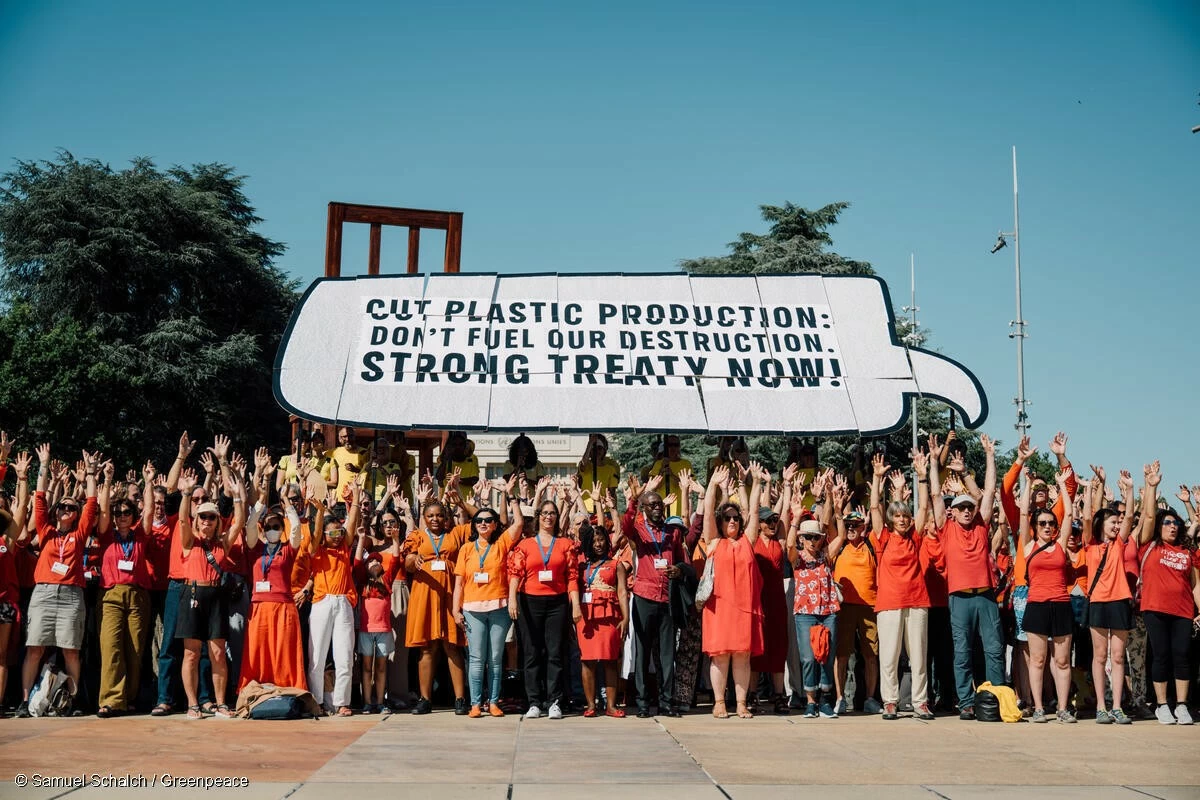
Ahead of the UN negotiations hundreds of citizens and civil society organisations from across the world gather at Place des Nations in Geneva to demand an ambitious and legally binding plastics treaty that puts people and the planet before polluters. Protesters wear yellow, red and orange to symbolise the urgency of the crisis and the danger posed by the unchecked production of plastic, which is overwhelmingly derived from fossil fuels.

No deal made

What stunned many countries during the second half of the fifth round of the talks was the lack of urgency. The only thing concrete in the room was perhaps its walls. No binding commitments emerged, not even actionable plans to address the global plastic crisis. 

According to the World Economic Forum, any treaty proposals must be agreed upon by all participating nations.  Yet, consensus remained elusive, particularly on whether the treaty should impose restrictions on new plastic production or focus instead on waste management, reuse, and improved product design.

According to the UN Environment Programme, the session followed a “structured approach,” tackling key areas such as plastic design, chemicals of concern, production caps, financing, compliance mechanisms, and progress assessments, alongside informal consultations. 

Failure to reach the goal they set themselves “brings sadness, even frustration,” said Luis Vayas Valdivieso, chair of Intergovernmental Negotiating Committee. But for the rest of the world, this brings destruction, even death.

“It should not lead to discouragement. It should spur us to regain our energy, renew our commitments, and unite our aspirations. It has not happened yet in Geneva, but I have no doubt that the day will come when the international community will unite its will and join hands to protect our environment,” he added.

Without action and tangible solutions, global plastic waste production is projected to triple (possibly even quadruple) by 2060, making a treaty on plastics more vital now than ever. Negotiations are expected to resume at a later date, though no venue has been confirmed.
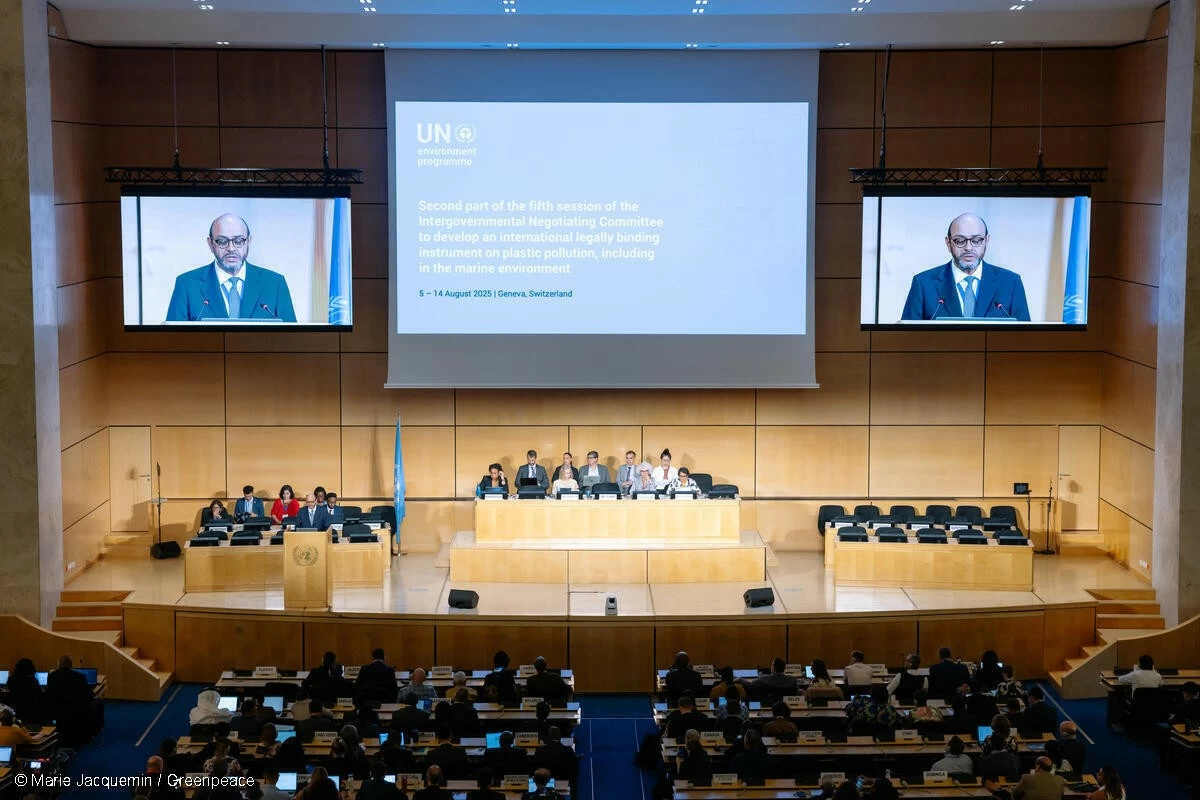
The second part of the fifth session of the Intergovernmental Negotiating Committee to develop an international legally binding treaty on plastic pollution, including in the marine environment (INC-5.2), takes place from the 5th to 14th August 2025 at the Palais des Nations in Geneva, Switzerland.

Pushing for a plastic-free Philippines

We often hear about turning panic into purpose, but maybe a healthy dose of panic is exactly what we need to change our habits and choices. Time is running out, and the global plastics treaty should have been finalized long ago. Now, we face the consequences, as seen in clogged drainages that worsen flooding, increasingly erratic and intolerable weather, polluted waters that rob animals of their lives and habitats, and widespread environmental degradation. 

During the recent negotiations, the Philippines submitted key points addressing health impacts, product design, financial mechanism, plastic release and leakage, waste management, plastics’ full life cycle, extended producer responsibility, transparency, and traceability.  These priorities were confirmed by Atty. Janice Regoso-Pammit, Chief of the legal division and concurrent Board Secretary of the Pollution Adjudication Board under the Environmental Management Bureau.

Amid the conference, Marian Ledesma, zero waste campaigner for Greenpeace PH, stated, “A watered-down treaty that ignores plastic production cuts would be a betrayal of the millions of people counting on their leaders to protect health, human rights, and the environment. A weak treaty will be nothing more than a fig leaf for polluters. World leaders promised ambition, and ambition means tackling the problem at its source." 

Meanwhile, more than 80 civil society organizations, academic institutions, and businesses have urged the Department of Environment and Natural Resources (DENR) to align with nations pushing for ambitious production reduction targets and to prioritize refill systems.  In response, the DENR affirmed its support for a full life cycle approach to plastics, from extraction to disposal.

“Supporting a full life cycle approach internationally should mean adopting the same ambition at home by cutting plastic production, phasing out single-use plastics, and building strong reuse systems in the Philippines. Anything less would betray the communities already suffering the impacts of plastic pollution,” Ledesma added.
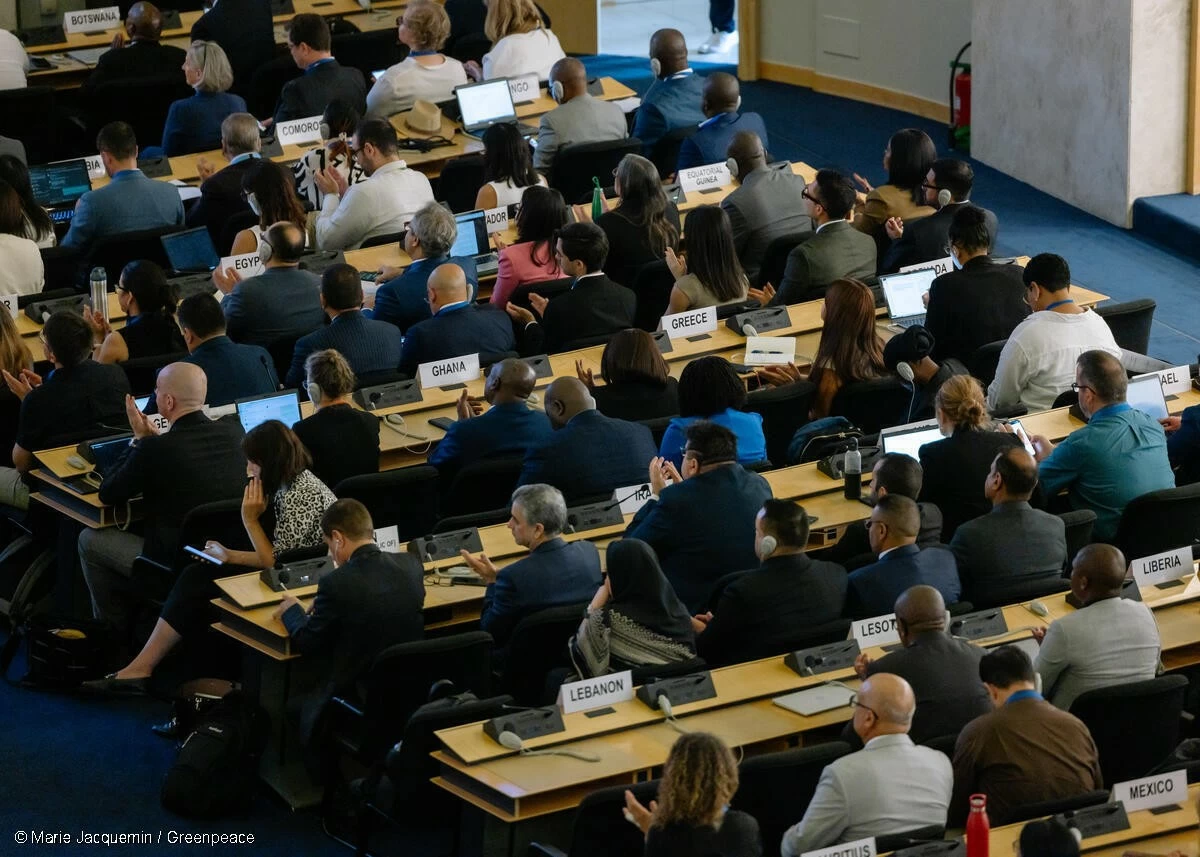
The second part of the fifth session of the Intergovernmental Negotiating Committee to develop an international legally binding treaty on plastic pollution, including in the marine environment (INC-5.2), takes place from the 5th to 14th August 2025 at the Palais des Nations in Geneva, Switzerland.

On refill hubs, a plastic-free country, and a healthy sea

All nations share the responsibility for the plastic pollution crisis. In the Philippines, refill hubs are helping sustain the “tingi” (buying per piece) habit, but this time without the waste. Instead of purchasing single-use sachets of shampoo, soap, and liquid detergent, individuals refill reusable containers at sari-sari stores, a practice seen in Quezon City, San Juan, and Pasig. 

Greenpeace PH has urged the government to expand the zero-waste systems nationwide.  According to the group’s latest report, consumers saved an average 201 percent by choosing refills over sachets, while store owners saw a 15 percent increase in profits. A win-win for both households and small businesses. 

The organization also called on the government to support the phaseout of single-use plastics, endorse global targets to cut plastic production, and uphold environmental rights as a matter of public health and justice.

Meanwhile, it’s not sea creatures per se that dream of a healthy home. For Pangisda Pilipinas, a clean ocean and sustainable fish stocks are essential to survival. 

“Pangisda Pilipinas joins the call for an agreement or law that will strictly regulate and punish violators of plastic polluters who cause the destruction of our environment,” said Pablo Rosales, president of Pangisda Pilipinas.

So, what’s the antidote to the plastic plague? 

We’ve heard about plastic-eating fungi. We’ve seen massive ocean cleanups, where large machines scoop up floating plastics that resemble technicolor vomit on water. We’ve equipped ourselves with knowledge, campaigns, and community action to fight plastic pollution. Yet, despite these efforts, victory remains elusive. 

Doctors say an apple a day keeps the doctor away. When it comes to plastic pollution, the cure isn’t cleanup campaigns or miracle solutions; it is prevention.

ADVERTISEMENT
.most-popular .layout-ratio{ padding-bottom: 79.13%; } @media (min-width: 768px) and (max-width: 1024px) { .widget-title { font-size: 15px !important; } }

{{ articles_filter_1561_widget.title }}

.most-popular .layout-ratio{ padding-bottom: 79.13%; } @media (min-width: 768px) and (max-width: 1024px) { .widget-title { font-size: 15px !important; } }

{{ articles_filter_1562_widget.title }}

.most-popular .layout-ratio{ padding-bottom: 79.13%; } @media (min-width: 768px) and (max-width: 1024px) { .widget-title { font-size: 15px !important; } }

{{ articles_filter_1563_widget.title }}

{{ articles_filter_1564_widget.title }}

.mb-article-details { position: relative; } .mb-article-details .article-body-preview, .mb-article-details .article-body-summary{ font-size: 17px; line-height: 30px; font-family: "Libre Caslon Text", serif; color: #000; } .mb-article-details .article-body-preview iframe , .mb-article-details .article-body-summary iframe{ width: 100%; margin: auto; } .read-more-background { background: linear-gradient(180deg, color(display-p3 1.000 1.000 1.000 / 0) 13.75%, color(display-p3 1.000 1.000 1.000 / 0.8) 30.79%, color(display-p3 1.000 1.000 1.000) 72.5%); position: absolute; height: 200px; width: 100%; bottom: 0; display: flex; justify-content: center; align-items: center; padding: 0; } .read-more-background a{ color: #000; } .read-more-btn { padding: 17px 45px; font-family: Inter; font-weight: 700; font-size: 18px; line-height: 16px; text-align: center; vertical-align: middle; border: 1px solid black; background-color: white; } .hidden { display: none; }
function initializeAllSwipers() { // Get all hidden inputs with cms_article_id document.querySelectorAll('[id^="cms_article_id_"]').forEach(function (input) { const cmsArticleId = input.value; const articleSelector = '#article-' + cmsArticleId + ' .body_images'; const swiperElement = document.querySelector(articleSelector); if (swiperElement && !swiperElement.classList.contains('swiper-initialized')) { new Swiper(articleSelector, { loop: true, pagination: false, navigation: { nextEl: '#article-' + cmsArticleId + ' .swiper-button-next', prevEl: '#article-' + cmsArticleId + ' .swiper-button-prev', }, }); } }); } setTimeout(initializeAllSwipers, 3000); const intersectionObserver = new IntersectionObserver( (entries) => { entries.forEach((entry) => { if (entry.isIntersecting) { const newUrl = entry.target.getAttribute("data-url"); if (newUrl) { history.pushState(null, null, newUrl); let article = entry.target; // Extract metadata const author = article.querySelector('.author-section').textContent.replace('By', '').trim(); const section = article.querySelector('.section-info ').textContent.replace(' ', ' '); const title = article.querySelector('.article-title h1').textContent; // Parse URL for Chartbeat path format const parsedUrl = new URL(newUrl, window.location.origin); const cleanUrl = parsedUrl.host + parsedUrl.pathname; // Update Chartbeat configuration if (typeof window._sf_async_config !== 'undefined') { window._sf_async_config.path = cleanUrl; window._sf_async_config.sections = section; window._sf_async_config.authors = author; } // Track virtual page view with Chartbeat if (typeof pSUPERFLY !== 'undefined' && typeof pSUPERFLY.virtualPage === 'function') { try { pSUPERFLY.virtualPage({ path: cleanUrl, title: title, sections: section, authors: author }); } catch (error) { console.error('ping error', error); } } // Optional: Update document title if (title && title !== document.title) { document.title = title; } } } }); }, { threshold: 0.1 } ); function showArticleBody(button) { const article = button.closest("article"); const summary = article.querySelector(".article-body-summary"); const body = article.querySelector(".article-body-preview"); const readMoreSection = article.querySelector(".read-more-background"); // Hide summary and read-more section summary.style.display = "none"; readMoreSection.style.display = "none"; // Show the full article body body.classList.remove("hidden"); } document.addEventListener("DOMContentLoaded", () => { let loadCount = 0; // Track how many times articles are loaded const offset = [1, 2, 3, 4, 5, 6, 7, 8, 9, 10]; // Offset values const currentUrl = window.location.pathname.substring(1); let isLoading = false; // Prevent multiple calls if (!currentUrl) { console.log("Current URL is invalid."); return; } const sentinel = document.getElementById("load-more-sentinel"); if (!sentinel) { console.log("Sentinel element not found."); return; } function isSentinelVisible() { const rect = sentinel.getBoundingClientRect(); return ( rect.top < window.innerHeight && rect.bottom >= 0 ); } function onScroll() { if (isLoading) return; if (isSentinelVisible()) { if (loadCount >= offset.length) { console.log("Maximum load attempts reached."); window.removeEventListener("scroll", onScroll); return; } isLoading = true; const currentOffset = offset[loadCount]; window.loadMoreItems().then(() => { let article = document.querySelector('#widget_1690 > div:nth-last-of-type(2) article'); intersectionObserver.observe(article) loadCount++; }).catch(error => { console.error("Error loading more items:", error); }).finally(() => { isLoading = false; }); } } window.addEventListener("scroll", onScroll); });

Sign up by email to receive news.