






Manila Bulletin
 Philippines
National
Puno debunks VP Duterte's claim of Congress tinkering with school building funds
Philippines
National
Puno debunks VP Duterte's claim of Congress tinkering with school building funds
Philippines
National
Puno debunks VP Duterte's claim of Congress tinkering with school building funds
Puno debunks VP Duterte's claim of Congress tinkering with school building funds
Published Aug 29, 2025 09:31 pm


At A Glance
- House Deputy Speaker Antipolo 1st district Rep. Ronaldo "Ronnie" Puno has debunked Vice President Sara Duterte's claim that members of Congress divide among themselves the funds under the Department of Education's (DepEd) school building program.
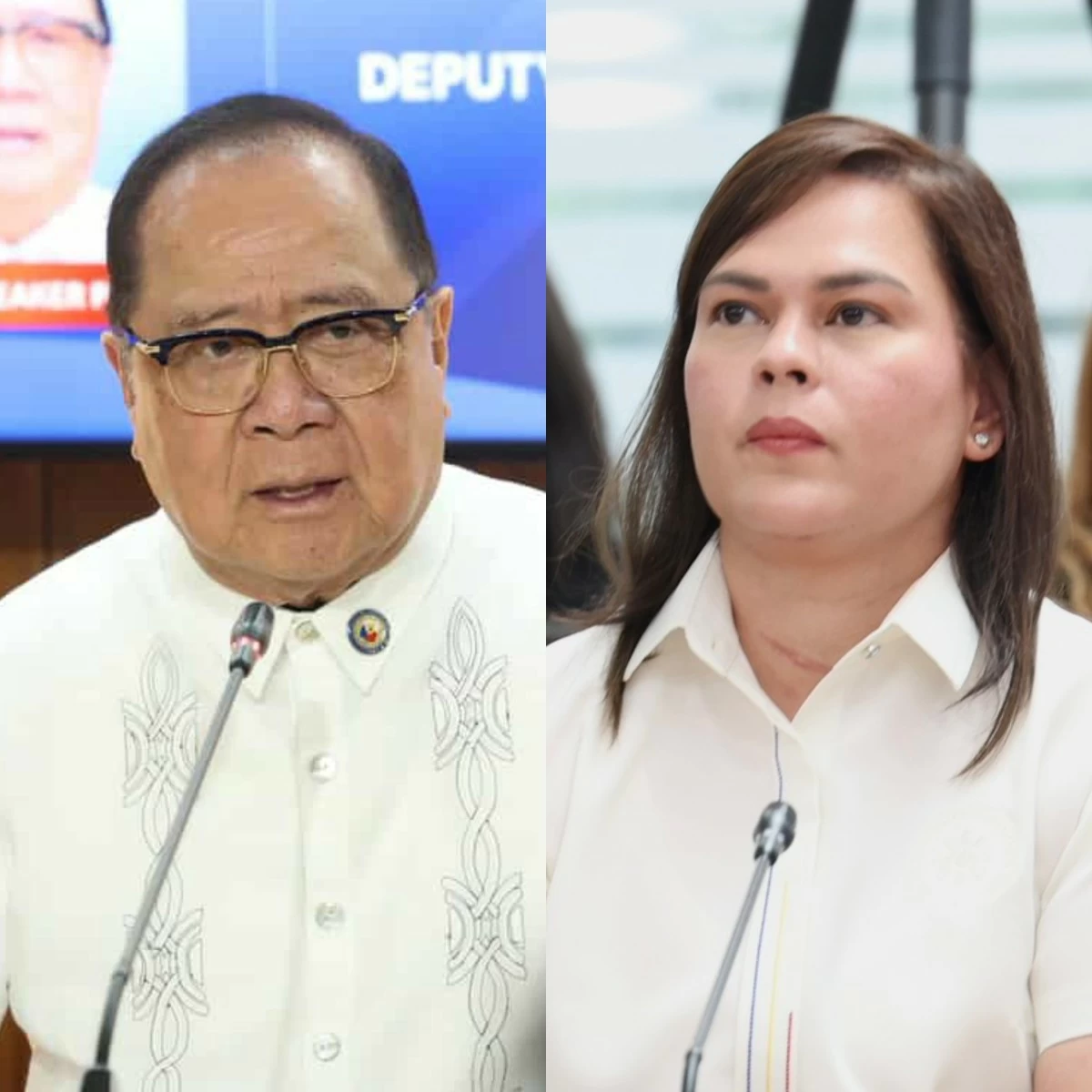
Deputy Speaker Antipolo 1st district Rep. Ronaldo “Ronnie” Puno (left), Vice President Sara Duterte (PPAB)
House Deputy Speaker Antipolo 1st district Rep. Ronaldo “Ronnie” Puno has debunked Vice President Sara Duterte's claim that members of Congress divide among themselves the funds under the Department of Education’s (DepEd) school building program.
In a press conference at the House of Representatives Friday, Aug. 28, Puno clarified that contrary to the Vice President’s claims, congressmen have no say in school buildings construction.
According to him, classroom construction is determined by the DepEd's nationwide priorities and then implemented by the Department of Public Works and Highways (DPWH).
“Malinaw ang procedure sa classrooms. Kailangan nandiyan ka sa listahan ng DepEd. Kailangan na-identify ka sa place that really needs classrooms more than the other places. Tapos na-identify na ‘yun…pupunta sa DPWH, siya ang magco-construct,” Puno, chairman of the National Unity Party (NUP), said in response to a question.
(The procedure for classrooms is clear. You need to be on the DepEd list. You must be identified as being in a location that needs classrooms more than other areas. Once that’s been determined...it goes to the DPWH, which will handle the construction.)
He noted that the DPWH, which juggles multiple national priorities such as roads, bridges and other public infrastructure, often takes time to implement classroom projects once DepEd has already flagged areas of need.
This is why, he explained, the responsibility of Congress lies in ensuring strict monitoring of every peso in the budget.
“So siyempre, maraming priorities sa DPWH. Gumagawa rin ‘yan ng tulay, gumagawa rin ‘yan ng kalye, gumagawa na ko ano-ano. So ‘pag pumasok ang classroom, kung minsan, hindi na bibigyan ng priority, kaya medyo mas tumatagal. So kailangan magbantayan ‘yan, lahat ng salapi ng bayan dapat bantayan,” he explained.
(Of course, the DPWH has many priorities. It also builds bridges, roads, and all sorts of other things. So when classroom projects come in, sometimes they’re not given priority, which is why they tend to take longer. That’s why we need to keep watch, every peso of public funds must be monitored.)
The issue gained traction after Vice President Duterte claimed that members of Congress had been dividing the DepEd’s schoolbuilding funds. Duterte is a former DepEd secretary.
Puno explained that the budget process makes such a claim implausible, because under the National Expenditure Program (NEP), he said, agencies submit proposals to the Department of Budget and Management (DBM). The NEP is the basis of the national budget measure.
For lawmakers, the only area where they are allowed to suggest projects is in the DPWH portion of the NEP, and even then, this is limited to small-scale local infrastructure like footbridges and farm-to-market roads.
“Yung [NEP] na sinusumite ng bawat ahensya, the only national expenditure program na may initiative power or ability yung congressman is DPWH. Ang rason dyan is kasi doon sa NEP na binibigay ng DPWH sa DBM meron portion doon that are for local infrastructure projects,” he explained.
(In the [NEP] submitted by each agency, the only national expenditure program where a congressman has initiative power or ability is the DPWH. The reason for that is because in the NEP that DPWH submits to the DBM, there’s a portion allocated for local infrastructure projects.)
Puno stressed that lawmakers have no authority to dictate allocations in national projects such as highways, government buildings or classroom construction, and that the only time they are consulted is when DepEd itself reaches out for input on local needs.
“Wala kaming nabibigay na suggestions on national projects. For example, national highway, national buildings, wala kaming karapatan gumawan doon… So doon naman sa DepEd, wala naman kapasidad din ang congressman mag-initiate except pag kinonsulta sila ng DepEd."
(We don’t give suggestions on national projects. For example, national highways or national buildings, we have no right to intervene there... As for DepEd, congressmen also don’t have the capacity to initiate, unless DepEd consults them.)
To illustrate, he said DepEd crafts a long-term plan to address shortages – currently estimated at 40,000 classrooms nationwide – by identifying the hardest-hit areas and proposing the necessary projects for inclusion in the next budget. Congress then scrutinizes these proposals as part of its oversight function.
“Papano nila pupunan ‘yung 40,000 classrooms na ‘yun? Gagawa sila ng plan nationwide, base sa kung sinong priority, sinong mas nangailangan. Tapos doon nila ilalagay yung kanilang mga proposal for the NEP 2026,” he said.
(How will they fill those 40,000 classrooms? They’ll create a nationwide plan based on who’s prioritized, who needs it most. Then they’ll place their proposals for the NEP 2026 accordingly.)
This, Puno stressed, is why it is critical for lawmakers to remain vigilant in reviewing every agency submission as their constitutional role is to ensure accountability, not to engineer allocations.
“So kung sasabi natin na dapat bantayan, talaga, lahat na mga bagay na nasa national expenditure program, dapat titig talaga. In fact ‘yan ang katungkulan, that’s the obligation of Congress. We really have to look at it,” Puno said.
(So if we’re saying these things should be monitored, then yes, everything in the national expenditure program must be closely scrutinized. In fact, that’s the duty, that’s the obligation of Congress. We really have to look into it.)