ADVERTISEMENT

Japan uses AI-generated eruption of Mount Fuji to prepare Tokyo for worst-case scenario

Published Aug 29, 2025 07:06 am
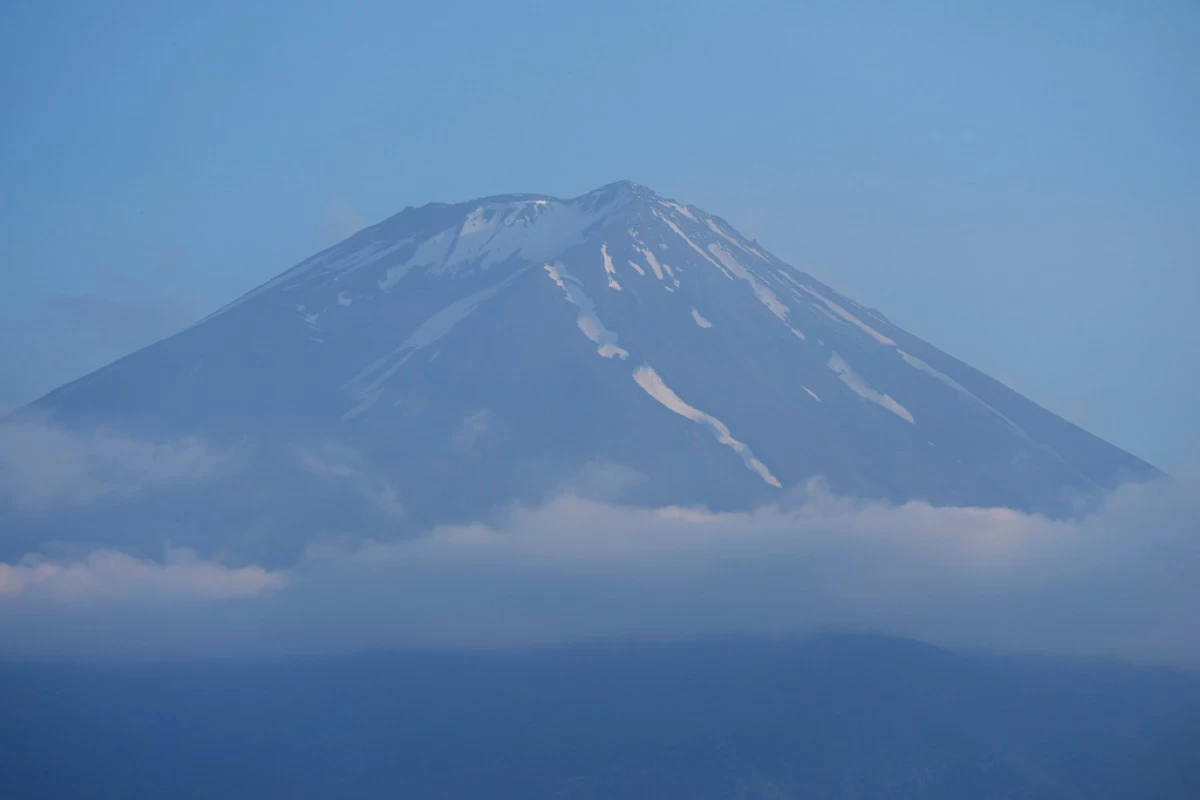
FILE - The top of Mount Fuji is seen in Fujikawaguchiko town, about 110 kilometers (68 miles) west of Tokyo, June 14, 2024. (AP Photo/Hiro Komae, File)
TOKYO (AP) — Mount Fuji hasn’t erupted since 1707. But for Volcanic Disaster Preparedness Day, Japanese officials have released computer- and AI-generated videos showing a simulation of a potential violent eruption of the active volcano.
The videos, released this week, are meant to prepare the 37 million residents in the greater Tokyo metropolitan area for potential disasters.
The Tokyo Metropolitan Government’s video warns an eruption could strike “at any moment, without warning,” depicting volcanic ash shrouding central Tokyo, about 100 kilometers (60 miles) away, within hours, paralyzing transportation, disrupting food and power, and causing long-term respiratory problems.
The video ends with the message: “We need to arm ourselves with facts and prepare for disaster in our daily lives.” It shows a family’s pantry stocked with canned food and a first-aid kit.
The Tokyo government said in a statement that there are currently no signs of Fuji erupting. “The simulation is designed to equip residents with accurate knowledge and preparedness measures they can take in case of an emergency,” it explained.
But the videos have caused anxiety and confusion among some residents.
“Are there actually any signs of eruption?” said Shinichiro Kariya, a 57-year-old hospital employee. “Why are we now hearing things like ‘10 centimeters of ash could fall,’ even in Tokyo? I’m wondering why this is happening all of a sudden.”
Hiromi Ooki, who lives in Mishima City, which has prime views of Fuji, said she planned to buy emergency supplies the next day. “Nature’s power is so great that maybe it’s better if it scares us a little,” she said.
Representatives of both the Tokyo Metropolitan Government and Japan’s Cabinet Office Disaster Prevention Division said they had not received complaints from Tokyo residents about the videos.
University of Tokyo professor and risk communication expert Naoya Sekiya said the government has for years modeled scenarios for volcanic eruptions and earthquakes, but added that does not mean Fuji is about to erupt.
“There’s no particular significance to the timing,” Sekiya said.
Japan is highly vulnerable to natural disasters because of its climate and topography and is known for its meticulous disaster planning which spans earthquakes, typhoons, floods, mudslides and volcanic eruptions.
The Japan Meteorological Agency last August issued its first-ever “megaquake advisory” after a powerful quake struck off the southeastern coast of the southern main island of Kyushu.
Of the world’s roughly 1,500 active volcanoes, 111 are in Japan, which lies on the Pacific “Ring of Fire.”
Fuji, Japan’s tallest peak, used to erupt about every 30 years, but it has been dormant since the 18th century.

Related Tags

WORLDNEWS
ADVERTISEMENT
.most-popular .layout-ratio{ padding-bottom: 79.13%; } @media (min-width: 768px) and (max-width: 1024px) { .widget-title { font-size: 15px !important; } }

{{ articles_filter_1561_widget.title }}

.most-popular .layout-ratio{ padding-bottom: 79.13%; } @media (min-width: 768px) and (max-width: 1024px) { .widget-title { font-size: 15px !important; } }

{{ articles_filter_1562_widget.title }}

.most-popular .layout-ratio{ padding-bottom: 79.13%; } @media (min-width: 768px) and (max-width: 1024px) { .widget-title { font-size: 15px !important; } }

{{ articles_filter_1563_widget.title }}

{{ articles_filter_1564_widget.title }}

.mb-article-details { position: relative; } .mb-article-details .article-body-preview, .mb-article-details .article-body-summary{ font-size: 17px; line-height: 30px; font-family: "Libre Caslon Text", serif; color: #000; } .mb-article-details .article-body-preview iframe , .mb-article-details .article-body-summary iframe{ width: 100%; margin: auto; } .read-more-background { background: linear-gradient(180deg, color(display-p3 1.000 1.000 1.000 / 0) 13.75%, color(display-p3 1.000 1.000 1.000 / 0.8) 30.79%, color(display-p3 1.000 1.000 1.000) 72.5%); position: absolute; height: 200px; width: 100%; bottom: 0; display: flex; justify-content: center; align-items: center; padding: 0; } .read-more-background a{ color: #000; } .read-more-btn { padding: 17px 45px; font-family: Inter; font-weight: 700; font-size: 18px; line-height: 16px; text-align: center; vertical-align: middle; border: 1px solid black; background-color: white; } .hidden { display: none; }
function initializeAllSwipers() { // Get all hidden inputs with cms_article_id document.querySelectorAll('[id^="cms_article_id_"]').forEach(function (input) { const cmsArticleId = input.value; const articleSelector = '#article-' + cmsArticleId + ' .body_images'; const swiperElement = document.querySelector(articleSelector); if (swiperElement && !swiperElement.classList.contains('swiper-initialized')) { new Swiper(articleSelector, { loop: true, pagination: false, navigation: { nextEl: '#article-' + cmsArticleId + ' .swiper-button-next', prevEl: '#article-' + cmsArticleId + ' .swiper-button-prev', }, }); } }); } setTimeout(initializeAllSwipers, 3000); const intersectionObserver = new IntersectionObserver( (entries) => { entries.forEach((entry) => { if (entry.isIntersecting) { const newUrl = entry.target.getAttribute("data-url"); if (newUrl) { history.pushState(null, null, newUrl); let article = entry.target; // Extract metadata const author = article.querySelector('.author-section').textContent.replace('By', '').trim(); const section = article.querySelector('.section-info ').textContent.replace(' ', ' '); const title = article.querySelector('.article-title h1').textContent; // Parse URL for Chartbeat path format const parsedUrl = new URL(newUrl, window.location.origin); const cleanUrl = parsedUrl.host + parsedUrl.pathname; // Update Chartbeat configuration if (typeof window._sf_async_config !== 'undefined') { window._sf_async_config.path = cleanUrl; window._sf_async_config.sections = section; window._sf_async_config.authors = author; } // Track virtual page view with Chartbeat if (typeof pSUPERFLY !== 'undefined' && typeof pSUPERFLY.virtualPage === 'function') { try { pSUPERFLY.virtualPage({ path: cleanUrl, title: title, sections: section, authors: author }); } catch (error) { console.error('ping error', error); } } // Optional: Update document title if (title && title !== document.title) { document.title = title; } } } }); }, { threshold: 0.1 } ); function showArticleBody(button) { const article = button.closest("article"); const summary = article.querySelector(".article-body-summary"); const body = article.querySelector(".article-body-preview"); const readMoreSection = article.querySelector(".read-more-background"); // Hide summary and read-more section summary.style.display = "none"; readMoreSection.style.display = "none"; // Show the full article body body.classList.remove("hidden"); } document.addEventListener("DOMContentLoaded", () => { let loadCount = 0; // Track how many times articles are loaded const offset = [1, 2, 3, 4, 5, 6, 7, 8, 9, 10]; // Offset values const currentUrl = window.location.pathname.substring(1); let isLoading = false; // Prevent multiple calls if (!currentUrl) { console.log("Current URL is invalid."); return; } const sentinel = document.getElementById("load-more-sentinel"); if (!sentinel) { console.log("Sentinel element not found."); return; } function isSentinelVisible() { const rect = sentinel.getBoundingClientRect(); return ( rect.top < window.innerHeight && rect.bottom >= 0 ); } function onScroll() { if (isLoading) return; if (isSentinelVisible()) { if (loadCount >= offset.length) { console.log("Maximum load attempts reached."); window.removeEventListener("scroll", onScroll); return; } isLoading = true; const currentOffset = offset[loadCount]; window.loadMoreItems().then(() => { let article = document.querySelector('#widget_1690 > div:nth-last-of-type(2) article'); intersectionObserver.observe(article) loadCount++; }).catch(error => { console.error("Error loading more items:", error); }).finally(() => { isLoading = false; }); } } window.addEventListener("scroll", onScroll); });

Sign up by email to receive news.