







'Greed control' is focal point of good governance advocacy
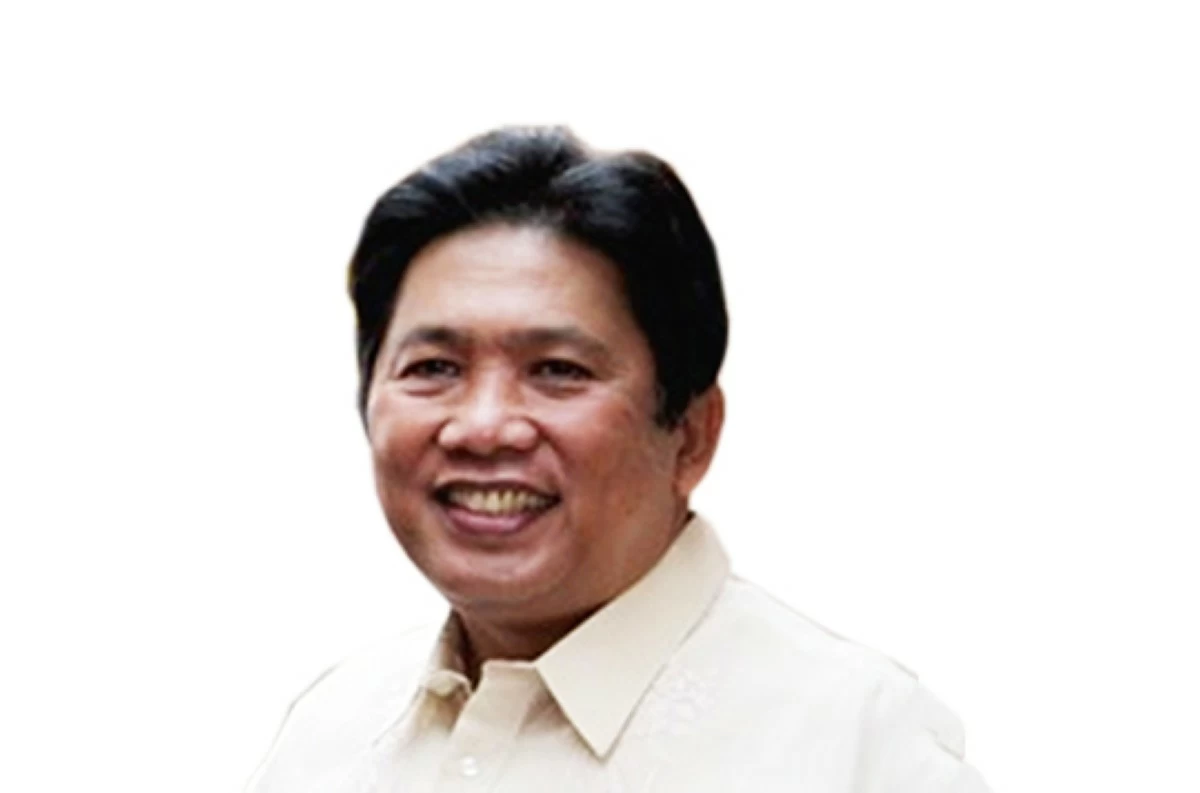
By Sonny Coloma
Published Aug 28, 2025 12:03 am
|
Updated Aug 28, 2025 08:58 am


ENDEAVOR
‘Greed control’ is focal point of good govern-ance advocacy
Serving in the President’s Cabinet could be a herculean task that entails a plenitude of sacrifice, as those like me who have experienced it would attest. Thus did I view with understanding former Public Works Secretary Ro-gelio ‘Babes’ Singson recent statement on declining a reported offer to return to his old post — a subject that made this newspaper’s banner headline last week.
A professional manager in the business sector — he was MAP’s Management Person of the Year in 2024 — Babes Singson is fully aware of the magnitude of the task. Not one who would take on an invitation to serve anew in the Cabinet simply to buttress his curriculum vitae, he echoed an offer made by the Management Asso-ciation of the Philippines to serve, pro bono, in a task group that would conduct an independent study on flood control projects. Public interest has been sparked since the Congress committee began to probe into alleged “ghost” projects in Bulacan, Oriental Mindoro, Benguet and other provinces.
During his six-year stint as DPWH Secretary, Singson said that a total of ₱182 billion was spent for flood control; in the past year alone, nearly double or ₱350 billion, has been spent. Why the amount has ballooned exponentially — and there has been a proliferation of huge projects — has been the object of public outcry for the past several weeks, after the controversy over Vice President Duterte’s impeachment waned.
He also said that when he left office in 2016, the DPWH had crafted a comprehensive flood control master plan “but (this) was not adopted by succeeding administrations,” referring to those headed by Rodrigo Duterte and Ferdinand Marcos, Jr. But with the outcry spawned by apparent anomalies, Congress leaders have been es-pousing legislative oversight on patently overpriced flood control projects.
President Marcos has been on high-profile provincial inspection trips in which he has deplored substandard flood control and other public works projects, vowing that corrective actions will be taken, He has also assured that before he completes his term in 2028, problems spawned by widespread irregularities shall have been curbed.
Sen. Panfilo Lacson delivered a well-documented privilege speech in which he deplored that the raging issue has gone past flood control and could well be characterized instead as “greed control.” Hearing this sound bite, I am reminded of a phrase that became popular more than a decade ago: “Moderate your greed.” I heard this at the height of public outcry over alleged overpricing of foreign-sourced telecoms equipment.
Recent events remind me of similar occurrences during my past stints in government service.
During the post-EDSA Cory Aquino administration, Rep. Oscar Santos of Quezon sought the help of his con-stituents in monitoring the actual implementation of infrastructure projects in his district, including farm-to-market roads and irrigation.
During the Estrada administration, I recall Rep. Magtanggol ‘Magi’ Gunigundo of Valenzuela City asking how many times “runway extension” projects have been approved as he noted that a certain provincial airport’s runway “would now be around 10 kilometers long” if indeed, such funds were used for this stated purpose.
At the start of his administration, President Benigno ‘Noynoy’ Aquino thumbed down a dredging project in Laguna de Bay after it was reported by the Laguna Lake Development Authority that the materials to be taken out will be dumped to another portion of the bay.
Indeed, House representatives have not been lacking in resourcefulness in the matter of seeking government appropriations for infrastructure development. But they must be mindful that the citizenry is rightfully con-cerned that approved budgets are channeled properly.
This is the crux of former Secretary Singson’s 5-R advocacy: 1) the right project delivered with 2) the right quality and following 3) the right quality specifications, 4) at the expected time of completion, and 5) at the right cost.
When asked in a recent interview by Politico if the 5-Rs mantra is still being followed at present, Singson said it has been “bastardized.” Explaining further, he noted that while there are many competent officials at the DPWH, they are now outnumbered by non-career district engineers. Moreover, they are unduly influenced, and eventually co-opted, by congressmen, governors and mayors who dangle threats over their security of tenure if they don’t behave according to the latters’ wishes.
He also pointed out that when he was secretary, standards were set for road projects so there will be con-sistency of project cost estimates, and these could be reliably evaluated for quality control during and upon project completion.
Such are the travails of serving in the government. Is it any wonder then that highly competent and qualified professionals do not consider serving in government as being beneficial to one’s development?
Earlier this month, the Institute for Solidarity in Asia (ISA) conducted an out-of-town good governance workshop for managers in the public sector. ISA was founded by former Finance and Economic Planning Secre-tary Jesus Estanislao prior to the EDSA 2 People Power Revolution to bring about “a return to values and mean-ingful civic participation” and realize the vision of “a nation led by strong and upright democratic institu-tions.” Indeed, there are many highly competent and dedicated professionals who have heeded the call of gov-ernment service, and are earnestly seeking to make a difference in their respective organizations.
Accountability is the core principle in good governance. Enshrined in the Philippine Constitution, it requires public servants to uphold the rule of law, and lead modest lives that inspire the people’s confidence in their government.
it is time for a new breed of senior government officials to emerge as present-day role models for the Filipi-no youth.
(Comments may be sent to [email protected])