

ADVERTISEMENT

MILO, Philippine Red Cross celebrate World Drowning Prevention Day with SAFE Swim Program

By MBrand
Published Aug 28, 2025 12:07 pm

At A Glance

  • Manila, Philippines, August, 2025 -- To mark World Drowning Prevention Day on July 25, MILO and the Philippine Red Cross (PRC) held the biggest event yet of the MILO Safe Swim program last July 27 at Lourdes School of Mandaluyong, equipping participants with essential water safety and first aid skills to combat rising child drowning cases in the Philippines.
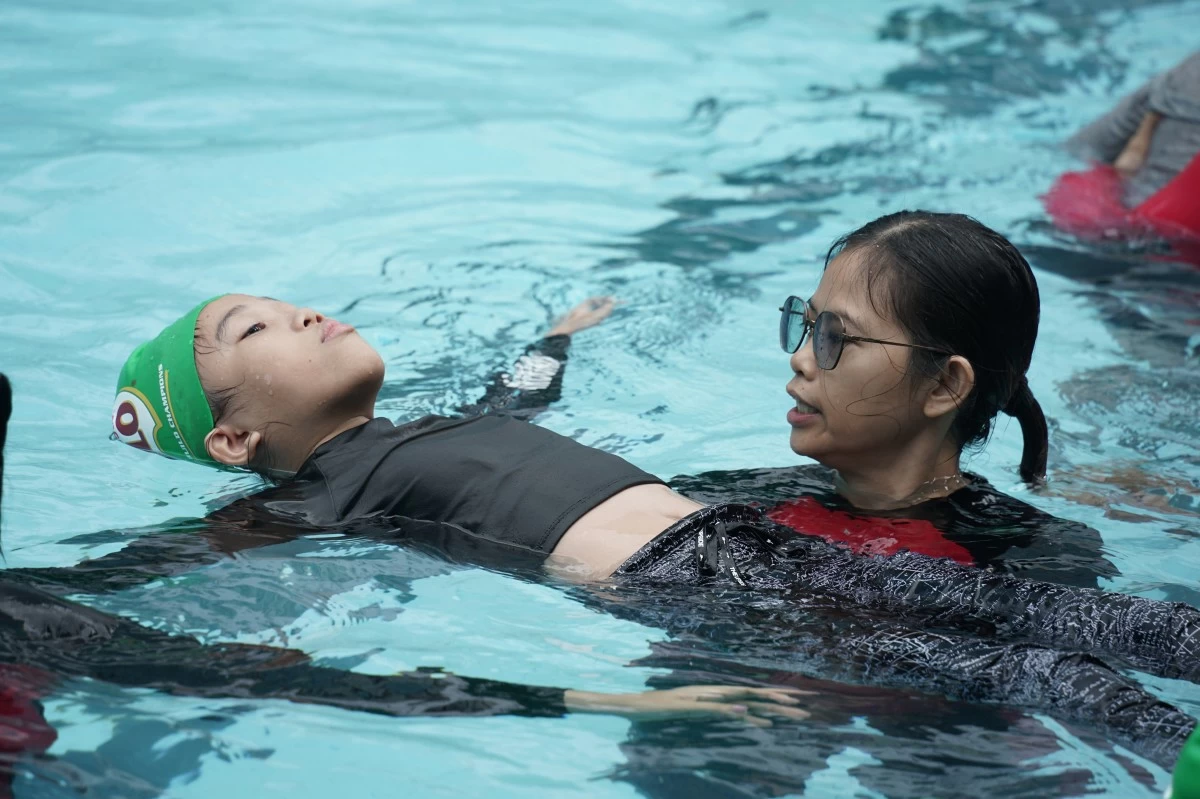
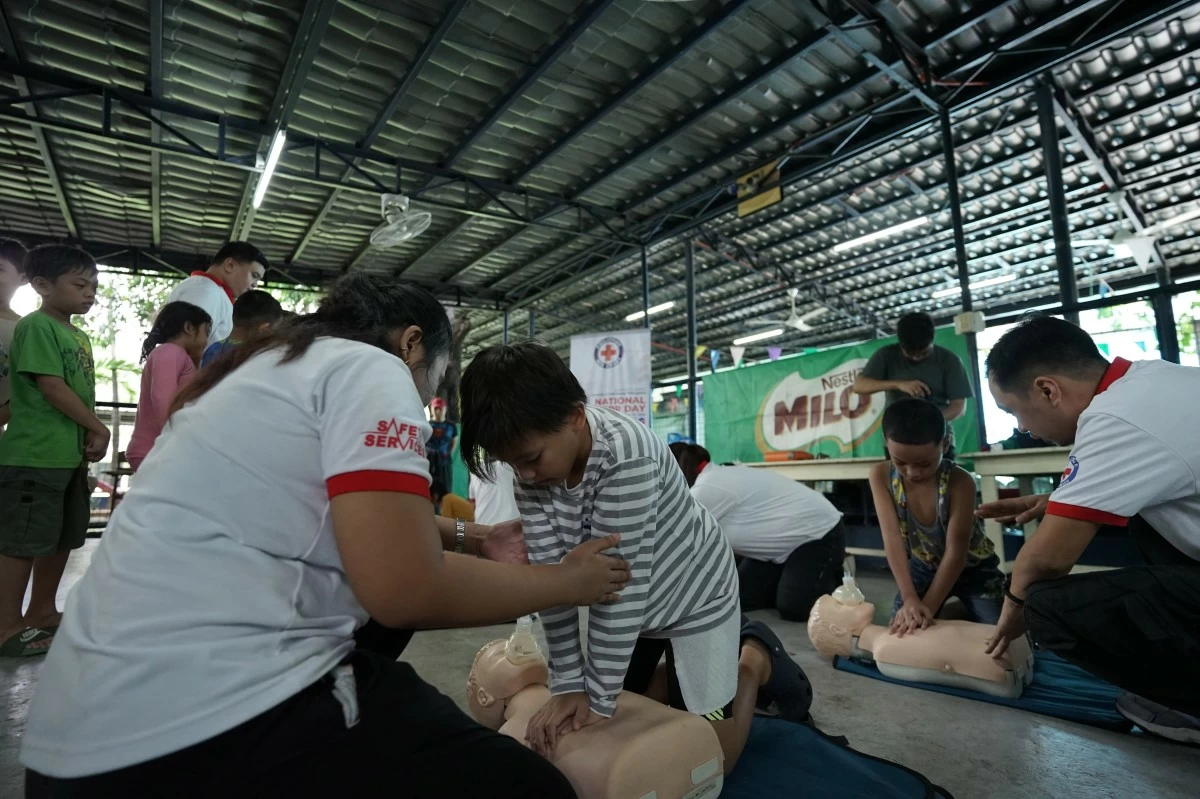
IN PHOTO: MILO® SAFE Swim participant practicing water safety techniques and Philippine Red Cross conducting CPR training for MILO® SAFE Swim participants
Manila, Philippines, August, 2025 -- To mark World Drowning Prevention Day on July 25, MILO and the Philippine Red Cross (PRC) held the biggest event yet of the MILO Safe Swim program last July 27 at Lourdes School of Mandaluyong, equipping participants with essential water safety and first aid skills to combat rising child drowning cases in the Philippines.

Why MILO SAFE Swim Matters

According to the World Health Organization(2019), drowning is the third leading cause of unintentional injury deaths in the Philippines, accounting for 31% of such deaths among children under 14 years old. Introduced in 2024 as a nationwide initiative, MILO SAFE Swim has already made stops in Davao, Cagayan de Oro, Ilocos Sur, Cavite, Cebu, Bacolod, Pampanga, and Pasig, reaching communities across the country to promote water safety awareness and equip families with life-saving knowledge in response to this alarming statistic.
“Let’s make a commitment today—to protect each other, to raise awareness, and to give every child the chance to enjoy water safely,” said Dr. Gwendolyn Pang, General Manager of the Philippine Red Cross. “Let’s make sure our kids know how to swim, how to stay safe, and how to help others because no one should lose their life to something we can prevent. Remember SAFE water is fun water.”
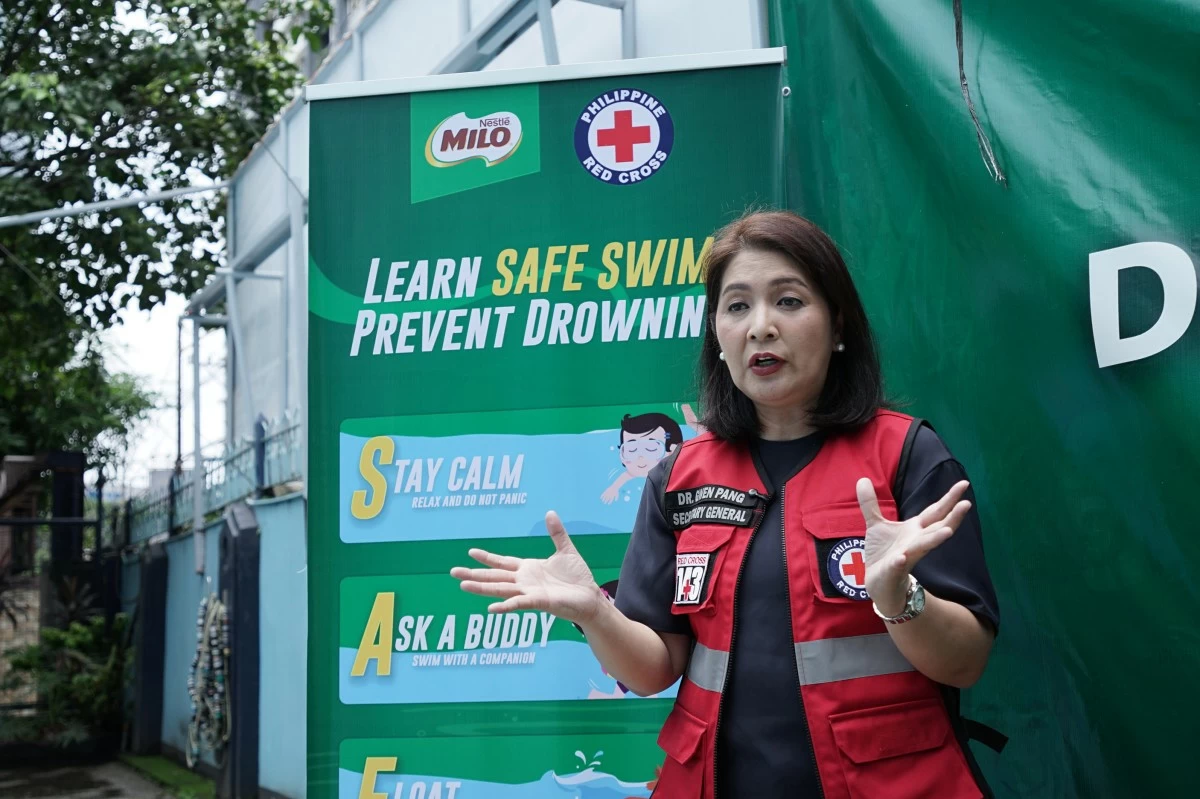
Dr. Gwendolyn Pang explaining the SAFE swim method.
“Drowning continues to be one of the leading causes of death among children in the Philippines. That’s why we knew we had to act and that’s how MILO SAFE Swim came to life,” shared Carlo Sampan, Assistant Vice President for MILO and head of MILO Sports. “At MILO, we’ve always believed that sports build champions not just in the field, but in life. Today, we’re proud to expand that mission into the water with a program that saves lives, builds courage, and strengthens families.”
“Swimming is more than just a sport. Hindi porket competitive swimmer ako, I can save myself and save others in times of emergencies. Hindi ‘yon automatic, natututunan po ‘yan,” former Olympian swimmer and now swimming coach Jenny Guerrero also showed her support, spotlighting the growing momentum behind the campaign.

From Safety to Confidence: Teaching Kids to Swim the SAFE Way

More than just swim lessons, MILO SAFE Swim emphasizes that swimming is an essential life skill, especially in a country prone to typhoons and flooding. Through its practical and accessible sessions, the program empowers families to stay safe and respond effectively to water-related emergencies, whether in pools, natural bodies of water like rivers and lakes, or during calamities.
Certified PRC instructors, together with Bert Lozada Learn-to-Swim (BLSS) coaches, led three core sessions: (1) life-saving skills seminar covering CPR and first aid, (2) introduction to water safety with swim assessments, and (3) hands-on water safety demonstrations.
To make water safety clear and memorable, MILO introduced the SAFE method—their take on the ABCs of swimming:
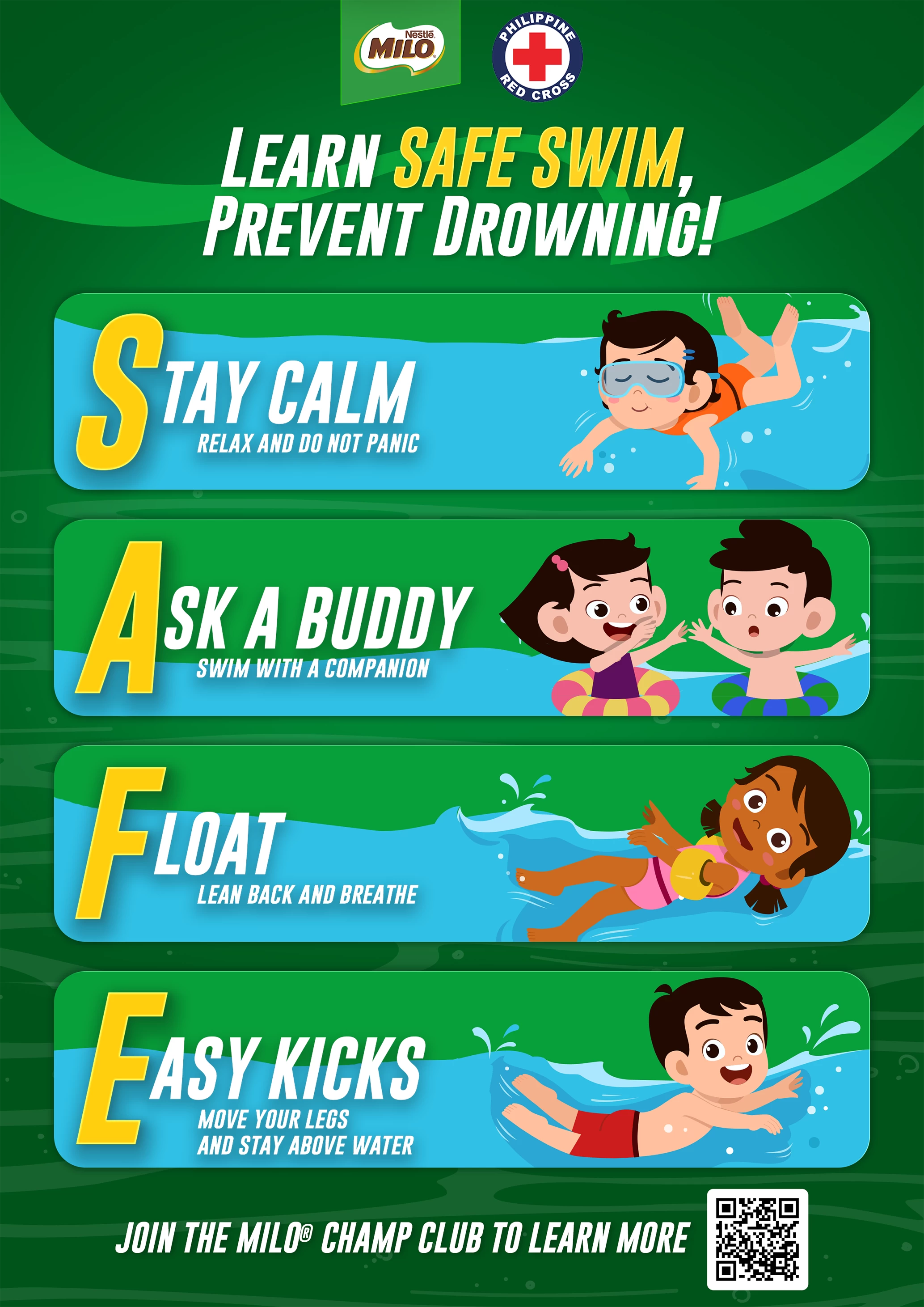
 Official MILO® SAFE Swim Poster
Official MILO® SAFE Swim Poster

These simple yet vital steps are designed to prevent drowning and empower individuals to respond confidently in water emergencies.

A Movement Toward Widespread Water Safety Awareness

MILO SAFE Swim is a long-term advocacy that envisions water safety, especially the SAFE method, as second nature as ‘duck, cover, and hold’ in earthquake drills.
By reaching communities nationwide, the program aspires to make swimming not just a recreational activity but a life-saving skill, critical in a country like the Philippines where water-related emergencies are common.
To learn more about MILO SAFE Swim and its upcoming legs, visit MILO Philippines on Facebook and join the MILO Champ Club.
ADVERTISEMENT
.most-popular .layout-ratio{ padding-bottom: 79.13%; } @media (min-width: 768px) and (max-width: 1024px) { .widget-title { font-size: 15px !important; } }

{{ articles_filter_1561_widget.title }}

.most-popular .layout-ratio{ padding-bottom: 79.13%; } @media (min-width: 768px) and (max-width: 1024px) { .widget-title { font-size: 15px !important; } }

{{ articles_filter_1562_widget.title }}

.most-popular .layout-ratio{ padding-bottom: 79.13%; } @media (min-width: 768px) and (max-width: 1024px) { .widget-title { font-size: 15px !important; } }

{{ articles_filter_1563_widget.title }}

{{ articles_filter_1564_widget.title }}

.mb-article-details { position: relative; } .mb-article-details .article-body-preview, .mb-article-details .article-body-summary{ font-size: 17px; line-height: 30px; font-family: "Libre Caslon Text", serif; color: #000; } .mb-article-details .article-body-preview iframe , .mb-article-details .article-body-summary iframe{ width: 100%; margin: auto; } .read-more-background { background: linear-gradient(180deg, color(display-p3 1.000 1.000 1.000 / 0) 13.75%, color(display-p3 1.000 1.000 1.000 / 0.8) 30.79%, color(display-p3 1.000 1.000 1.000) 72.5%); position: absolute; height: 200px; width: 100%; bottom: 0; display: flex; justify-content: center; align-items: center; padding: 0; } .read-more-background a{ color: #000; } .read-more-btn { padding: 17px 45px; font-family: Inter; font-weight: 700; font-size: 18px; line-height: 16px; text-align: center; vertical-align: middle; border: 1px solid black; background-color: white; } .hidden { display: none; }
function initializeAllSwipers() { // Get all hidden inputs with cms_article_id document.querySelectorAll('[id^="cms_article_id_"]').forEach(function (input) { const cmsArticleId = input.value; const articleSelector = '#article-' + cmsArticleId + ' .body_images'; const swiperElement = document.querySelector(articleSelector); if (swiperElement && !swiperElement.classList.contains('swiper-initialized')) { new Swiper(articleSelector, { loop: true, pagination: false, navigation: { nextEl: '#article-' + cmsArticleId + ' .swiper-button-next', prevEl: '#article-' + cmsArticleId + ' .swiper-button-prev', }, }); } }); } setTimeout(initializeAllSwipers, 3000); const intersectionObserver = new IntersectionObserver( (entries) => { entries.forEach((entry) => { if (entry.isIntersecting) { const newUrl = entry.target.getAttribute("data-url"); if (newUrl) { history.pushState(null, null, newUrl); let article = entry.target; // Extract metadata const author = article.querySelector('.author-section').textContent.replace('By', '').trim(); const section = article.querySelector('.section-info ').textContent.replace(' ', ' '); const title = article.querySelector('.article-title h1').textContent; // Parse URL for Chartbeat path format const parsedUrl = new URL(newUrl, window.location.origin); const cleanUrl = parsedUrl.host + parsedUrl.pathname; // Update Chartbeat configuration if (typeof window._sf_async_config !== 'undefined') { window._sf_async_config.path = cleanUrl; window._sf_async_config.sections = section; window._sf_async_config.authors = author; } // Track virtual page view with Chartbeat if (typeof pSUPERFLY !== 'undefined' && typeof pSUPERFLY.virtualPage === 'function') { try { pSUPERFLY.virtualPage({ path: cleanUrl, title: title, sections: section, authors: author }); } catch (error) { console.error('ping error', error); } } // Optional: Update document title if (title && title !== document.title) { document.title = title; } } } }); }, { threshold: 0.1 } ); function showArticleBody(button) { const article = button.closest("article"); const summary = article.querySelector(".article-body-summary"); const body = article.querySelector(".article-body-preview"); const readMoreSection = article.querySelector(".read-more-background"); // Hide summary and read-more section summary.style.display = "none"; readMoreSection.style.display = "none"; // Show the full article body body.classList.remove("hidden"); } document.addEventListener("DOMContentLoaded", () => { let loadCount = 0; // Track how many times articles are loaded const offset = [1, 2, 3, 4, 5, 6, 7, 8, 9, 10]; // Offset values const currentUrl = window.location.pathname.substring(1); let isLoading = false; // Prevent multiple calls if (!currentUrl) { console.log("Current URL is invalid."); return; } const sentinel = document.getElementById("load-more-sentinel"); if (!sentinel) { console.log("Sentinel element not found."); return; } function isSentinelVisible() { const rect = sentinel.getBoundingClientRect(); return ( rect.top < window.innerHeight && rect.bottom >= 0 ); } function onScroll() { if (isLoading) return; if (isSentinelVisible()) { if (loadCount >= offset.length) { console.log("Maximum load attempts reached."); window.removeEventListener("scroll", onScroll); return; } isLoading = true; const currentOffset = offset[loadCount]; window.loadMoreItems().then(() => { let article = document.querySelector('#widget_1690 > div:nth-last-of-type(2) article'); intersectionObserver.observe(article) loadCount++; }).catch(error => { console.error("Error loading more items:", error); }).finally(() => { isLoading = false; }); } } window.addEventListener("scroll", onScroll); });

Sign up by email to receive news.