







MBHTE official slams COA probe of Iqbal
Published Aug 28, 2025 01:47 pm


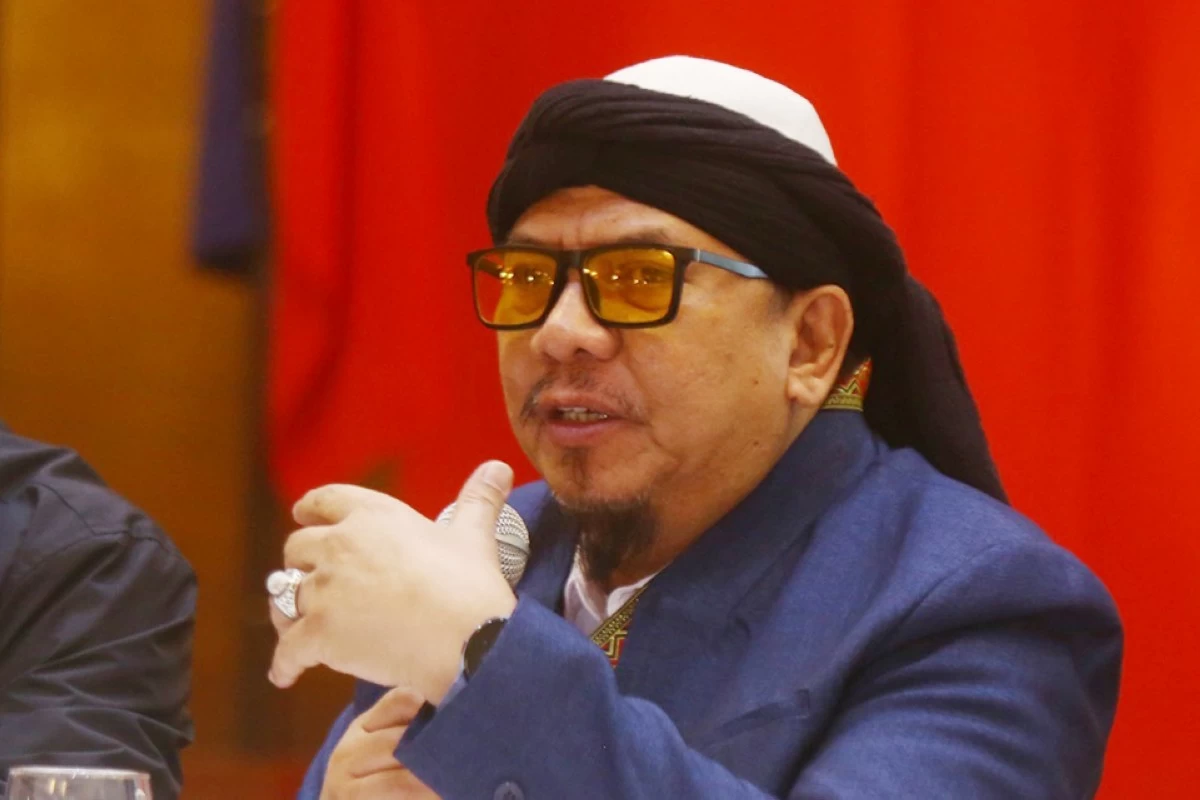
SALIK
DAVAO CITY – An official of the Ministry on Basic Higher and Technical Education (MBHTE) has branded the Commission on Audit (COA) move to investigate alleged anomalies in the agency as political sabotage.
Abdullah Salik Jr., MBHTE director general for basic education, believes that the recent COA investigation into alleged anomalies involving MBHTE chief Mohagher Iqbal is just a revival of old tactics designed to undermine the legitimacy and credibility of the Bangsamoro leadership.
Salik said the allegations aimed to discredit the Bangsamoro leadership are neither new nor surprising.
“Historically, whenever the Bangsamoro movement seeks to assert its rights or challenge unfulfilled promises, there is an ensuing attempt to undermine its leaders,” he said.
The COA investigation, Salik said, should not be viewed solely as an issue of alleged misconduct.
Instead, it must be recognized as part of a persistent political strategy aimed at destabilizing and undermining the Bangsamoro’s pursuit of genuine self-governance, he said.
In a letter addressed to BARMM interim Chief Minister Abdulraof Macacua dated Aug. 11, the Commission on Audit (COA) stated in a letter that they received formal complaints filed against Iqbal about the alleged anomalous disbursements of P1.77-billion payment made by the MBHTE in a single day and P449.2-million payment issued to a single supplier under questionable circumstances.
Cordoba said that the initial review by the relevant COA offices indicates that the complaints merit the conduct of a special audit.
BARMM records show that the MBHTE has the largest budget allocation with over P36 billion or nearly one-third of the regional government’s spending.
The Bangsamoro government welcomed the COA probe, saying that they will fully cooperate with the investigation.
Salik insisted that the issue must be analyzed within a broader political and historical framework since it coincides with a period of heightened tensions between the government and the Moro Islamic Liberation Front (MILF).
Salik was referring to the recent issues surrounding the implementation of the commitments under the Comprehensive Agreement on the Bangsamoro (CAB).
The MILF temporarily suspended last July the fourth and final phase of the decommissioning process for its combatants and weapons.
In a Central Committee resolution issued on July 19 and released on July 26, the MILF insisted that the suspension of decommissioning process will take effect until there is substantial compliance by the (Philippine government) in the other tracks of normalization, including the provision of socio-economic package as agreed upon by the GPH and MILF Peace Implementing Panels to the 26,145 (decommissioned) combatants.
A month later, the MILF barred commanders of its armed wing, the Bangsamoro Islamic Armed Forces (BIAF), from participating in any decommissioning or normalization activities organized by the national government and the Office of the Presidential Adviser on Peace, Reconciliation, and Unity (OPAPRU) without prior written approval or authorization.
Salik said the alleged failure of the government to respect the agreed upon composition of the Bangsamoro Transition Authority (BTA), which was meant to give the MILF control over the Bangsamoro Autonomous Region in Muslim Mindanao (BARMM), has exposed its lack of sincerity.
“Now, the narrative linking MILF leaders to corruption allegations appears to be a revival of old tactics designed to undermine the legitimacy and credibility of the Bangsamoro leadership.”
Salik said that they have seen similar strategies before as he cited that the 1996 Final Peace Agreement with the Moro National Liberation Front (MNLF) was marred by partial implementation of the peace deal.
According to him, MNLF Chairman Nur Misuari was strategically discredited through corruption charges intended to turn public opinion against him and the movement.
Salik claimed that the problems that the Bangsamoro region are currently facing are a deliberate sabotage.
He believes that a similar pattern has now emerged, adding that the narrative is crafted to portray the MILF-led BARMM as corrupt and incapable. “Thus, undermining the resolve of the Bangsamoro people and their aspirations for genuine self-determination.”
Salik said that the real strength of the Bangsamoro lies in its ability to navigate these turbulent waters, overcoming both external threats and internal divisions, to realize the true promise of self-determination.