ADVERTISEMENT

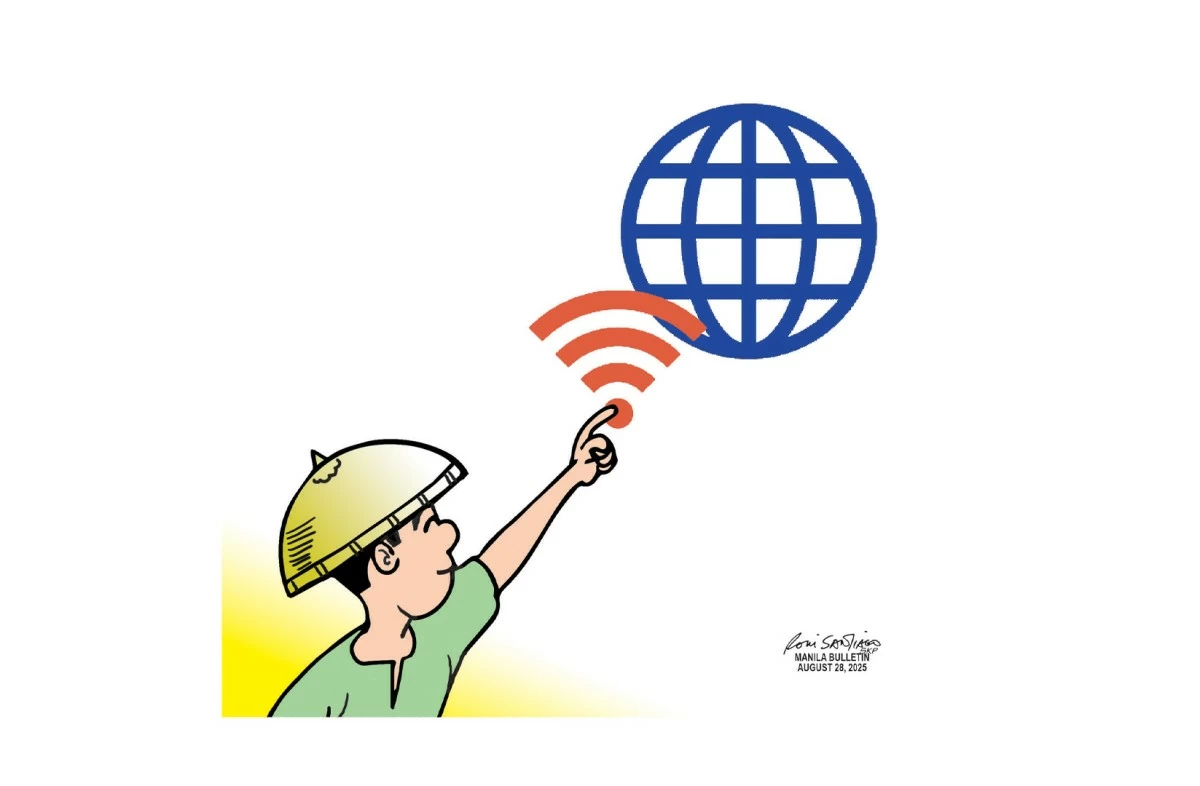
Konektadong Pinoy Act: Bridging the digital divide for every Filipino

Published Aug 28, 2025 12:01 am  |  Updated Aug 27, 2025 05:10 pm
In a nation of over 7,000 islands, where progress is often hampered by geography, the newly enacted Konektadong Pinoy Act offers a much-needed leap toward digital inclusion. Lapsing into law on Aug. 23, 2025, the measure—also known as the Open Access in Data Transmission Act—is a landmark reform that promises to transform how Filipinos connect, learn, do business, and participate in governance. It is not just about faster internet—it is about empowering an entire nation.
For decades, the Philippines has grappled with one of the slowest and most expensive internet services in Southeast Asia. Despite the government's Free Wi-Fi for All initiative and the establishment of the Department of Information and Communications Technology (DICT), connectivity has remained uneven, especially in far-flung and underserved areas.
The Konektadong Pinoy Act removes the outdated requirement for data transmission providers to secure a congressional franchise—long seen as a major barrier to entry for new players. This single provision alone opens the door for small and community-based Internet Service Providers (ISPs) to compete with larger telcos. Infrastructure sharing and streamlined permitting processes, both key features of the law, are expected to further drive down costs, accelerate service rollouts, and encourage innovation in the sector.
Senator Imee Marcos, the principal author of the law, captured its human impact: “No student will be left behind in class, no OFW call will be cut, and no business will be left behind just because of poor internet.” The law also mandates priority infrastructure near schools and guarantees student discounts—both of which reflect a commitment to digital equity in education.
The most compelling case for the law’s necessity was laid out by Manila Bulletin columnist and technology advocate Mon Ibrahim, who called the Act “not just timely but an absolute necessity for the nation’s future.” In his column published early this year, Ibrahim highlighted how the lack of connectivity has sidelined millions from economic opportunities, quality education, and digital innovation. “In an AI economy, digital connectivity is no longer a luxury—it’s a lifeline,” he wrote.
Indeed, the law's potential impact on micro, small, and medium enterprises (MSMEs), particularly outside Metro Manila, cannot be overstated. With affordable internet, these businesses can finally tap into e-commerce, adopt digital tools, and compete more effectively in a fast-moving economy. Sectors such as agriculture and tourism, often left out due to weak connectivity, can now join the digital mainstream through innovations like precision farming and virtual travel platforms.
Equally important is the law’s role in laying the groundwork for the country’s digital transformation. Stable internet access is foundational for artificial intelligence, cloud computing, and big data technologies to flourish—technologies that will define the next generation of development. From AI-powered diagnostics in rural clinics to smart traffic systems in urban areas, these advancements all hinge on one thing: reliable, affordable connectivity.
While telco giants have raised concerns about regulatory fairness and cybersecurity, the law provides for proper safeguards, including oversight mechanisms, performance audits, and protections against foreign government control. With proper implementation, these fears can be addressed without compromising the law’s spirit of openness and inclusion.
The Konektadong Pinoy Act is not just about improving download speeds—it’s about building a future-ready, digitally empowered Philippines. In bridging the digital divide, it brings us closer to a vision where every Filipino, regardless of location or income, can participate in and benefit from the digital revolution.
It’s a long-overdue connection—one that Filipinos deserve.

Related Tags

Konektadong Pinoy Act
ADVERTISEMENT
.most-popular .layout-ratio{ padding-bottom: 79.13%; } @media (min-width: 768px) and (max-width: 1024px) { .widget-title { font-size: 15px !important; } }

{{ articles_filter_1561_widget.title }}

.most-popular .layout-ratio{ padding-bottom: 79.13%; } @media (min-width: 768px) and (max-width: 1024px) { .widget-title { font-size: 15px !important; } }

{{ articles_filter_1562_widget.title }}

.most-popular .layout-ratio{ padding-bottom: 79.13%; } @media (min-width: 768px) and (max-width: 1024px) { .widget-title { font-size: 15px !important; } }

{{ articles_filter_1563_widget.title }}

{{ articles_filter_1564_widget.title }}

.mb-article-details { position: relative; } .mb-article-details .article-body-preview, .mb-article-details .article-body-summary{ font-size: 17px; line-height: 30px; font-family: "Libre Caslon Text", serif; color: #000; } .mb-article-details .article-body-preview iframe , .mb-article-details .article-body-summary iframe{ width: 100%; margin: auto; } .read-more-background { background: linear-gradient(180deg, color(display-p3 1.000 1.000 1.000 / 0) 13.75%, color(display-p3 1.000 1.000 1.000 / 0.8) 30.79%, color(display-p3 1.000 1.000 1.000) 72.5%); position: absolute; height: 200px; width: 100%; bottom: 0; display: flex; justify-content: center; align-items: center; padding: 0; } .read-more-background a{ color: #000; } .read-more-btn { padding: 17px 45px; font-family: Inter; font-weight: 700; font-size: 18px; line-height: 16px; text-align: center; vertical-align: middle; border: 1px solid black; background-color: white; } .hidden { display: none; }
function initializeAllSwipers() { // Get all hidden inputs with cms_article_id document.querySelectorAll('[id^="cms_article_id_"]').forEach(function (input) { const cmsArticleId = input.value; const articleSelector = '#article-' + cmsArticleId + ' .body_images'; const swiperElement = document.querySelector(articleSelector); if (swiperElement && !swiperElement.classList.contains('swiper-initialized')) { new Swiper(articleSelector, { loop: true, pagination: false, navigation: { nextEl: '#article-' + cmsArticleId + ' .swiper-button-next', prevEl: '#article-' + cmsArticleId + ' .swiper-button-prev', }, }); } }); } setTimeout(initializeAllSwipers, 3000); const intersectionObserver = new IntersectionObserver( (entries) => { entries.forEach((entry) => { if (entry.isIntersecting) { const newUrl = entry.target.getAttribute("data-url"); if (newUrl) { history.pushState(null, null, newUrl); let article = entry.target; // Extract metadata const author = article.querySelector('.author-section').textContent.replace('By', '').trim(); const section = article.querySelector('.section-info ').textContent.replace(' ', ' '); const title = article.querySelector('.article-title h1').textContent; // Parse URL for Chartbeat path format const parsedUrl = new URL(newUrl, window.location.origin); const cleanUrl = parsedUrl.host + parsedUrl.pathname; // Update Chartbeat configuration if (typeof window._sf_async_config !== 'undefined') { window._sf_async_config.path = cleanUrl; window._sf_async_config.sections = section; window._sf_async_config.authors = author; } // Track virtual page view with Chartbeat if (typeof pSUPERFLY !== 'undefined' && typeof pSUPERFLY.virtualPage === 'function') { try { pSUPERFLY.virtualPage({ path: cleanUrl, title: title, sections: section, authors: author }); } catch (error) { console.error('ping error', error); } } // Optional: Update document title if (title && title !== document.title) { document.title = title; } } } }); }, { threshold: 0.1 } ); function showArticleBody(button) { const article = button.closest("article"); const summary = article.querySelector(".article-body-summary"); const body = article.querySelector(".article-body-preview"); const readMoreSection = article.querySelector(".read-more-background"); // Hide summary and read-more section summary.style.display = "none"; readMoreSection.style.display = "none"; // Show the full article body body.classList.remove("hidden"); } document.addEventListener("DOMContentLoaded", () => { let loadCount = 0; // Track how many times articles are loaded const offset = [1, 2, 3, 4, 5, 6, 7, 8, 9, 10]; // Offset values const currentUrl = window.location.pathname.substring(1); let isLoading = false; // Prevent multiple calls if (!currentUrl) { console.log("Current URL is invalid."); return; } const sentinel = document.getElementById("load-more-sentinel"); if (!sentinel) { console.log("Sentinel element not found."); return; } function isSentinelVisible() { const rect = sentinel.getBoundingClientRect(); return ( rect.top < window.innerHeight && rect.bottom >= 0 ); } function onScroll() { if (isLoading) return; if (isSentinelVisible()) { if (loadCount >= offset.length) { console.log("Maximum load attempts reached."); window.removeEventListener("scroll", onScroll); return; } isLoading = true; const currentOffset = offset[loadCount]; window.loadMoreItems().then(() => { let article = document.querySelector('#widget_1690 > div:nth-last-of-type(2) article'); intersectionObserver.observe(article) loadCount++; }).catch(error => { console.error("Error loading more items:", error); }).finally(() => { isLoading = false; }); } } window.addEventListener("scroll", onScroll); });

Sign up by email to receive news.