








At A Glance
- While the Bangko Sentral ng Pilipinas (BSP) has signaled one more reduction by year-end following the widely expected 25-basis-point cut to five percent on August 28, the central bank chief said the next move could mark the end of the easing cycle.
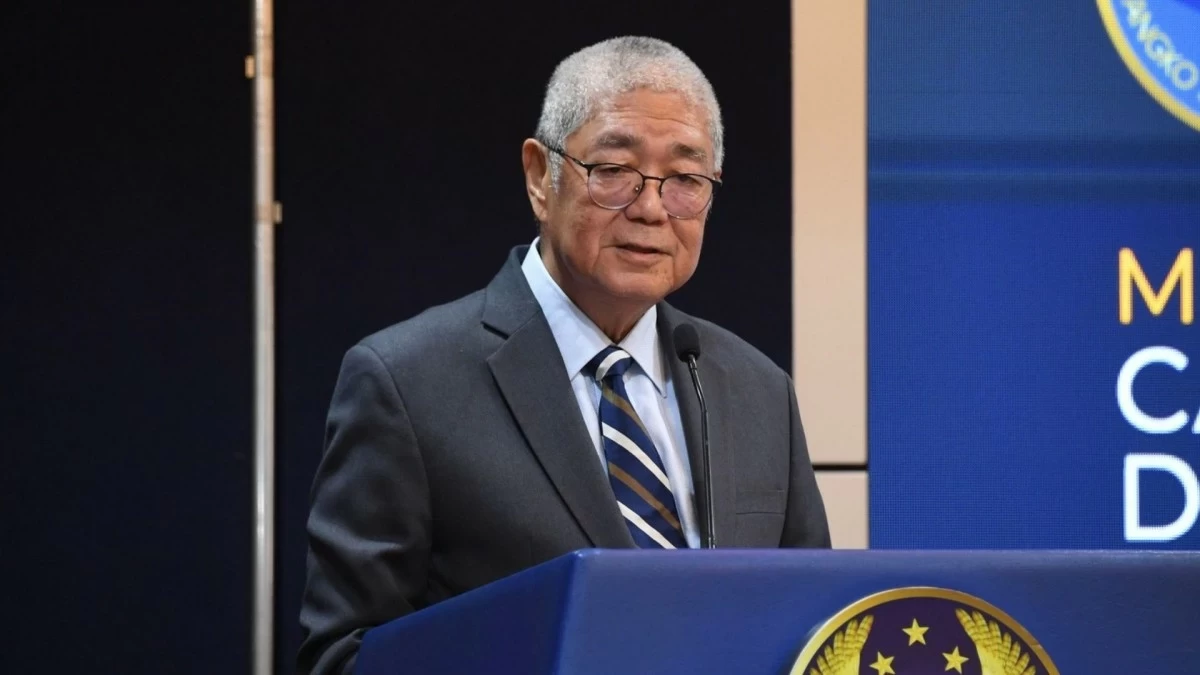
While the Bangko Sentral ng Pilipinas (BSP) has signaled one more interest rate cut by year-end following the widely expected 25-basis-point (bp) reduction on Thursday, Aug. 28, the central bank chief said the next move could mark the end of the easing cycle.
“With the data we’re looking at right now, yes, it would be [the end of the easing cycle],” BSP Governor Eli M. Remolona Jr. said told a press briefing.
“I think we have space for one more cut. If the data develops the way we think it will develop, then maybe one more cut this year,” Remolona said, noting the possibility, not the likelihood, of such a move.
Meanwhile, Remolona added that ending the loosening cycle after the anticipated cut after the latest one is the “likely evolution of the policy.” However, “if something bad happens to output that suggests there's a lack of demand, then we may cut some more.”
He cautioned that conditions may shift, noting that “the data can change, the sweet spot can move, so we always have to look at the data.”
Citing steady domestic demand coupled with a favorable inflation outlook, the BSP has delivered its widely expected third interest rate cut of 2025, lowering the key policy rate by a quarter of a point to five percent.
Such a move was influenced by the policy-setting Monetary Board’s (MB) observation that ”domestic demand has held firm.” Economic growth stood at 5.5 percent in the second quarter of the year, slightly faster than the previous quarter’s 5.4 percent.
“Based on the latest data, I think this puts us at our sweet spot for both inflation and output. The projected inflation rate over the next year or so is where we want it to be. Output is moving to where we think our capacity is,” Remolona said.
He further noted that the current policy rate is within the Goldilocks level—neither too high nor too low. “I would characterize this as still dovish, but slightly less so than before in terms of forward guidance.”
“However, the impact of United States (US) policies on global trade and investment continues to weigh on global economic activity. This could temper the outlook for the Philippine economy,” Remolona said.
Zeno Ronald R. Abenoja, BSP deputy governor for the monetary and economics sector (MES), said the series of rate cuts since August 2024 makes the lower end of the downscaled 5.5- to 6.5-percent gross domestic product (GDP) growth target for this year attainable.
Abenoja added that the policy effects could sustain momentum and keep growth on track with government targets over the next two years. To recall, the country’s economic managers also tweaked downwards the annual growth target range for 2026 to 2028 to six to seven percent, from the previously more ambitious six to eight percent.
To date, the MB has slashed the key interest rate by a total of 1.5 percentage points (ppt) from 6.5 percent before the easing cycle began in August last year. For this year alone, the BSP has reduced the policy rate by 75 bps across three consecutive policy meetings in April, June, and August.
Similarly, the central bank also reduced the overnight deposit rate to 4.5 percent from 4.75 percent previously, and the lending rate to 5.5 percent from 5.75 percent previously.
“Inflation expectations remain well-anchored. Meanwhile, possible electricity rate adjustments and higher rice tariffs could raise inflationary pressures over the policy horizon,” Remolona said.
According to the BSP, its inflation outlook remains “broadly unchanged,” with forecasts at 1.7 percent for 2025, 3.3 percent for 2026, and 3.4 percent for 2027.
Abenoja said that the impact of tariffs has already been factored into the BSP’s inflation outlook and latest policy decision. He noted that weaker global demand has helped ease price pressures, keeping inflation benign this year and within target over the next two years.
“Emerging risks will continue to require close monitoring,” Remolona said, stressing that monetary policy will be adjusted in line with shifts in price pressures and economic growth.