






Manila Bulletin
 Philippines
National
This rare snake is the biggest threat to divers looking for 'sabungeros' remains
Philippines
National
This rare snake is the biggest threat to divers looking for 'sabungeros' remains
Philippines
National
This rare snake is the biggest threat to divers looking for 'sabungeros' remains
This rare snake is the biggest threat to divers looking for 'sabungeros' remains
Published Aug 27, 2025 05:10 pm


At A Glance
- A rare species of venomous sea snake is arguably the biggest threat being faced by the Philippine Coast Guard (PCG) divers who are retrieving the remains of alleged missing "sabungeros" (cockfighting enthusiasts) at the bottom of Taal Lake.
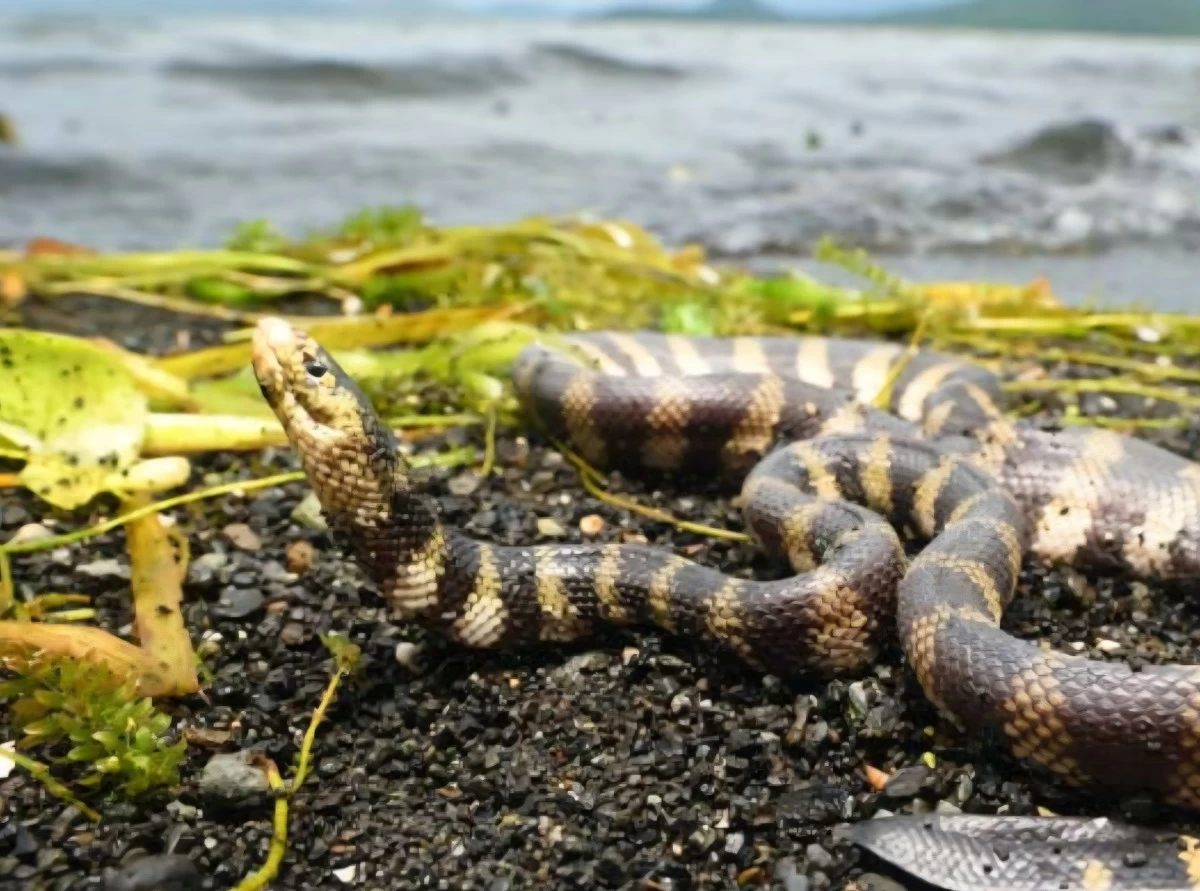
Taal Sea Snake (EsquireMag.ph)
A rare species of venomous sea snake is arguably the biggest threat being faced by the Philippine Coast Guard (PCG) divers who are retrieving the remains of alleged missing "sabungeros" (cockfighting enthusiasts) at the bottom of Taal Lake.
This was attested to by Department of Justice (DOJ) Assistant Secretary Eliseo Cruz and
PCG Commodore Geronimo Tuvilla on Wednesday afternoon, Aug. 27 during House Committee on Human Rights hearing on the case.
Both Cruz and Tuvilla also cited the medical dangers posed by prolonged exposure to the waters itself.
This notwithstanding, Cruz says the technical divers involved are "continuing its relentless search and retrieval operations despite the challenges they are facing".
"During our previous briefing, they reported that their technical divers are already suffering from medical conditions that is skin irritation, ear infection, diarrhea, coughs and colds due to the long-term exposure to the murky waters of Taal Lake," the DOJ official said.
"Noteworthy to mention that our PCG personnel are also facing threat from the venomous Taal water snake, which our country has no anti-venom for according to the Research Institute for Tropical Medicine (RITM)," he added.
Tuvilla echoed Cruz's concerns over the divers' predicament.
"Based on the water quality monitoring conducted on 23 July 2025, the lake exhibits fecal coliform levels of 4,900 mpn per 100 liter arsenic levels, which is high alkalinity ranging from ph of 8.702, all exceeding the DENR (Department of Environment and Natural Resources) standards for safe water use," he said.
"Prolonged exposure to such conditions greatly increases the likelihood for our divers contracting respiratory, gastrointestinal, and skin-related illnesses," noted Tuvilla.
"Compounding this risk is the presence of the venomous aquatic life, particularly the duhol matapang or the Taal Sea Snake whose venom possesses a severe threat to human life. It is stressed that no anti-venom for this species is currently available in the Philippines, leaving our divers acutely vulnerable in the event of a bite," Tuvilla said.
Also known as hydrophis semperi, the Taal Sea Snake can only be found on the island of Luzon. It is noted for being one of only two known species of sea snakes that are found almost-exclusively in freshwater.
In his report to the House panel, Cruz--citing figures from the Philippine National Police (PNP) forensic group--said 401 pieces of "human skeletal remains" have been recovered from 17 different locations in the lake, as reported by the PCG.
Cruz said the recovery period was "from July 10 [2025] up to present".
"The recovered sacks or mesh nets containing the human skeletal remains are usually tied to or attached to sacks containing sand that serve as sinkers. Each sinker-sand bag is of the size of a 25-kilogram rice sack," he added.