







The last R35 Nissan GT-R rolls off the line
End of the R35, not of the GT-R name
By Inigo Roces
Published Aug 27, 2025 04:14 pm


At A Glance
- Approximately 48,000 units produced over 18-year production run
- Final vehicle to line-off is Premium edition T-Spec finished in Midnight Purple paint
- Nissan committed to reimagining future generation of GT-R
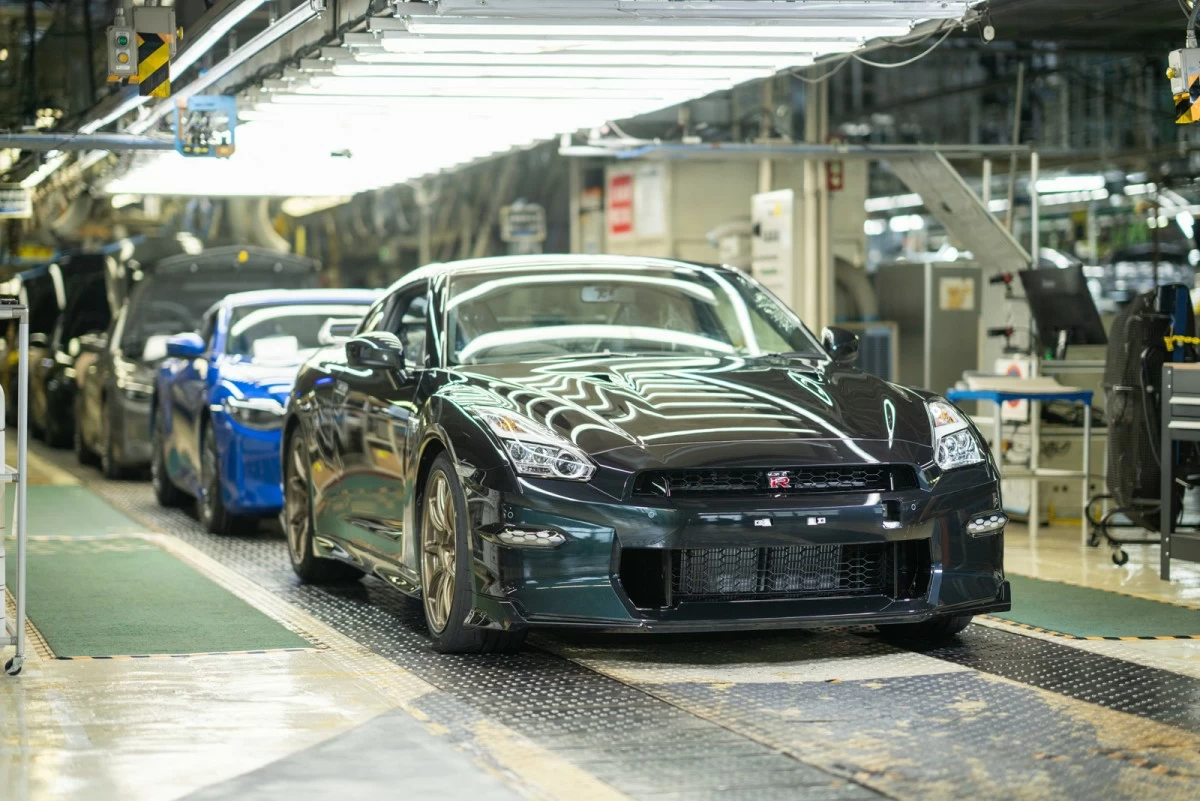
The last R35 Nissan GT-R rolled off the production line, culminating 18 years of the model since its launch in 2007. The R35 GT-R has become a symbol of performance and innovation, captivating automotive enthusiasts and setting benchmarks in the high-performance sports car segment.
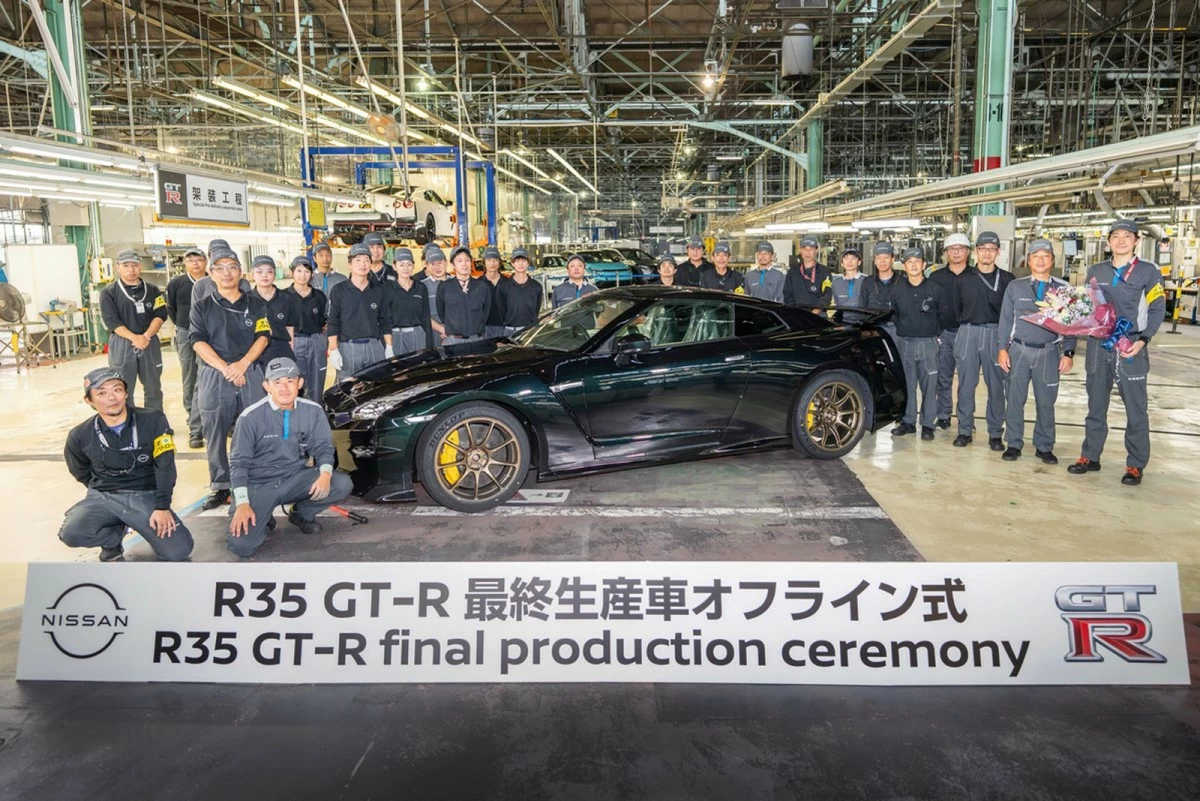
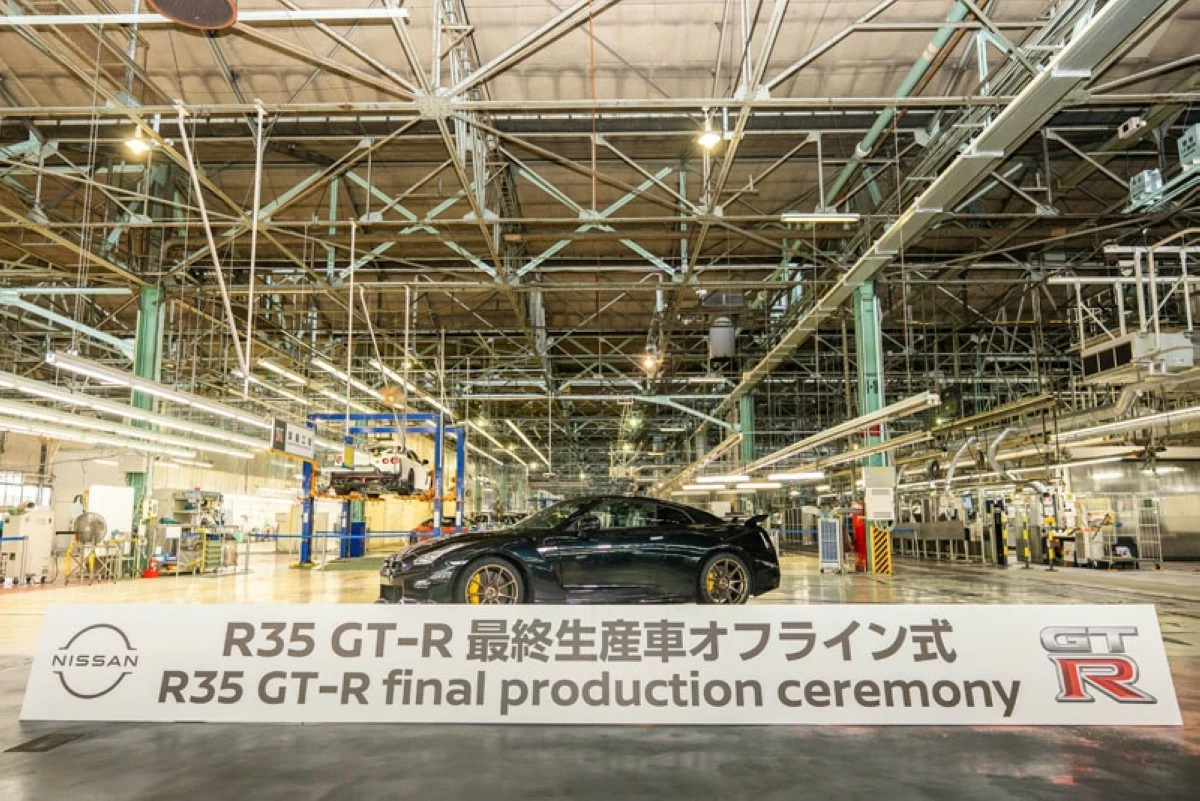
Workers at Nissan’s Tochigi plant, located about 100-km north of Tokyo, gathered to celebrate the extensive legacy of the R35 as the very last unit rolled off the line. In total, approximately 48,000 units were produced and sold over the lifecycle of the model. The final vehicle, a Premium edition T-Spec, finished in Midnight Purple paint, is destined for a customer in Japan.
The R35 GT-R legacy
The R35 GT-R set a new standard as the ultimate Grand Tourer. More than any of its predecessors, Nissan’s planning and engineering team sought to imbue the R35 GT-R with a "multi-performance" character, delivering a true GT ‘Grand Tourer’ with a comfortable ride, high levels of refinement, and benchmark fit and finish, while also enabling the driver to enjoy world-class performance that embodies the "R" in the GT-R namesake, a nod to racing technology.
Rather than the typical product lifecycle involving a major update midlife cycle, the R35 GT-R continually evolved throughout each model year. Depending on the grade, Nissan’s engineers in Japan aimed to unleash either more power or greater levels of control, increased comfort and luxury, or in the case of the GT-R Nismo, breathtaking track-honed performance.
At its heart is the now famous VR38DETT twin-turbo V6 engine, ATTESA ET-S all-wheel-drive system, and innovative aerodynamics. Over the course of its production run, a core team of just nine master craftsman – called Takumi – at Nissan's plant in Yokohama, Japan passionately hand assembled each of the engines installed in the 48,000 units produced. Their names are immortalized on a plaque attached to each engine.
Throughout the course of its life, maximum power rose from 480-Ps at launch, up to 570-Ps from the 2017 model year onwards. Nismo engineers were able to extract even more, adopting GT3 racecar-spec turbochargers as well as high-precision, weight-balanced parts including the piston rings, connecting rods, crankshaft, flywheel, crank pulley and valve springs. The result was faster revs and quicker spooling turbos, delivering up to 600-Ps for GT-R NISMO models.
The R35 GT-R departs having achieved an enviable list of track and motorsports accolades, including five GT500 class and three GT300 class wins in Japan’s Super GT Championship, victory in the 2013 Blancpain GT Series Pro-Am class, a Bathurst 12-hour victory in 2015 and five Super Taikyu Japanese endurance racing series victories.
GT-R Records
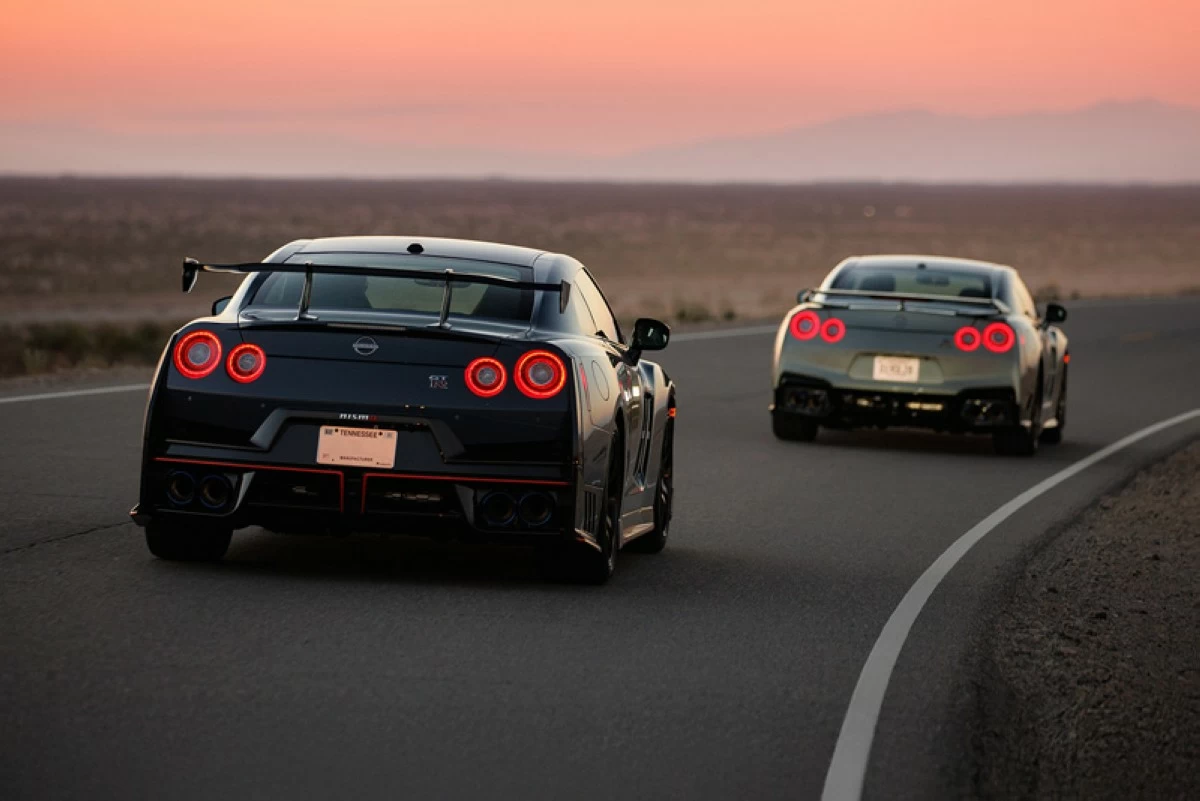
The Nissan GT-R Nismo (left) and the Nissan GT-R T-Spec
Besides motorsports titles, the R35 GT-R also secured various records. In 2007, a production R35 GT-R set a lap time of seven minutes, 38 seconds at the Nurburgring Nordschleife circuit in Germany, one of the fastest laps achieved by a production car despite conditions being slightly damp on two corners. Over repeated tries, the team were able to bring the stock GT-R’s Nurburgring time down to seven minutes and 18 seconds.
In November 2013, Nissan engineers made another run, this time with the GT-R Nismo ahead of its official reveal. Fitted with track options that included aerodynamic tuning, weight- reduction measures, and a uniquely tuned suspension system, they managed to record a blistering 7 minutes 8.679 seconds with Michael Krumm at the wheel.
In 2016, the R35 GT-R set the Guinness World Records title for the fastest-ever drift. At a special event held at Fujairah International Airport, UAE, a specially tuned 2016 R35 GT-R drifted at 304.96 km/hr and 30 degrees angle.
This isn’t goodbye for the GT-R
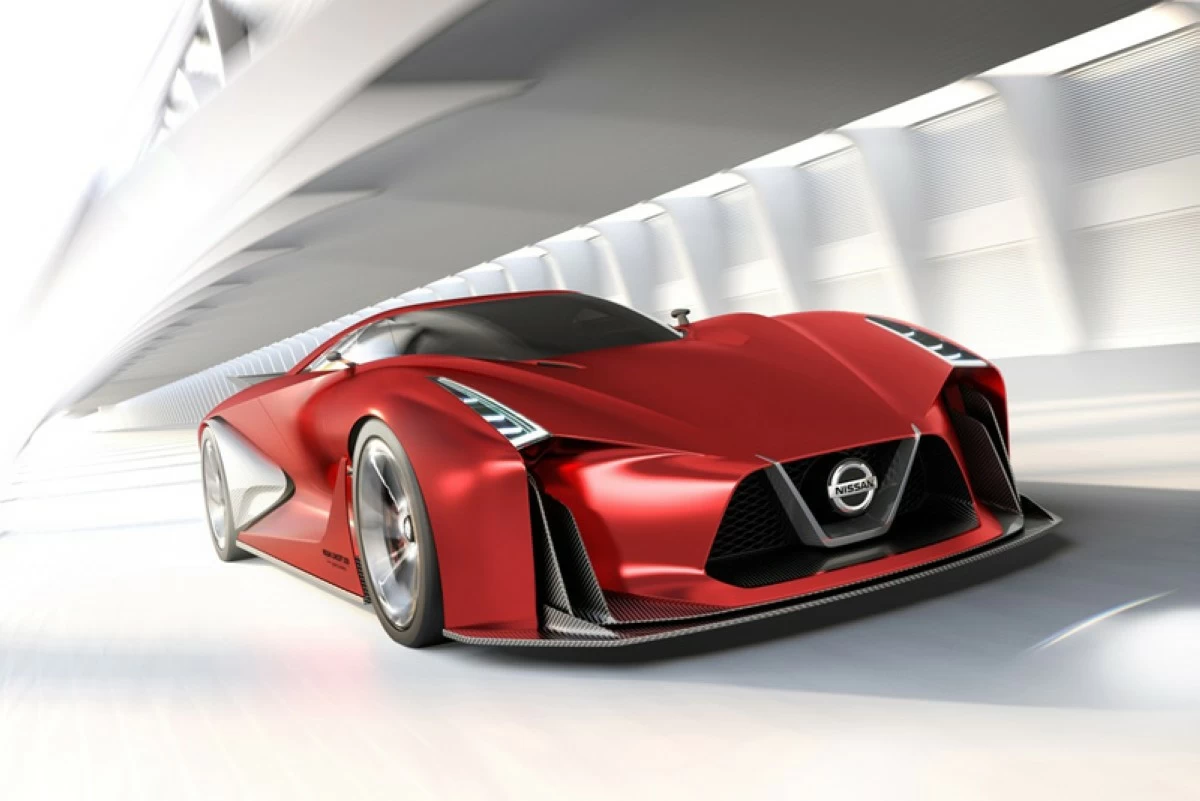
Ivan Espinosa, President and CEO of Nissan said, “After 18 remarkable years, the R35 GT-R has left an enduring mark on automotive history. Its legacy is a testament to the passion of our team and the loyalty of our customers around the globe. Thank you for being part of this extraordinary journey. To the many fans of the GT-R worldwide, I want to tell you this isn’t a goodbye to the GT-R forever, it’s our goal for the GT-R nameplate to one day make a return.”
As we bid farewell to the R35 GT-R, Nissan remains committed to the GT-R nameplate with a vision to reimagine it for a new generation. Learnings from the R35 will be integral to the next-generation GT-R, ensuring its legacy evolves while raising the performance benchmark.
Espinosa said “We understand the expectations are high, the GT-R badge is not something that can be applied to just any vehicle; it is reserved for something truly special and the R35 set the bar high. So, all I can ask is for your patience. While we don’t have a precise plan finalized today, the GT-R will evolve and reemerge in the future.”