







Stop selling the future
Published Aug 27, 2025 12:05 am
|
Updated Aug 26, 2025 05:15 pm


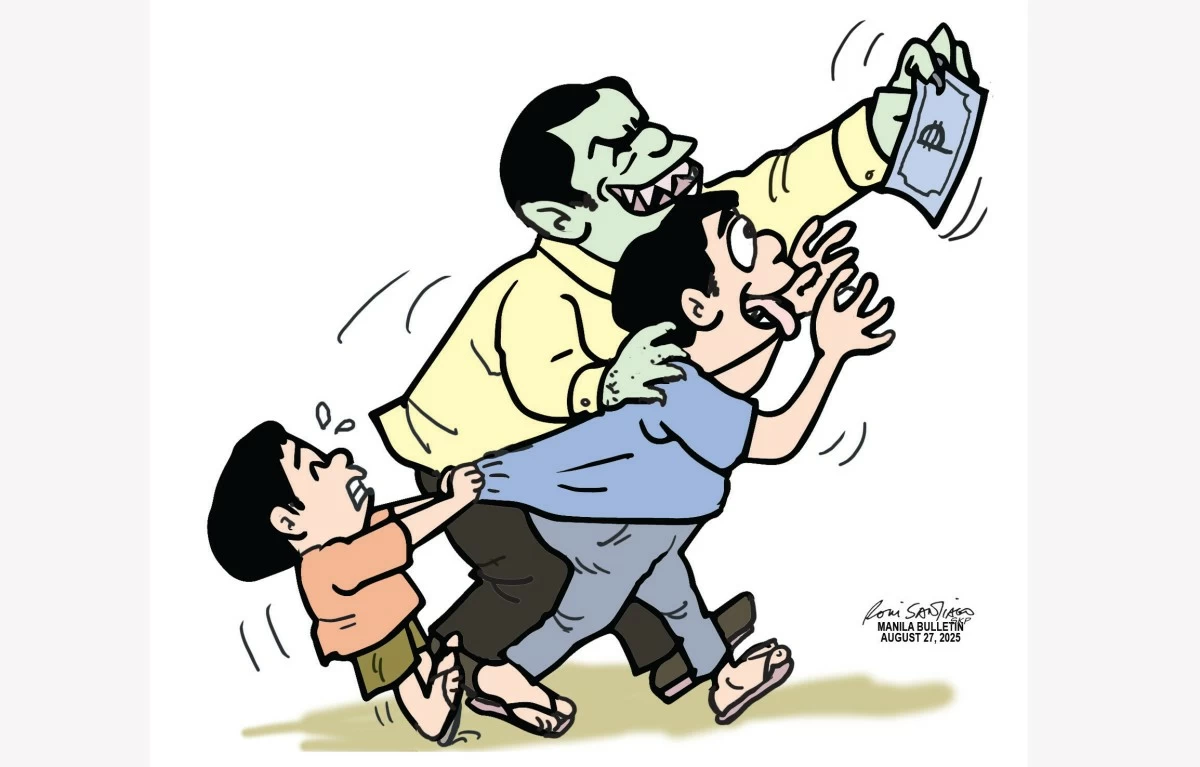
When a road collapses in the rain, or a flood devastates a community that should have been protected by a billion-peso flood control project, the question is no longer whether corruption is involved—it is how many lives paid the price.
For decades, flood control projects in the country have served as convenient vessels for corruption. Masked as public service, these projects become money pits—endless cycles of substandard infrastructure, inflated costs, brazen kickbacks, and at worst ghost projects. Investigations are launched, exposés aired, and occasionally, a conviction follows. But the rot remains.
Why?
Because corruption is not just an act committed by a few; it is a cycle sustained by many. And it begins either with our innocent or complicit vote.
Every election cycle, the pattern is painfully familiar: candidates hand out cash, rice, or promises, and many voters accept these. Justifications for doing so are numerous. But the painful truth is: a vote sold to the corrupt is a future surrendered. When we accept money in exchange for our vote, we are complicit in the betrayal that follows. We hand over power to people whose loyalty lies not with the public good but with profit.
The electorate must understand its power and its responsibility. Corrupt politicians thrive because voters put them there. If the same faces keep returning to power despite scandal after scandal, the blame lies not only with the corrupt, but with those who keep enabling them.
But we must be thankful, we still have leaders who prove that governance can be clean, principled, and effective. The advocacies for good governance of Sen. Panfilo Lacson, Batangas Rep. Leandro Leviste, Pasig City Mayor Vico Sotto, and Baguio City Mayor Benjamin Magalong, to name a few, must be supported if we are to rise as a nation.
They may not be perfect leaders, but they prove that principled leadership is possible. They show that integrity does not mean inaction, and that reform is necessary.
The private sector, too, must stop treating the government as a business partner in plunder. Every overpriced flood control project has a contractor, a supplier, a financier. Many in the private sector see corruption as a cost of doing business, a shortcut to permits, a fast lane to profit. But what is profit when roads collapse, when communities drown, when cities become unlivable? The private sector must commit to ethical engagement. Transparency in bidding, refusal to engage in bribery, and cooperation with whistleblowing mechanisms are necessities for survival in a functioning democracy.
And the government? It must do more than posturing. Corruption should not only be addressed when the media cameras are rolling or when foreign aid is at risk. Accountability mechanisms must be relentless and permanent—independent auditing, strong whistleblower protection, transparent procurement, and real-time public access to infrastructure data. Punishment must be swift, fair, and public to serve as a deterrent.
But even the best systems and the best leadership may fail without a vigilant citizenry.
Real change will not come from one administration, one investigation, or one conviction. It must come from a shift in public culture—a collective refusal to tolerate corruption. The first step? Stop voting for the corrupt. Stop accepting money from those who only seek to buy silence and submission. Remember that a vote is not a favor to a politician, it is a mandate to serve. And when that mandate is abused, it is our duty to revoke it.
We must stop selling the future for a few hundred pesos. The price we pay is always far greater—lives lost, futures drowned, and generations betrayed.
But it ends when we decide it ends.
Let’s act decisively and with conviction.