ADVERTISEMENT

Planting seeds of hope: DepEd highlights importance of collaboration to address classroom shortage

From malls to mountains, Filipinos can now help close the education gap through everyday purchases

Published Aug 27, 2025 05:56 pm
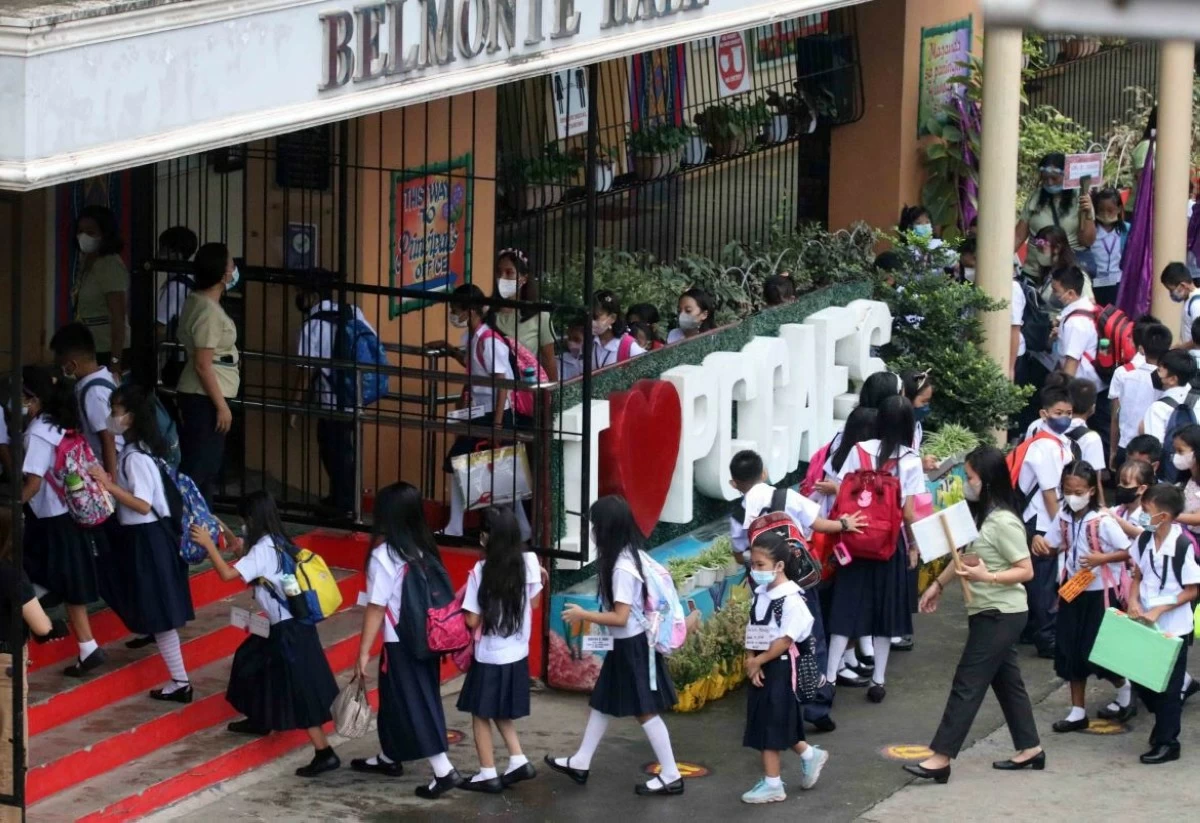
ADDRESSING THE CLASSROOM SHORTAGE. DepEd and social enterprise HOPE partner with leading brands to help close the Philippines’ long-standing classroom gap. (MANILA BULLETIN / file)
The Department of Education (DepEd) is rallying support from both the public and private sectors to help bridge the country’s classroom shortage through a collaboration that enables Filipinos to contribute to school-building efforts with their everyday purchases.
“Let us keep planting these seeds of hope in every space where a child dares to dream,” DepEd Secretary Sonny Angara said in a statement. “Because in Bagong Pilipinas, hope is not something we wait for but something we build together,” he added.
Classrooms of HOPE
DepEd, in partnership with social enterprise HOPE and some of the country’s leading brands, has launched the Generation HOPE program to help ease the Philippines’ classroom shortage.
In line with President Marcos’ call to address the gap in school infrastructure, the partnership brings together BDO, SM, Penshoppe, Grab, Aivee, Carmen’s Best, and Sunnies, with proceeds from their products and services channeled directly into classroom construction nationwide.
DepEd said the initiative complements the government’s classroom-building efforts through public-private partnerships (PPP), ensuring that resources reach the areas that need them most.
Angara emphasized the importance of collaboration in addressing the long-standing shortage.
“Sa tulong ng HOPE at ng ating mga private partners, nais naming patunayan na kapag nagkaisa ang pribado at pampublikong sektor, mas mabilis nating matutupad ang pangarap na walang batang naiwan sa edukasyon (With the help of HOPE and our private partners, we want to prove that when the private and public sectors unite, we can more quickly fulfill the dream of leaving no child behind in education),” he said.
Durable and student-friendly classrooms
Each HOPE classroom measures 7 by 9 meters and is built to withstand harsh weather conditions.
They are equipped with a chalkboard, teacher’s table, wall fans, wide windows for ventilation, a cathedral-style ceiling for cooler airflow, and an indoor toilet—features designed to provide both students and teachers with safe and conducive learning spaces.
HOPE’s expanding impact
Founded in 2012 by philanthropist Nanette Medved-Po, Generation HOPE reinvests 100 percent of its profits from products like Hope in a Bottle and Hope in a Box into classroom construction.
By teaming up with established brands, the initiative aims to scale up its reach and benefit more underserved schools nationwide.
“Filipinos always come together in times of need,” Medved-Po said. “In a world that is increasingly divided, let’s harness that power every day to support something we can all agree on: investing in the youth of this country to build a nation and ensure a brighter future.”
Since its inception, HOPE has built 144 classrooms, serving more than 52,000 students nationwide.
Beyond education, the group has supported 32,000 farmers, distributed 2 million seedlings, diverted 9.1 million kilograms of plastic waste from the environment, and sequestered 21,938 tons of carbon emissions through its community-driven programs.
Through collaboration, DepEd and HOPE aim to build on this momentum—turning everyday purchases into long-term investments for the future of Filipino students.

Related Tags

DepEd classroom shortage 2025 HOPE classroom initiative Philippines Generation HOPE DepEd partnership Sonny Angara DepEd classroom program Nanette Medved-Po HOPE classrooms DepEd public-private partnership education classroom construction Philippines
ADVERTISEMENT
.most-popular .layout-ratio{ padding-bottom: 79.13%; } @media (min-width: 768px) and (max-width: 1024px) { .widget-title { font-size: 15px !important; } }

{{ articles_filter_1561_widget.title }}

.most-popular .layout-ratio{ padding-bottom: 79.13%; } @media (min-width: 768px) and (max-width: 1024px) { .widget-title { font-size: 15px !important; } }

{{ articles_filter_1562_widget.title }}

.most-popular .layout-ratio{ padding-bottom: 79.13%; } @media (min-width: 768px) and (max-width: 1024px) { .widget-title { font-size: 15px !important; } }

{{ articles_filter_1563_widget.title }}

{{ articles_filter_1564_widget.title }}

.mb-article-details { position: relative; } .mb-article-details .article-body-preview, .mb-article-details .article-body-summary{ font-size: 17px; line-height: 30px; font-family: "Libre Caslon Text", serif; color: #000; } .mb-article-details .article-body-preview iframe , .mb-article-details .article-body-summary iframe{ width: 100%; margin: auto; } .read-more-background { background: linear-gradient(180deg, color(display-p3 1.000 1.000 1.000 / 0) 13.75%, color(display-p3 1.000 1.000 1.000 / 0.8) 30.79%, color(display-p3 1.000 1.000 1.000) 72.5%); position: absolute; height: 200px; width: 100%; bottom: 0; display: flex; justify-content: center; align-items: center; padding: 0; } .read-more-background a{ color: #000; } .read-more-btn { padding: 17px 45px; font-family: Inter; font-weight: 700; font-size: 18px; line-height: 16px; text-align: center; vertical-align: middle; border: 1px solid black; background-color: white; } .hidden { display: none; }
function initializeAllSwipers() { // Get all hidden inputs with cms_article_id document.querySelectorAll('[id^="cms_article_id_"]').forEach(function (input) { const cmsArticleId = input.value; const articleSelector = '#article-' + cmsArticleId + ' .body_images'; const swiperElement = document.querySelector(articleSelector); if (swiperElement && !swiperElement.classList.contains('swiper-initialized')) { new Swiper(articleSelector, { loop: true, pagination: false, navigation: { nextEl: '#article-' + cmsArticleId + ' .swiper-button-next', prevEl: '#article-' + cmsArticleId + ' .swiper-button-prev', }, }); } }); } setTimeout(initializeAllSwipers, 3000); const intersectionObserver = new IntersectionObserver( (entries) => { entries.forEach((entry) => { if (entry.isIntersecting) { const newUrl = entry.target.getAttribute("data-url"); if (newUrl) { history.pushState(null, null, newUrl); let article = entry.target; // Extract metadata const author = article.querySelector('.author-section').textContent.replace('By', '').trim(); const section = article.querySelector('.section-info ').textContent.replace(' ', ' '); const title = article.querySelector('.article-title h1').textContent; // Parse URL for Chartbeat path format const parsedUrl = new URL(newUrl, window.location.origin); const cleanUrl = parsedUrl.host + parsedUrl.pathname; // Update Chartbeat configuration if (typeof window._sf_async_config !== 'undefined') { window._sf_async_config.path = cleanUrl; window._sf_async_config.sections = section; window._sf_async_config.authors = author; } // Track virtual page view with Chartbeat if (typeof pSUPERFLY !== 'undefined' && typeof pSUPERFLY.virtualPage === 'function') { try { pSUPERFLY.virtualPage({ path: cleanUrl, title: title, sections: section, authors: author }); } catch (error) { console.error('ping error', error); } } // Optional: Update document title if (title && title !== document.title) { document.title = title; } } } }); }, { threshold: 0.1 } ); function showArticleBody(button) { const article = button.closest("article"); const summary = article.querySelector(".article-body-summary"); const body = article.querySelector(".article-body-preview"); const readMoreSection = article.querySelector(".read-more-background"); // Hide summary and read-more section summary.style.display = "none"; readMoreSection.style.display = "none"; // Show the full article body body.classList.remove("hidden"); } document.addEventListener("DOMContentLoaded", () => { let loadCount = 0; // Track how many times articles are loaded const offset = [1, 2, 3, 4, 5, 6, 7, 8, 9, 10]; // Offset values const currentUrl = window.location.pathname.substring(1); let isLoading = false; // Prevent multiple calls if (!currentUrl) { console.log("Current URL is invalid."); return; } const sentinel = document.getElementById("load-more-sentinel"); if (!sentinel) { console.log("Sentinel element not found."); return; } function isSentinelVisible() { const rect = sentinel.getBoundingClientRect(); return ( rect.top < window.innerHeight && rect.bottom >= 0 ); } function onScroll() { if (isLoading) return; if (isSentinelVisible()) { if (loadCount >= offset.length) { console.log("Maximum load attempts reached."); window.removeEventListener("scroll", onScroll); return; } isLoading = true; const currentOffset = offset[loadCount]; window.loadMoreItems().then(() => { let article = document.querySelector('#widget_1690 > div:nth-last-of-type(2) article'); intersectionObserver.observe(article) loadCount++; }).catch(error => { console.error("Error loading more items:", error); }).finally(() => { isLoading = false; }); } } window.addEventListener("scroll", onScroll); });

Sign up by email to receive news.