







PEZA sees Davao Region as gateway for trade, investments
Published Aug 27, 2025 12:01 pm
|
Updated Aug 27, 2025 01:22 pm


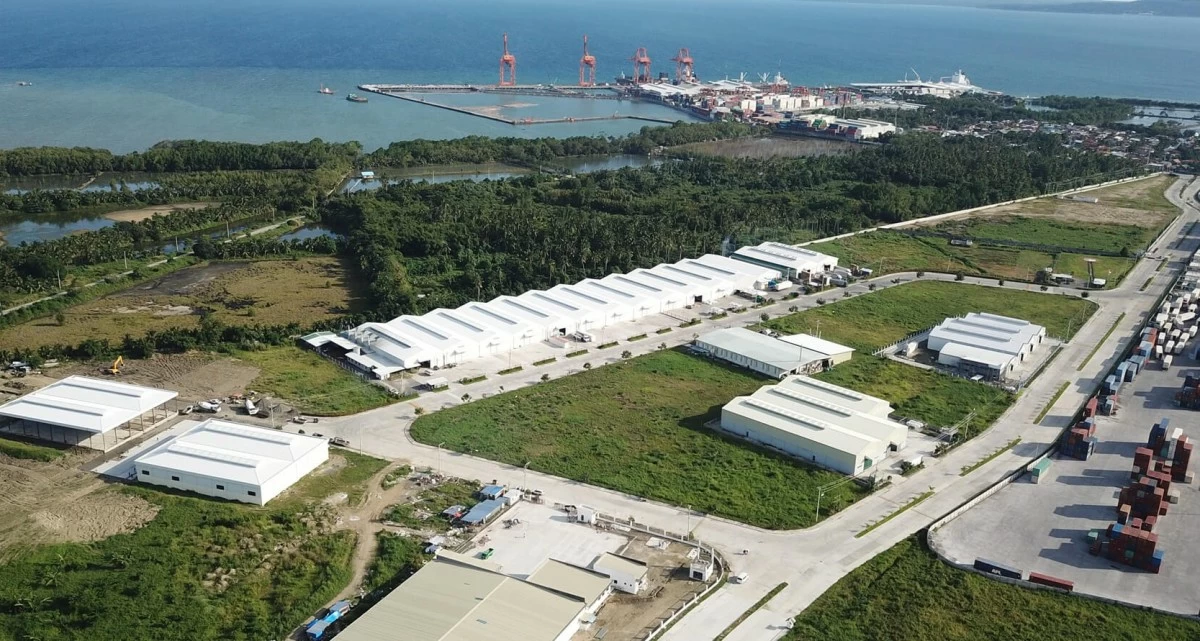
(Anflo Industrial Estate photo)
Davao Region is emerging as a springboard for greater trade and investment into the country, a growing hub for business, logistics, and tourism, according to the Philippine Economic Zone Authority (PEZA).
In a statement, PEZA said the region—which consists of five provinces all bearing the name Davao—is becoming a “natural magnet” for investors owing to its vibrant economy and world-class agricultural exports such as bananas and cacao.
The investment promotion agency (IPA) added that the region is a “natural gateway” for international commerce because of its location in the southernmost part of the Philippines and its proximity to countries such as Brunei, Malaysia, and Indonesia.
PEZA said its logistics ecosystem, anchored by Davao International Airport and Davao International Container Terminal, also serves as a vital link for exports bound to Asia, Europe, and the Americas.
“It is within this fertile and globally connected environment that PEZA, in partnership with the LGUs [local government units] and both public and private organizations, has established world-class ecozones [economic zones], designed not only to attract foreign and local investments but also to foster inclusive and sustainable development,” the statement read.
PEZA said Davao Region is home to 19 ecozones, which host 55 locator firms that employ more than 50,000 workers.
The agency said the region’s ecozones have generated over $275 million in export revenue from January to June.
“These ecozones are more than industrial spaces—they are platforms that empower communities, enhance competitiveness, and open doors for the Philippines to reach the world,” it said.
One of the region’s flagship ecozones is the 63-hectare (ha) Anflo Industrial Estate (AIE) in Panabo City, Davao del Norte, which features locators spanning the agro-industry, manufacturing and packaging, and logistics sectors.
Some of AIE’s standout locators, according to PEZA, include silicon wafers manufacturer Solaris Panabo Corp. and tennis ball manufacturer Head Sport Philippines Inc.
The agency said that it is spearheading initiatives to ramp up support for these locators, including partnerships with utility providers to lower costs and collaboration with the academe on research and development (R&D) for potential new input for their operations.
“This is exactly the kind of synergy we aim to replicate across the country as we ecozone the Philippines for inclusive and sustainable development,” said PEZA Director General Tereso Panga.
Panga also cited Metro Davao Economic Zone (MDEZ) in Digos City as an exemplary ecozone, where locators can take advantage of the city’s pro-business environment to expand their business.
“PEZA’s ecozones in Davao are not just fueling local growth—they are unlocking the region’s potential as the Philippines’ next global gateway,” he said.
The official said Davao Region is a crucial driver in the agency’s push to expand the country’s ecozones, ultimately positioning the Philippines as an attractive investment destination.
“By ecozoning the country, we aim to advance inclusive and sustainable development, empower local communities, and position Mindanao and the rest of the Philippines as a rising frontier for global investors,” added Panga.
This year, PEZA is targeting the proclamation of up to 30 new ecozones.
The government has been pushing for the creation of more ecozones to maximize investments and promote industrial dispersion, particularly outside the country’s metropolitan areas.
Within ecozones, locators can enjoy benefits such as streamlined requirements, free flow of parts, components, and other inputs, and open trade with companies both inside and outside the zone.