ADVERTISEMENT

PAGASA warns of possible increase in cyclones, above-average rainfall amid looming La Niña

Published Aug 27, 2025 05:09 pm
PAGASA
PAGASA
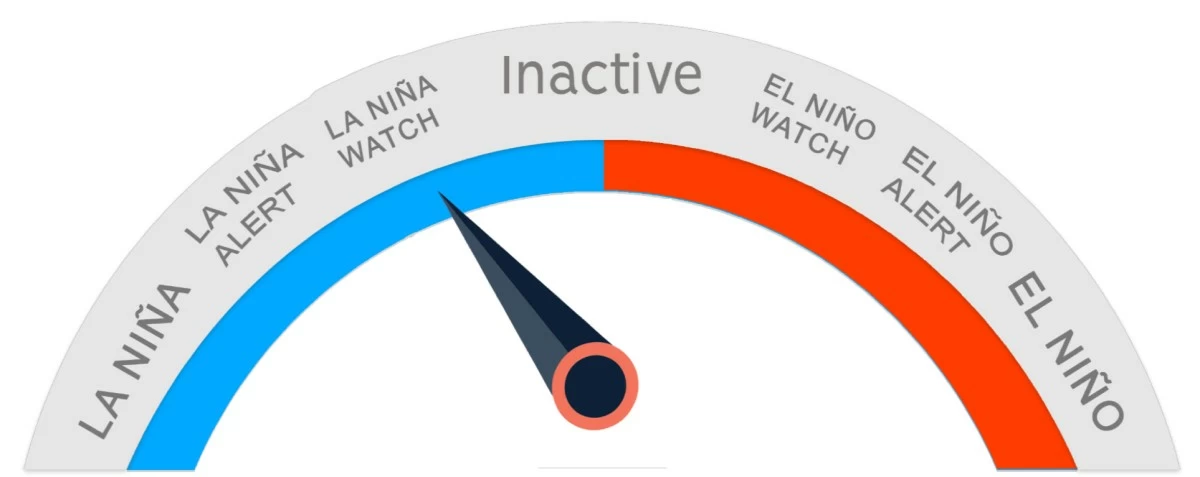
The Philippines may face a higher number of tropical cyclones and heavier rainfall in the last quarter of 2025 due to the increasing probability of developing La Niña conditions, the Philippine Atmospheric, Geophysical and Astronomical Services Administration (PAGASA) warned on Wednesday, Aug. 27.
PAGASA forecasts that the La Niña conditions expected later this year may not develop into a full-blown event and are likely to be short-lived.
However, even weak or brief La Niña phases can still influence weather patterns and bring significant impact across the country.
“Historically, even short-lived or weak La Niña conditions have been associated with increased tropical cyclone activity, especially during the last quarter of the year,” PAGASA-Climate and Agrometeorology Division Assistant Weather Services Chief Ana Liza Solis said in Filipino during a climate forum.
She added that during these periods, cyclones tend to develop inside the Philippine Area of Responsibility (PAR) and are more likely to intensify into typhoons.
“That means tropical cyclones tend to form closer to land, and by the time they strengthen, they’re already near landfall,” she explained.
PAGASA expects between seven and 13 tropical cyclones to enter or form within the PAR from September to December.
Two to four cyclones are likely in both September and October, two to three in November, and one or two in December.
Heavy rains triggered by other systems
Solis also explained that not all weather disturbances will intensify into tropical cyclones.
Some may remain as low-pressure areas (LPAs) or interact with other existing weather systems, including the Intertropical Convergence Zone (ITCZ), shear line, or southwest monsoon (habagat), potentially leading to more frequent and widespread rainfall during the La Niña phase.
There is also a higher probability of above-normal rainfall, especially in areas already vulnerable to flooding and landslides.
In an advisory issued on Aug. 26, PAGASA said most climate models show an increasing likelihood of La Niña conditions emerging as early as the September-October-November period, and may persist until the October-November-December 2025 season.
These conditions are expected to be short-lived and not reach full La Niña intensity.
Rainfall outlook
For September, PAGASA expects above-normal rainfall in the northeastern and southwestern parts of Luzon, while the rest of the country may receive near-normal rainfall.
From October to December, near-normal to above-normal rainfall is forecast for most parts of the country.
By January 2026, below-normal rainfall may occur in the western sections of Luzon, while near to above-normal rainfall is expected in the rest of the country.
In February 2026, below-normal to way below-normal rainfall is likely in northwestern Luzon and western Visayas, while other areas are still expected to receive near-normal to above-normal rainfall.

Related Tags

PAGASA LA NIÑA TROPICAL CYCLONE RAINFALL
ADVERTISEMENT
.most-popular .layout-ratio{ padding-bottom: 79.13%; } @media (min-width: 768px) and (max-width: 1024px) { .widget-title { font-size: 15px !important; } }

{{ articles_filter_1561_widget.title }}

.most-popular .layout-ratio{ padding-bottom: 79.13%; } @media (min-width: 768px) and (max-width: 1024px) { .widget-title { font-size: 15px !important; } }

{{ articles_filter_1562_widget.title }}

.most-popular .layout-ratio{ padding-bottom: 79.13%; } @media (min-width: 768px) and (max-width: 1024px) { .widget-title { font-size: 15px !important; } }

{{ articles_filter_1563_widget.title }}

{{ articles_filter_1564_widget.title }}

.mb-article-details { position: relative; } .mb-article-details .article-body-preview, .mb-article-details .article-body-summary{ font-size: 17px; line-height: 30px; font-family: "Libre Caslon Text", serif; color: #000; } .mb-article-details .article-body-preview iframe , .mb-article-details .article-body-summary iframe{ width: 100%; margin: auto; } .read-more-background { background: linear-gradient(180deg, color(display-p3 1.000 1.000 1.000 / 0) 13.75%, color(display-p3 1.000 1.000 1.000 / 0.8) 30.79%, color(display-p3 1.000 1.000 1.000) 72.5%); position: absolute; height: 200px; width: 100%; bottom: 0; display: flex; justify-content: center; align-items: center; padding: 0; } .read-more-background a{ color: #000; } .read-more-btn { padding: 17px 45px; font-family: Inter; font-weight: 700; font-size: 18px; line-height: 16px; text-align: center; vertical-align: middle; border: 1px solid black; background-color: white; } .hidden { display: none; }
function initializeAllSwipers() { // Get all hidden inputs with cms_article_id document.querySelectorAll('[id^="cms_article_id_"]').forEach(function (input) { const cmsArticleId = input.value; const articleSelector = '#article-' + cmsArticleId + ' .body_images'; const swiperElement = document.querySelector(articleSelector); if (swiperElement && !swiperElement.classList.contains('swiper-initialized')) { new Swiper(articleSelector, { loop: true, pagination: false, navigation: { nextEl: '#article-' + cmsArticleId + ' .swiper-button-next', prevEl: '#article-' + cmsArticleId + ' .swiper-button-prev', }, }); } }); } setTimeout(initializeAllSwipers, 3000); const intersectionObserver = new IntersectionObserver( (entries) => { entries.forEach((entry) => { if (entry.isIntersecting) { const newUrl = entry.target.getAttribute("data-url"); if (newUrl) { history.pushState(null, null, newUrl); let article = entry.target; // Extract metadata const author = article.querySelector('.author-section').textContent.replace('By', '').trim(); const section = article.querySelector('.section-info ').textContent.replace(' ', ' '); const title = article.querySelector('.article-title h1').textContent; // Parse URL for Chartbeat path format const parsedUrl = new URL(newUrl, window.location.origin); const cleanUrl = parsedUrl.host + parsedUrl.pathname; // Update Chartbeat configuration if (typeof window._sf_async_config !== 'undefined') { window._sf_async_config.path = cleanUrl; window._sf_async_config.sections = section; window._sf_async_config.authors = author; } // Track virtual page view with Chartbeat if (typeof pSUPERFLY !== 'undefined' && typeof pSUPERFLY.virtualPage === 'function') { try { pSUPERFLY.virtualPage({ path: cleanUrl, title: title, sections: section, authors: author }); } catch (error) { console.error('ping error', error); } } // Optional: Update document title if (title && title !== document.title) { document.title = title; } } } }); }, { threshold: 0.1 } ); function showArticleBody(button) { const article = button.closest("article"); const summary = article.querySelector(".article-body-summary"); const body = article.querySelector(".article-body-preview"); const readMoreSection = article.querySelector(".read-more-background"); // Hide summary and read-more section summary.style.display = "none"; readMoreSection.style.display = "none"; // Show the full article body body.classList.remove("hidden"); } document.addEventListener("DOMContentLoaded", () => { let loadCount = 0; // Track how many times articles are loaded const offset = [1, 2, 3, 4, 5, 6, 7, 8, 9, 10]; // Offset values const currentUrl = window.location.pathname.substring(1); let isLoading = false; // Prevent multiple calls if (!currentUrl) { console.log("Current URL is invalid."); return; } const sentinel = document.getElementById("load-more-sentinel"); if (!sentinel) { console.log("Sentinel element not found."); return; } function isSentinelVisible() { const rect = sentinel.getBoundingClientRect(); return ( rect.top < window.innerHeight && rect.bottom >= 0 ); } function onScroll() { if (isLoading) return; if (isSentinelVisible()) { if (loadCount >= offset.length) { console.log("Maximum load attempts reached."); window.removeEventListener("scroll", onScroll); return; } isLoading = true; const currentOffset = offset[loadCount]; window.loadMoreItems().then(() => { let article = document.querySelector('#widget_1690 > div:nth-last-of-type(2) article'); intersectionObserver.observe(article) loadCount++; }).catch(error => { console.error("Error loading more items:", error); }).finally(() => { isLoading = false; }); } } window.addEventListener("scroll", onScroll); });

Sign up by email to receive news.