







Can gov't workers hold a strike? Tinio asks CSC
Published Aug 26, 2025 08:17 pm


At A Glance
- ACT Teachers Party-list Rep. Antonio Tinio on Tuesday, Aug. 26, asked the Civil Service Commission (CSC) whether or not government employees are allowed to hold strikes against their employers.
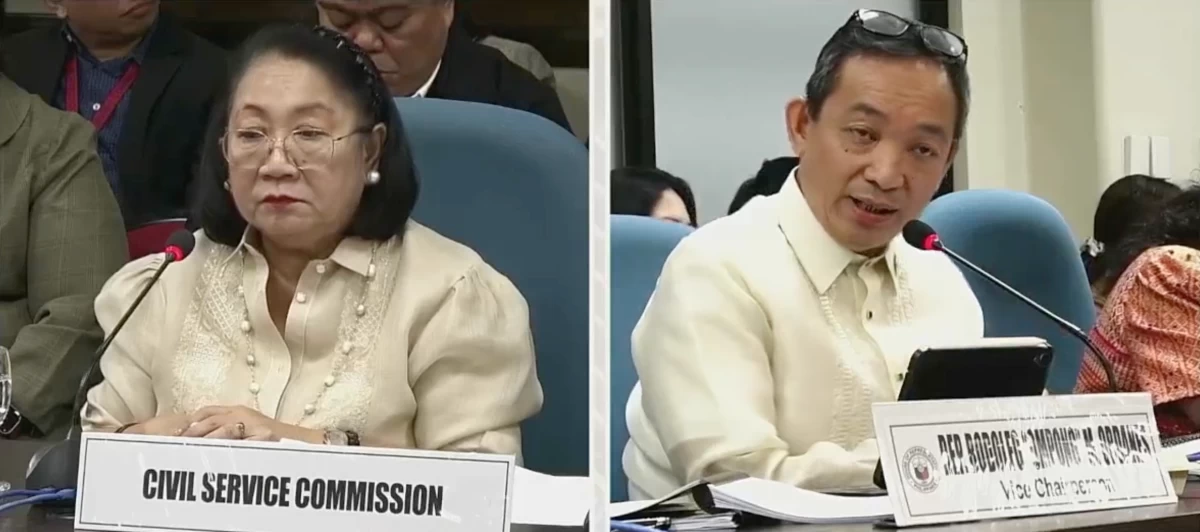
ACT Teachers Party-list Rep. Antonio Tinio on Tuesday, Aug. 26, asked the Civil Service Commission (CSC) whether or not government employees are allowed to hold strikes against their employers.
During a House Appropriations Committee hearing on the CSC's proposed budget for 2026, Tinio posed such a question even as he stressed that Filipino workers' constitutional freedom must be upheld despite being in the government.
He particularly cited Article 13 Section 3 of the 1987 Constitution, which stipulates that the state must "guarantee the rights of all workers to self-organization... including the right to strike in accordance with law".
In response, CSC Chairperson Marilyn Yap said the "right to strike is only for private sector, and not for the government [workers]".
"Ang ginaguarantee po sa gobyerno ay right to organize. Kaya nga po meron tayong public sector employees organization (What is guaranteed for government workers is the right to organize. That's why we have public sectors employees organization)," she said.
"Like other citizens of the country, they're free to organize. They are free to express their sentiments, they are free to engage in peaceful assembly to redress grievances and to petition their respective agencies for any assistance or for any program which will uphold or elevate their welfare," she added.
Tinio argued that the Constitution stated that "all workers" have the right to strike.
However, Yap said the Constitution had a "qualifier" that said it must be "in accordance with the law".
Tinio said there is no other law that prohibits the right of government workers to strike, except for the existing CSC Resolution No. 021316 that "prohibits concerted mass action". These include mass leaves, walkouts, pickets and acts of similar nature.
The Makabayan lawmaker says the CSC must retrack its resolution because it is "unconstitutional". To this, Yap said the commission will put it "under serious study".