






Manila Bulletin
 Business
Banking & Finance
BSP: Failure to curb e-gambling risks Philippine return to money-laundering watchlist
Business
Banking & Finance
BSP: Failure to curb e-gambling risks Philippine return to money-laundering watchlist
Business
Banking & Finance
BSP: Failure to curb e-gambling risks Philippine return to money-laundering watchlist
BSP: Failure to curb e-gambling risks Philippine return to money-laundering watchlist
By Derco Rosal
Published Aug 26, 2025 02:40 pm


At A Glance
- While the Bangko Sentral ng Pilipinas (BSP) has already moved to unlink in-app online gambling apps from financial institutions, the central bank chief affirmed the possibility of the Philippines returning to money-laundering watchlist should the government fail to contain persisting online gambling concerns.
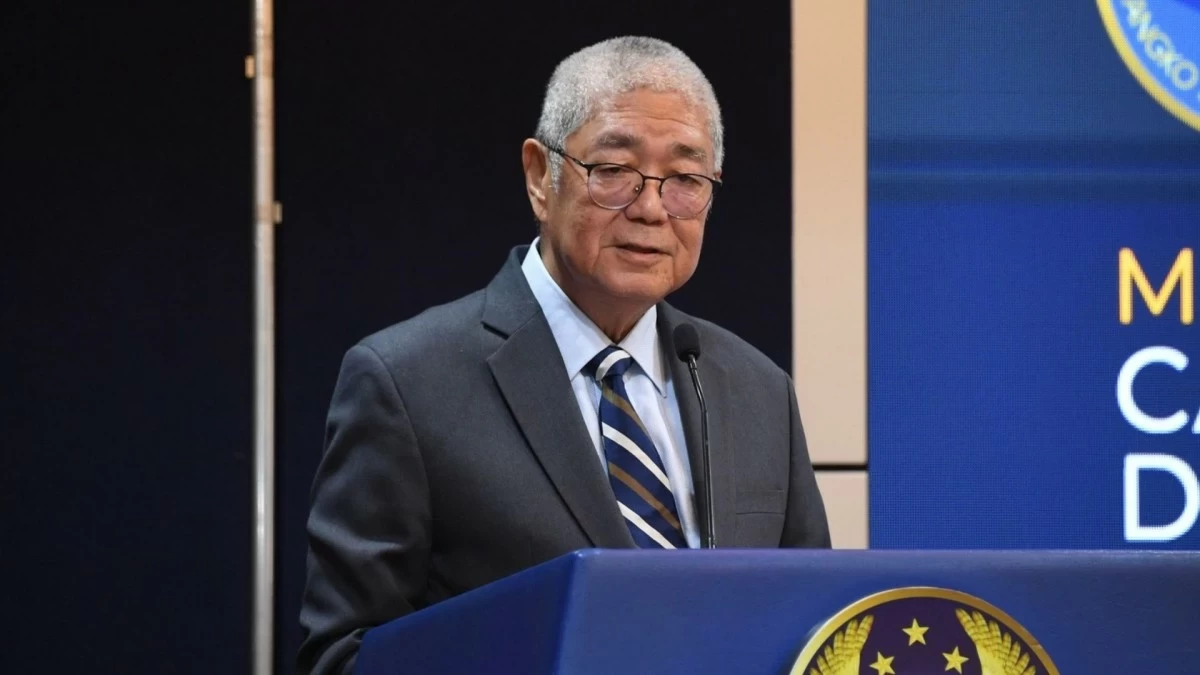
While the Bangko Sentral ng Pilipinas (BSP) has already moved to unlink in-app online gambling platforms from financial institutions, the central bank chief affirmed the possibility of the Philippines returning to the money-laundering watchlist should the government fail to contain persisting online gambling concerns.
Should the government fail to resolve both the existing problems and those emerging from the unprecedented surge in e-gambling, the Philippines could stand face to face with the risk of being part again of the Financial Action Task Force’s (FATF) “grey list” after its successful exit in February.
“Yes, but that can be resolved,” BSP Governor Eli M. Remolona Jr. told reporters on the sidelines of the Manila Tech Summit on Tuesday, Aug. 26, in response to a question regarding the country’s potential return to such watchlists.
For context, Yuchengco-led Rizal Commercial Banking Corp. (RCBC) figured in one of the world’s largest cyber-heists in 2019, when $81 million looted from Bangladesh’s central bank passed through its accounts before being funneled into the local casino sector.
To recall, the Philippines was removed from money-laundering watchlists in the first half of this year—FATF’s grey list in February, the United Kingdom’s (UK) list of high-risk third countries in March, and the European Commission’s (EC) list in June.
Last week, the BSP vowed to “fight financial crimes and uphold global standards” in light of the Philippines’ third exit this year from international money-laundering watchlists of high-risk jurisdictions.
Meanwhile, Remolona said the BSP is studying further regulations such as e-gaming restrictions and safeguards following the e-wallet ban.
“We’re still studying it. Basically, as before, we just want to put sand in the wheels. There’s still a lot more that can be done, but along the same lines,” said Remolona, noting that a clear policy regarding e-gambling is still being discussed.
Further, the BSP chief has crossed his fingers that the central bank’s efforts could help curb “at least the harmful aspects of [online gambling].”
Additionally, Remolona disclosed that two financial institutions initially failed to comply with the BSP directive. After the two-day ultimatum given to financial institutions had lapsed, Remolona said the central bank issued a cease-and-desist order, prompting said institutions to eventually comply.
To note, BSP-supervised financial institutions (BSFIs) were given 48 hours to take down in-app online gambling links. “That’s the deadline—but after that, the suspension remains in place,” Remolona said.
As for the clear wall e-wallets were told to build, Remolona said transactions as merchants are still allowed “but not for gambling.” He nodded when asked if the ban, which involves blocking top-ups from outside online gamblers, is absolute.
Among the emerging problems linked to the recent e-wallet ban are the immediate migration of gamblers to unregulated gambling sites. Given this shift, Remolona said he hopes “someone can do something about that.”
“We no longer have authority over that. We can’t handle it,” Remolona said.
Sought for his expectation on e-wallets’ income, he said: “Of course, it will go down. They earn a lot from [e-gambling].” As for the size of losses, Remolona deferred to BSP Deputy Governor Mamerto E. Tangonan, head of the central bank’s payments and currency management sector.