







Why MSMEs and microfinance matter
Published Aug 25, 2025 12:05 am
|
Updated Aug 24, 2025 03:27 pm


FROM THE MARGINS
On Aug. 18, 2025, Malacañang reaffirmed the administration’s commitment to strengthening micro, small, and medium enterprises (MSMEs) through the ongoing implementation of the MSME Development Plan 2023–2028. Speaking at the Presidential Awards for Outstanding MSMEs, Executive Secretary Lucas Bersamin conveyed President Ferdinand Marcos Jr.’s vision of creating a business climate that promotes innovation, expanded market access, and stronger competitiveness for MSMEs nationwide.
This renewed push recognizes a critical reality: MSMEs make up 99 percent of all businesses in the Philippines and employ the majority of Filipino workers. Yet, many remain underfunded and vulnerable to shocks. For them, access to finance is not simply about capital — it is about survival, opportunity, and dignity. On the ground, microfinance has been the bridge that turns government policy into personal transformation.
Drying fish, building resilience
In Atimonan, Quezon, Alexander Amado’s days begin before sunrise. For more than 30 years, he has produced dried fish under the harsh sun. Though a B.S. Education graduate, he chose entrepreneurship over teaching, finding fulfillment in sustaining a business with his own hands.
On good days, he sells all 30 kilos he dries, with his products reaching as far as Manila. But storms and unpredictable weather often threaten his livelihood. When capital was tight in 2015, Alexander turned to a microfinance-oriented bank for support. Through the years, access to microfinance has helped stabilize his business operations.
“In this kind of business, aside from capital, it’s hard work and perseverance that truly matter,” he reflects. His story embodies the resilience of countless Filipino microentrepreneurs who persevere against uncertainty, sustained by both grit and financial access.
A Tausug mother’s dream
Far south in Zamboanga City, Ainon Jabani Saddaramil, a Tausug mother of six, has built her life on resilience. Losing her father young, she worked in the rice fields as a child before working abroad as a domestic helper. Illness forced her return, but with savings, she started small businesses — from barter trading to renting rooms in their house —to support her family.
In 2020, a friend introduced her to a microfinance institution which offers Musharakah contract financing, a Shari’ah-compliant product that allowed her to expand her sari-sari store. Today, her store provides steady income while giving her more time at home with her children.
Her deepest motivation is education. Three of her children have already graduated, while the others remain in school. “I don’t want my children to go through the same struggles I faced,” she says. For Ainon, her store, beyond being a business, is a vehicle for her children’s dreams.
Walking beside microentrepreneurs
Behind every thriving microenterprise is often a microfinance worker quietly walking alongside. Ana Marie Flores, a microfinance loan officer in Sta. Teresita, Cagayan, knows this well. The daughter of a farmer, she joined ASKI Microfinance in 2019 through its “Study Now, Pay Later” program, which offered young people both education and employment opportunities.
Her role takes her to far-flung communities, processing loans and collecting payments from members. Typhoons make her work doubly hard, as fishing-dependent clients struggle to repay during lean seasons. Yet Ana remains steadfast, even when the job requires long days away from her husband and child. “Even if it’s hard not to be home, these sacrifices guide me to learn and serve our clients better,” she shares.
For Ana, fulfillment comes from witnessing change. “As long as I see members happy and know I am part of helping them, I’m happy too,” she says.
From policy to people
Alexander, Ainon, and Ana reflect the everyday reality behind national plans. The government’s MSME Development Plan provides a framework, but the beating heart of inclusive growth is found in communities — where fish are dried, sari-sari stores are stocked, and loan officers walk dusty roads to reach members. Microfinance ensures that those unserved or underserved by banks and formal financial institutions have the tools and support to sustain their livelihoods.
To realize the country’s vision for MSMEs, policy must go hand in hand with deeper investment in microfinance. That means expanding outreach in unserved/underserved areas, building financial literacy, and strengthening partnerships between government, financial institutions, and private businesses. It also means encouraging innovations — such as digital platforms and Shari’ah-compliant products — that respond to the diverse needs of microentrepreneurs.
Small businesses, big futures
The stories of Alexander, Ainon, and Ana remind us that MSMEs are not just numbers in economic reports — they are lives, families, and futures. Each enterprise sustained is a child sent to school, a household lifted, a community strengthened.
If the Philippines is to fulfill the promise of inclusive growth, it must continue to champion its microentrepreneurs — not only through policies, but through sustained financing and support. Because in every small store, rural village, and microfinance center lies the heartbeat of the nation’s economy — and the hope of a more resilient and equitable future.
* * *
“Change your thoughts and you change your world.” – Norman Vincent Peale
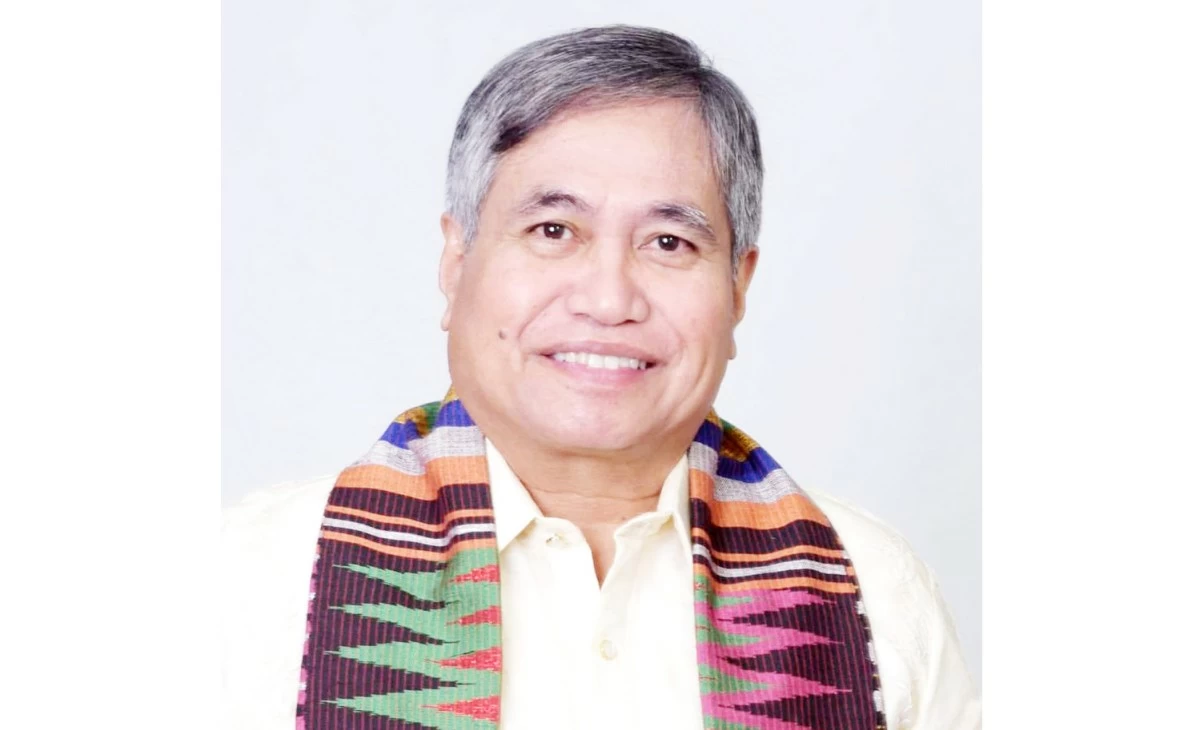
(Dr. Jaime Aristotle B. Alip is a poverty eradication advocate. He is the founder of the Center for Agriculture and Rural Development Mutually-Reinforcing Institutions (CARD MRI), a group of 23 organizations that provide social development services to eight million economically-disadvantaged Filipinos and insure more than 27 million nationwide.)