






Manila Bulletin
 Philippines
National
Lt. Gen. Antonio G. Nafarrete: The making of a Philippine Army chief
Philippines
National
Lt. Gen. Antonio G. Nafarrete: The making of a Philippine Army chief
Philippines
National
Lt. Gen. Antonio G. Nafarrete: The making of a Philippine Army chief
Lt. Gen. Antonio G. Nafarrete: The making of a Philippine Army chief
A National Heroes Day feature story
Published Aug 25, 2025 08:08 am


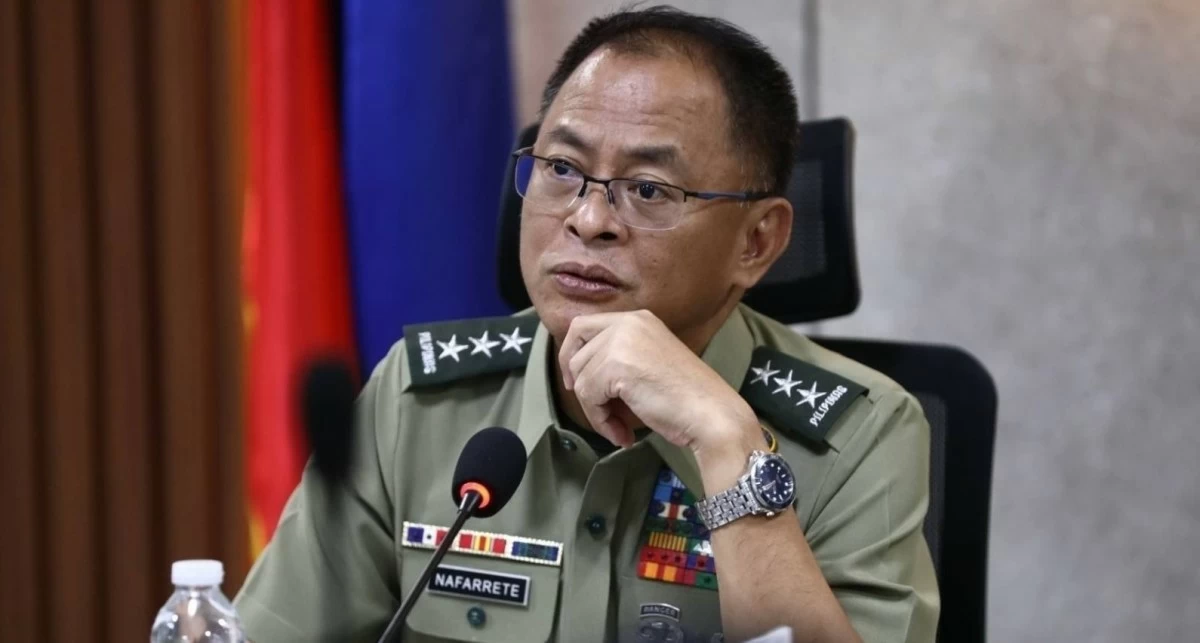
Lt. Gen. Antonio Nafarrete (Photo: Office of the Army Chief Public Affairs)
Lieutenant General Antonio G. Nafarrete, called “Toto” by his peers, never dreamed of becoming a soldier. Unlike many of his classmates at the Philippine Military Academy (PMA) who had long envisioned themselves in uniform, his journey into the armed forces was more of an unexpected turn than a lifelong ambition. Yet he discovered not just a career but a calling that would eventually shape his life, and now, the future of the Philippine Army (PA) as its new commanding general.
Born in Manila on Feb. 22, 1969 to a lawyer from Pangasinan and a teacher from Iloilo, Nafarrete spent his early childhood in the city before the family settled in Iloilo. “We were six siblings in the family, and I’m the youngest with twin sisters,” the 56-year-old Army official said in a recent interview with the Manila Bulletin at the Army headquarters, Fort Bonifacio in Taguig City, for the National Heroes Day.
His father, Atty. Perpetuo Nafarrete, passed away during the COVID-19 pandemic in 2020, while his 90-year-old mother, Maria Daisy Gustilo Nafarette, is a retired teacher at the Ramon Magsaysay High School in Manila and remains active as a board director of their family’s rural bank in La Paz, Iloilo.
Though raised in a household that valued education, the young Nafarrete never saw himself in a soldier’s boots.
“Hindi eh (Not really),” he said, chuckling, when asked if it was his dream to be a soldier when he was a kid. His real inclination was toward farming, a passion rooted in summers spent tending rice fields and sugarcane lands in Calinog, Iloilo.
“Noong maliit pa ako, ‘yung lola namin was a disciplinarian. Kaming lahat ay sa city nakatira and every summer, umuuwi kami ng province sa Calinog, that’s 54 kilometers from La Paz. Mayroon kaming rice land doon at tubuhan but she would always bring us sa farm para mafeel namin na kahit may ganito kami, dapat kami ang magpawis dito,” he said.
(When I was little, our grandmother was a disciplinarian. All of us lived in the city, but every summer we would go home to our province in Calinog, which is 54 kilometers from La Paz. We had rice and sugarcane fields there, and she would always bring us to the farm so we could feel that even if we owned such land, we had to work hard and sweat for it ourselves.)
However, in his senior high school year at West Visayas State University, fate intervened. A diary and pamphlet about the Philippine Military Academy (PMA) caught his eye during a career orientation for students. “Uy, maganda dito (Oh, this looks nice),” he thought, drawn first by the crisp uniforms, free education, and the promise of a challenge.
Entering PMA
In 1986, amid left and right coup d’état against then-president Corazon Aquino, Nafarrete entered the PMA right after graduating from high school. He became part of the Alpha company and served as a squad leader and, eventually, a platoon leader.
He shared that among those who became his mentors were generals Lisandro Abadia and Rodolfo Biazon, who served as the PMA Commandant of Cadets and Superintendent, respectively, at the time. “Ang galing ng leadership skills nila (Their leadership skills are excellent).” Abadia and Biazon were key figures during the December 1989 coup against the Aquino matriarch, stopping rogue soldiers from controlling Camp Aguinaldo and unseating the lady president. Both became Chief of Staff of the AFP under the Aquino administration.
Inside the premier military learning institution, Nafarrete was an “average” student. He excelled in subjects such as military history, military leadership, military sciences, and socials; and had a hard time with Math subjects. “I was only a high school graduate and the Math subjects were already advanced.”
Four years later, he graduated from the PMA as part of the “Bigkis-Lahi” Class of 1990, stepping directly into a country torn by coup attempts and insurgencies.
Becoming a soldier
His first posting as a young first lieutenant at the 10th Infantry Battalion, 1st Infantry Division in Zamboanga del Sur taught him lessons no academy could fully prepare him for. “Naging platoon leader ako pero mas matanda sa akin ang mga tropa ko (I became a platoon leader but my troops were older than me),” he said. This really tested his leadership skills as he needed to make sure the troops would follow his lead despite the age gap. “You have to listen to your non-commissioned officers, too. They’ll make sure you survive during field operations.”
Nafarrete then underwent training to be a Scout Ranger, eventually becoming one of the pioneers in organizing the 1st Scout Ranger Company in the 1ID when the First Scout Ranger Regiment was reactivated in 1991.
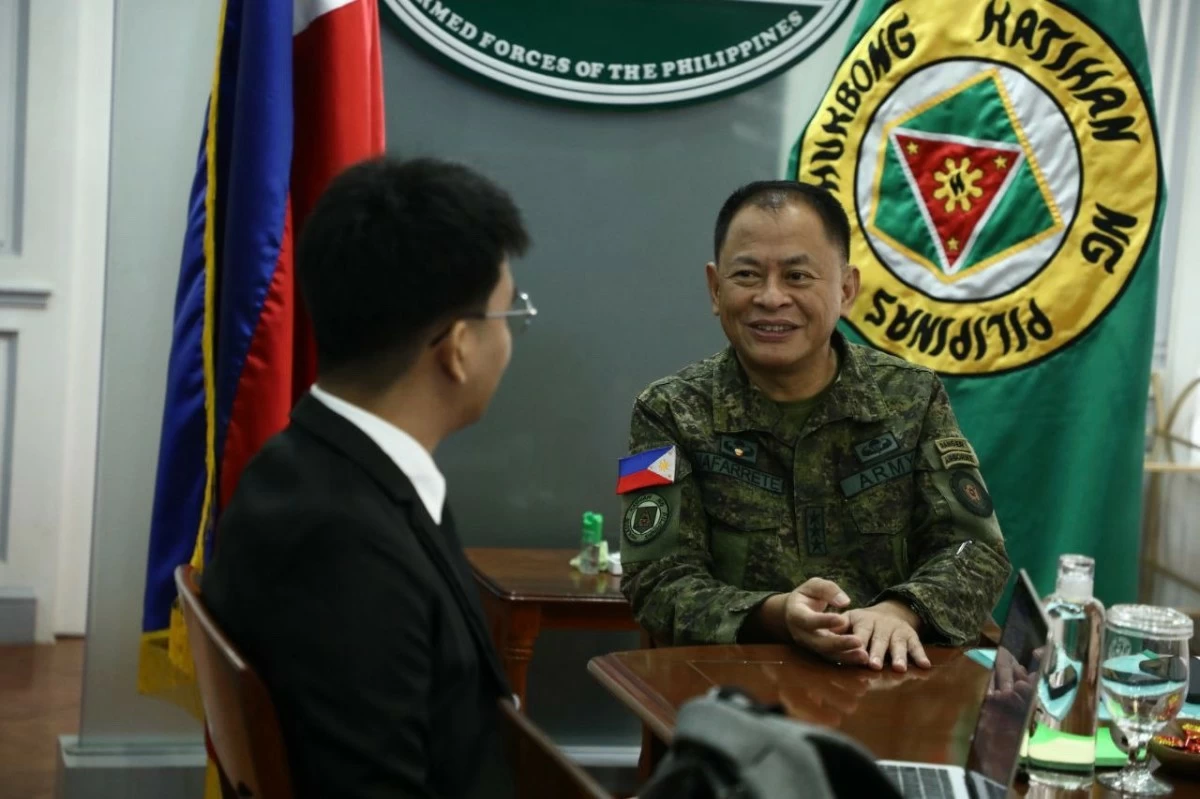
Lt. Gen. Antonio Nafarrete (Photo: Office of the Army Chief Public Affairs)
One of the most memorable missions for Nafarrete came in 1992 when he was sent on a test mission as a section leader in the mountains of Kalinga-Apayao along with around four dozen soldiers to pursue and neutralize the First National Battalion of the New People’s Army (NPA).
He said they were on their way back after a series of encounters with the NPA rebels when the enemy caught up with them. “Ginabi kami then we have to establish ‘yung patrol base. Hindi kami makatulog kasi konting ganoon mo lang ng Skyflakes, maririnig sa sobrang tahimik. Lahat nagtitinginan kasi baka marinig (It was already evening when we had to establish a patrol base. We couldn’t sleep because even breaking a biscuit would make a sound in the silence. We were looking at each other because the enemy might hear us.)” After that, he served in various leadership posts as a Scout Ranger and at the AFP Joint Special Operations Group until 2010.
But Nafarrete’s career was not limited to the battlefield. From 2010 to 2015, he served in the Presidential Security Group (PSG), providing external security for the late former president Benigno “Noynoy” Aquino III. He supervised security operations that, at one point, required an emergency scramble when Aquino’s helicopter was forced to land during a storm in Tarlac. “Nakakakaba pero trabaho namin ‘yun (I was really nervous but it was our job) to make sure he was safe.”
Despite the high-profile assignments, Nafarrete remained anchored to the ordinary soldier’s struggles, especially when he was assigned to Mindanao. While commanding troops in Mindanao, he saw firsthand the toll of stress and separation from their families. He mourned the loss of a young lieutenant who took his own life with a gun, others becoming AWOL (absent without official leave) and not returning after their first missions due to the pressure of military life.
This served as a reminder for Nafarrete that not all battles are fought in the field. “I am a soldier’s soldier,” he said. “I’ve been there, I’ve done that, and I feel what they feel.”
The making of an Army chief
This was the very same reason why Nafarrete mentioned during his assumption as the chief of the 110,000-strong Philippine Army on July 31 that his priorities would focus on the welfare of the troops. His five-point command guidance emphasizes personnel development, morale, health, education, and financial literacy of the troops.
“Our greatest asset is really the soldier. Every soldier matters,” he said. “They are the strength of the Army, they are the ones who are behind the triggers. Even if we have the technology, if we are not well-trained, if we are not well-disciplined, if their health is not okay, then it’s all for nothing. We also have to improve their equipment, their force protection, for them to survive.”
He said he envisions a modernized Army, equipped not only with howitzers, missile systems, and cyber capabilities but also with soldiers trained in leadership, critical thinking, and resilience.
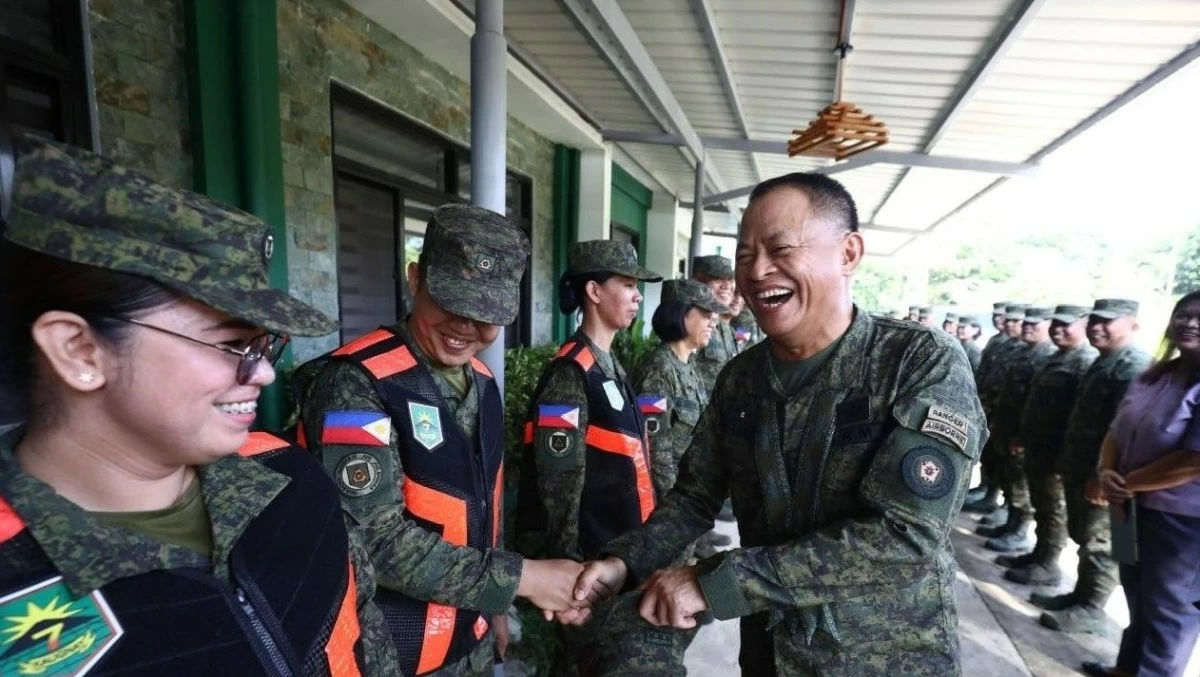
Lt. Gen. Antonio Nafarrete (Photo: Office of the Army Chief Public Affairs)
On internal security, Nafarrete pointed out that there were no longer active or weakened guerilla front of the NPA, although remnants remain with a total strength of 822. This was a huge reduction from 4,777 in 2016. He said some of the remnants were in Bicol, others in Zamboanga.
Meanwhile, the strength of local terrorist groups such as the Dawlah Islamiyah and Abu Sayyaf Group has dwindled to 78, some of whom were monitored in Maguindanao and Lanao del Sur. He said that vigilance remains key: “This is not only a military solution, it’s a whole-of-nation approach.”
On external defense, particularly in upholding the country’s territorial integrity in the West Philippine Sea (WPS) amid disputes with China, Nafarette said: “Of course, Pilipino tayo (we are Filipinos), we will defend what is ours until the last blood. We have TTPs [techniques, tactics, procedures] for that.”
He said the Army is in the process of acquiring Javelin anti-tank missile systems, High Mobility Artillery Rocket System (HIMARS), man-portable air defense systems (MANPADS), and other cyber defense equipment.
A soldier with a heart
While most of the time, ordinary people would look at soldiers as cold-blooded warriors, Nafarrete said he wanted to introduce himself to the people as a soldier with a heart. “To the public, your Army will always be your Army. We are here to protect you and secure the land.”
At the helm of the Philippine Army, Nafarrete acknowledged that he carries not only the weight of the institution but also the aspirations of the soldiers who march behind him.
His message to the troops was simple but heartfelt: “Maintain your professionalism and do your job well. I will look after your welfare on the frontlines. Lastly, always pray to the Almighty. I do that every day, for all of you.”
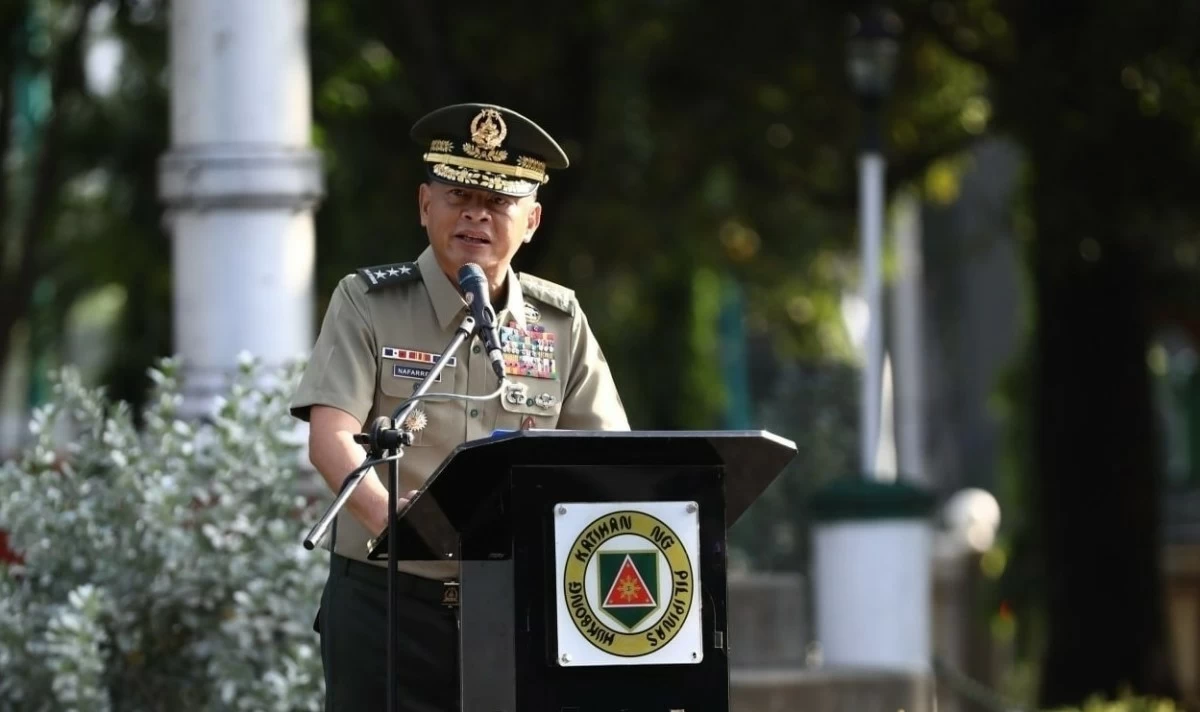
Lt. Gen. Antonio Nafarrete (Photo: Office of the Army Chief Public Affairs)