ADVERTISEMENT

Jabra Introduces PanaCast 40 VBS for Small Meeting Rooms

Published Aug 25, 2025 08:41 am
Finding a meeting room can be more stressful than you might expect. There are instances where the only available rooms are too big for a small meeting. In some cases, this forces people to have virtual meetings in their office corridors. There is also the issue of the room not having the equipment you need. And even after all the effort in finding the right room and setting up the video and audio, a couple of surprises can still happen, like losing mic audio and people appearing way too close to the camera.
Jabra has a solution for these problems with the launch of the PanaCast 40 VBS. The launch comes as organizations continue adapting to hybrid work arrangements, creating increased demand for video conferencing solutions in smaller meeting spaces. Many companies are repurposing underutilized areas into collaborative workspaces, driving the need for compact, easy-to-deploy video systems.
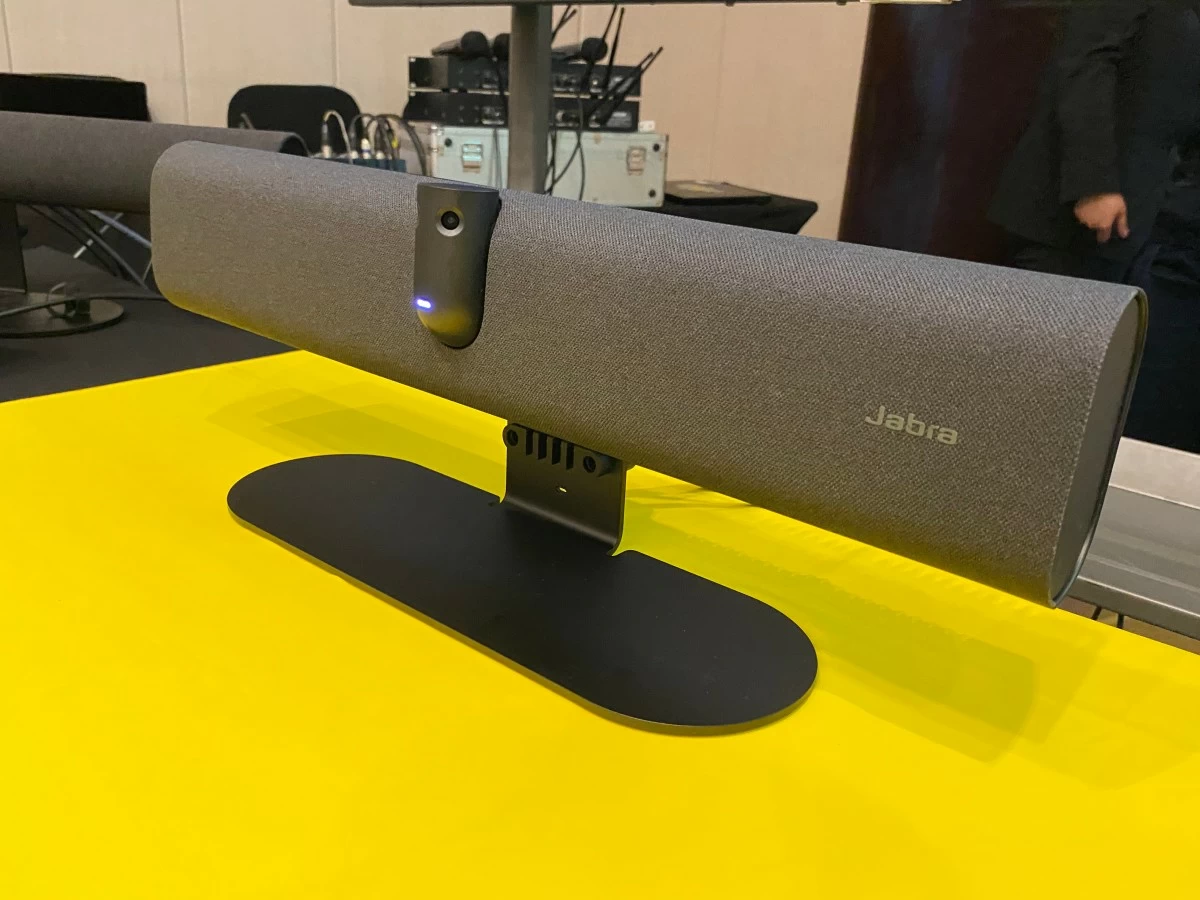
The 180-degree field of view allows the PanaCast 40 VBS to capture everyone in the room on camera. This would also mean people who are situated even on the PanaCast's peripherals. The device is intelligent enough to make adjustments before the meeting actually starts. For instance, people who are actually too close to the camera, would appear to have some distance from the receiving end of the video call. It’s not simply adjusting the depth of view, but it’s presenting the person as if they were a bit farther back from the camera. This is one of the features Jabra touts with the PanaCast 40 VBS as a device for huddle spaces.
It’s also intelligent enough to recognize the participants of the meeting and then frame the video on them. This would mean, if someone who isn’t part of the meeting, happens to pass by, they won’t be seen during the video call.

Audio capabilities include a single speaker paired with six microphones equipped with adaptive beamforming and what Jabra describes as intelligent audio algorithms designed to enhance voice clarity. With all of these, Jabra touts the PanaCast 40 VBS for its mobility, meaning it's small enough to be carried around, which is about a little longer than a foot, or about 20 inches, and is about lighter than most laptops out there. All the features one would need to conduct a virtual meeting in any location.
The system runs on Android and supports major video conferencing platforms including Zoom and Microsoft Teams, as well as bring-your-own-device (BYOD) deployments.
Jabra emphasizes the device's simplified installation process, claiming users can set up the system without removing it from its packaging. The design incorporates streamlined cable routing to reduce installation complexity. They even included a box sticker, which can be used to re-packaging the unit.
Optional accessories include a touch controller and detachable faceplate, available as part of a bundle package. The system integrates with Jabra's existing software ecosystem, including Jabra+ management software and Warranty+ services.
According to Larsen Sandoval, Jabra's Philippines Enterprise Country Head, the product addresses the evolving needs of Filipino workplaces as they adapt to hybrid work models.
The PanaCast 40 VBS is scheduled for availability starting August 2025, with two pricing tiers:
Bar-only configuration: P110,000
Complete system: P165,000
The product positions Jabra to compete in the growing small meeting room video conferencing segment, offering an Android-based alternative in a market increasingly focused on flexible, easy-to-deploy collaboration solutions.
ADVERTISEMENT
.most-popular .layout-ratio{ padding-bottom: 79.13%; } @media (min-width: 768px) and (max-width: 1024px) { .widget-title { font-size: 15px !important; } }

{{ articles_filter_1561_widget.title }}

.most-popular .layout-ratio{ padding-bottom: 79.13%; } @media (min-width: 768px) and (max-width: 1024px) { .widget-title { font-size: 15px !important; } }

{{ articles_filter_1562_widget.title }}

.most-popular .layout-ratio{ padding-bottom: 79.13%; } @media (min-width: 768px) and (max-width: 1024px) { .widget-title { font-size: 15px !important; } }

{{ articles_filter_1563_widget.title }}

{{ articles_filter_1564_widget.title }}

.mb-article-details { position: relative; } .mb-article-details .article-body-preview, .mb-article-details .article-body-summary{ font-size: 17px; line-height: 30px; font-family: "Libre Caslon Text", serif; color: #000; } .mb-article-details .article-body-preview iframe , .mb-article-details .article-body-summary iframe{ width: 100%; margin: auto; } .read-more-background { background: linear-gradient(180deg, color(display-p3 1.000 1.000 1.000 / 0) 13.75%, color(display-p3 1.000 1.000 1.000 / 0.8) 30.79%, color(display-p3 1.000 1.000 1.000) 72.5%); position: absolute; height: 200px; width: 100%; bottom: 0; display: flex; justify-content: center; align-items: center; padding: 0; } .read-more-background a{ color: #000; } .read-more-btn { padding: 17px 45px; font-family: Inter; font-weight: 700; font-size: 18px; line-height: 16px; text-align: center; vertical-align: middle; border: 1px solid black; background-color: white; } .hidden { display: none; }
function initializeAllSwipers() { // Get all hidden inputs with cms_article_id document.querySelectorAll('[id^="cms_article_id_"]').forEach(function (input) { const cmsArticleId = input.value; const articleSelector = '#article-' + cmsArticleId + ' .body_images'; const swiperElement = document.querySelector(articleSelector); if (swiperElement && !swiperElement.classList.contains('swiper-initialized')) { new Swiper(articleSelector, { loop: true, pagination: false, navigation: { nextEl: '#article-' + cmsArticleId + ' .swiper-button-next', prevEl: '#article-' + cmsArticleId + ' .swiper-button-prev', }, }); } }); } setTimeout(initializeAllSwipers, 3000); const intersectionObserver = new IntersectionObserver( (entries) => { entries.forEach((entry) => { if (entry.isIntersecting) { const newUrl = entry.target.getAttribute("data-url"); if (newUrl) { history.pushState(null, null, newUrl); let article = entry.target; // Extract metadata const author = article.querySelector('.author-section').textContent.replace('By', '').trim(); const section = article.querySelector('.section-info ').textContent.replace(' ', ' '); const title = article.querySelector('.article-title h1').textContent; // Parse URL for Chartbeat path format const parsedUrl = new URL(newUrl, window.location.origin); const cleanUrl = parsedUrl.host + parsedUrl.pathname; // Update Chartbeat configuration if (typeof window._sf_async_config !== 'undefined') { window._sf_async_config.path = cleanUrl; window._sf_async_config.sections = section; window._sf_async_config.authors = author; } // Track virtual page view with Chartbeat if (typeof pSUPERFLY !== 'undefined' && typeof pSUPERFLY.virtualPage === 'function') { try { pSUPERFLY.virtualPage({ path: cleanUrl, title: title, sections: section, authors: author }); } catch (error) { console.error('ping error', error); } } // Optional: Update document title if (title && title !== document.title) { document.title = title; } } } }); }, { threshold: 0.1 } ); function showArticleBody(button) { const article = button.closest("article"); const summary = article.querySelector(".article-body-summary"); const body = article.querySelector(".article-body-preview"); const readMoreSection = article.querySelector(".read-more-background"); // Hide summary and read-more section summary.style.display = "none"; readMoreSection.style.display = "none"; // Show the full article body body.classList.remove("hidden"); } document.addEventListener("DOMContentLoaded", () => { let loadCount = 0; // Track how many times articles are loaded const offset = [1, 2, 3, 4, 5, 6, 7, 8, 9, 10]; // Offset values const currentUrl = window.location.pathname.substring(1); let isLoading = false; // Prevent multiple calls if (!currentUrl) { console.log("Current URL is invalid."); return; } const sentinel = document.getElementById("load-more-sentinel"); if (!sentinel) { console.log("Sentinel element not found."); return; } function isSentinelVisible() { const rect = sentinel.getBoundingClientRect(); return ( rect.top < window.innerHeight && rect.bottom >= 0 ); } function onScroll() { if (isLoading) return; if (isSentinelVisible()) { if (loadCount >= offset.length) { console.log("Maximum load attempts reached."); window.removeEventListener("scroll", onScroll); return; } isLoading = true; const currentOffset = offset[loadCount]; window.loadMoreItems().then(() => { let article = document.querySelector('#widget_1690 > div:nth-last-of-type(2) article'); intersectionObserver.observe(article) loadCount++; }).catch(error => { console.error("Error loading more items:", error); }).finally(() => { isLoading = false; }); } } window.addEventListener("scroll", onScroll); });

Sign up by email to receive news.