ADVERTISEMENT

Great white sharks are going north

Published Aug 25, 2025 01:06 pm
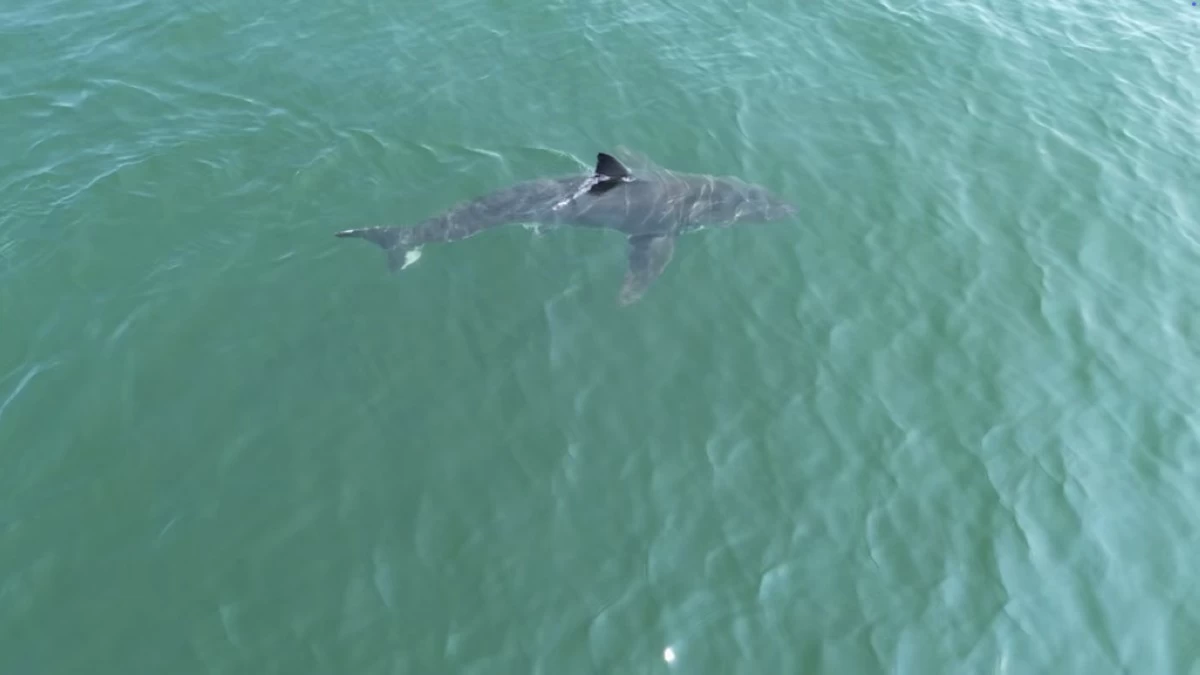
This TV grab shows an aerial image of a great white shark off the coast of Scarborough, Maine, on Monday, August 11, 2025. (David Lancaster via AP)
SCARBOROUGH, Maine (AP) — New data shows that great white sharks are spending more time in the chilly waters off New England and Canada’s Atlantic coast.
That means boaters, beachgoers and fishermen who spend time in the northern waters are learning to live with the predators made famous by the movie “Jaws” 50 years ago. Sightings of the sharks are up in places like Maine, where they were once very rarely spotted.
Scientists link the white shark sightings to increased availability of the seals the sharks feast on, and say beachgoers are generally very safe from shark bites.
Here’s a breakdown by the numbers.
93 great white sharks identified off Maine
The Maine Department of Marine Resources has been monitoring great white shark activity in the Gulf of Maine since 2020. The department has said it intends to use the data to better understand white shark distribution off the state’s coast.
Nineteen unique white sharks were recorded in 2024 on 47 unique dates, the department reported.
2 confirmed unprovoked shark attacks
The first recorded fatal shark attack in Maine happened in 2020 when a great white shark killed 63-year-old Julie Dimperio Holowach off Bailey Island.
Shark experts describe fatal shark bites as exceedingly rare, in Maine and everywhere else.
Nearly 2.5-fold increase in detection of white sharks off Nova Scotia
The number of white sharks detected off Halifax, Nova Scotia, increased about 2.5 times from 2018 to 2022, according to a paper published in May in the journal Marine Ecology Progress Series. Even farther north, the number detected in the Cabot Strait that separates Nova Scotia and Newfoundland increased nearly four times over, the paper said.
8 shark species known
In addition to the great white shark, at least seven other shark species live in Maine’s waters. They are the basking shark, porbeagle, blue shark, sand tiger shark, common thresher, shortfin mako and spiny dogfish.
Most of these sharks pose a very minimal threat to humans and some are harmless.
949 unprovoked shark attacks
The International Shark Attack File at the Florida Museum of Natural History keeps a record of documented shark attacks. While the great white shark holds the record for most documented attacks on humans, the totals are still very low.
The white shark has been the source of 351 documented unprovoked shark attacks, and 59 of those have been fatal, the International Shark Attack File has reported.

Related Tags

WORLDNEWS Shark
ADVERTISEMENT
.most-popular .layout-ratio{ padding-bottom: 79.13%; } @media (min-width: 768px) and (max-width: 1024px) { .widget-title { font-size: 15px !important; } }

{{ articles_filter_1561_widget.title }}

.most-popular .layout-ratio{ padding-bottom: 79.13%; } @media (min-width: 768px) and (max-width: 1024px) { .widget-title { font-size: 15px !important; } }

{{ articles_filter_1562_widget.title }}

.most-popular .layout-ratio{ padding-bottom: 79.13%; } @media (min-width: 768px) and (max-width: 1024px) { .widget-title { font-size: 15px !important; } }

{{ articles_filter_1563_widget.title }}

{{ articles_filter_1564_widget.title }}

.mb-article-details { position: relative; } .mb-article-details .article-body-preview, .mb-article-details .article-body-summary{ font-size: 17px; line-height: 30px; font-family: "Libre Caslon Text", serif; color: #000; } .mb-article-details .article-body-preview iframe , .mb-article-details .article-body-summary iframe{ width: 100%; margin: auto; } .read-more-background { background: linear-gradient(180deg, color(display-p3 1.000 1.000 1.000 / 0) 13.75%, color(display-p3 1.000 1.000 1.000 / 0.8) 30.79%, color(display-p3 1.000 1.000 1.000) 72.5%); position: absolute; height: 200px; width: 100%; bottom: 0; display: flex; justify-content: center; align-items: center; padding: 0; } .read-more-background a{ color: #000; } .read-more-btn { padding: 17px 45px; font-family: Inter; font-weight: 700; font-size: 18px; line-height: 16px; text-align: center; vertical-align: middle; border: 1px solid black; background-color: white; } .hidden { display: none; }
function initializeAllSwipers() { // Get all hidden inputs with cms_article_id document.querySelectorAll('[id^="cms_article_id_"]').forEach(function (input) { const cmsArticleId = input.value; const articleSelector = '#article-' + cmsArticleId + ' .body_images'; const swiperElement = document.querySelector(articleSelector); if (swiperElement && !swiperElement.classList.contains('swiper-initialized')) { new Swiper(articleSelector, { loop: true, pagination: false, navigation: { nextEl: '#article-' + cmsArticleId + ' .swiper-button-next', prevEl: '#article-' + cmsArticleId + ' .swiper-button-prev', }, }); } }); } setTimeout(initializeAllSwipers, 3000); const intersectionObserver = new IntersectionObserver( (entries) => { entries.forEach((entry) => { if (entry.isIntersecting) { const newUrl = entry.target.getAttribute("data-url"); if (newUrl) { history.pushState(null, null, newUrl); let article = entry.target; // Extract metadata const author = article.querySelector('.author-section').textContent.replace('By', '').trim(); const section = article.querySelector('.section-info ').textContent.replace(' ', ' '); const title = article.querySelector('.article-title h1').textContent; // Parse URL for Chartbeat path format const parsedUrl = new URL(newUrl, window.location.origin); const cleanUrl = parsedUrl.host + parsedUrl.pathname; // Update Chartbeat configuration if (typeof window._sf_async_config !== 'undefined') { window._sf_async_config.path = cleanUrl; window._sf_async_config.sections = section; window._sf_async_config.authors = author; } // Track virtual page view with Chartbeat if (typeof pSUPERFLY !== 'undefined' && typeof pSUPERFLY.virtualPage === 'function') { try { pSUPERFLY.virtualPage({ path: cleanUrl, title: title, sections: section, authors: author }); } catch (error) { console.error('ping error', error); } } // Optional: Update document title if (title && title !== document.title) { document.title = title; } } } }); }, { threshold: 0.1 } ); function showArticleBody(button) { const article = button.closest("article"); const summary = article.querySelector(".article-body-summary"); const body = article.querySelector(".article-body-preview"); const readMoreSection = article.querySelector(".read-more-background"); // Hide summary and read-more section summary.style.display = "none"; readMoreSection.style.display = "none"; // Show the full article body body.classList.remove("hidden"); } document.addEventListener("DOMContentLoaded", () => { let loadCount = 0; // Track how many times articles are loaded const offset = [1, 2, 3, 4, 5, 6, 7, 8, 9, 10]; // Offset values const currentUrl = window.location.pathname.substring(1); let isLoading = false; // Prevent multiple calls if (!currentUrl) { console.log("Current URL is invalid."); return; } const sentinel = document.getElementById("load-more-sentinel"); if (!sentinel) { console.log("Sentinel element not found."); return; } function isSentinelVisible() { const rect = sentinel.getBoundingClientRect(); return ( rect.top < window.innerHeight && rect.bottom >= 0 ); } function onScroll() { if (isLoading) return; if (isSentinelVisible()) { if (loadCount >= offset.length) { console.log("Maximum load attempts reached."); window.removeEventListener("scroll", onScroll); return; } isLoading = true; const currentOffset = offset[loadCount]; window.loadMoreItems().then(() => { let article = document.querySelector('#widget_1690 > div:nth-last-of-type(2) article'); intersectionObserver.observe(article) loadCount++; }).catch(error => { console.error("Error loading more items:", error); }).finally(() => { isLoading = false; }); } } window.addEventListener("scroll", onScroll); });

Sign up by email to receive news.