






Manila Bulletin
 Business
The Economy
Gov't receives ₱714 million from deal involving Imelda's missing Monet painting
Business
The Economy
Gov't receives ₱714 million from deal involving Imelda's missing Monet painting
Business
The Economy
Gov't receives ₱714 million from deal involving Imelda's missing Monet painting
Gov't receives ₱714 million from deal involving Imelda's missing Monet painting
Published Aug 25, 2025 12:00 am
|
Updated Aug 24, 2025 10:10 pm


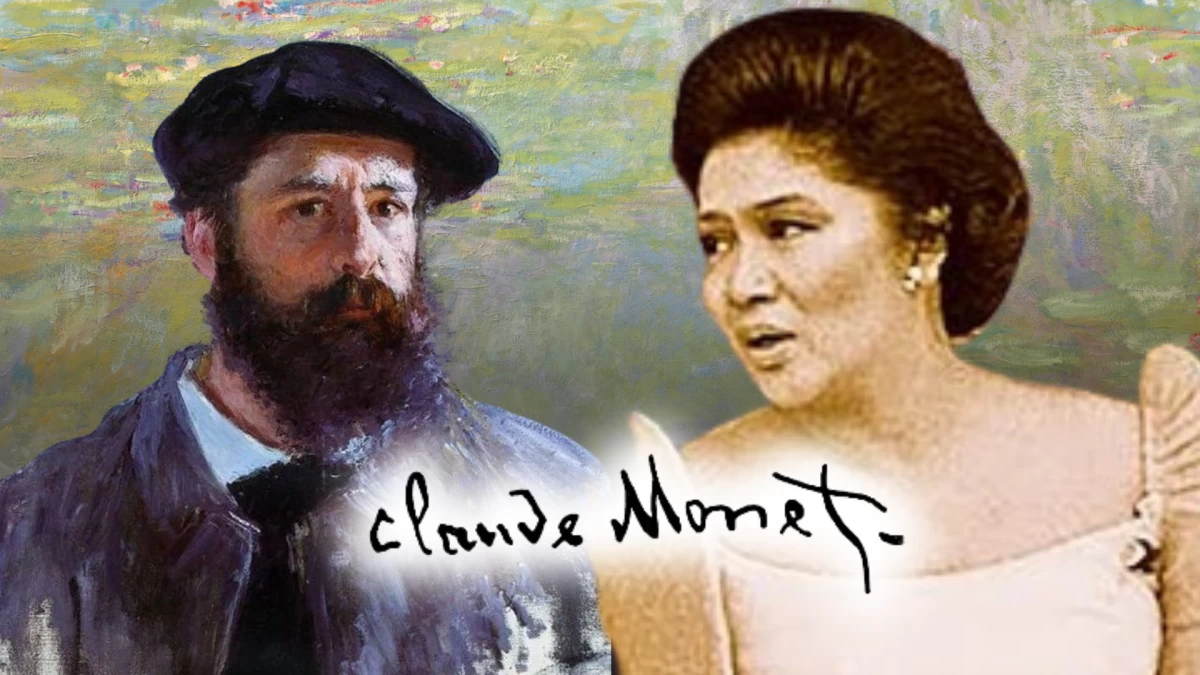
A successful compromise agreement—a process initiated during the previous administration—added ₱714 million to national coffers last May, coming from the current owner of a Monet painting that had been sold overseas and formed part of the ill-gotten wealth of the late strongman Ferdinand E. Marcos Sr., according to the Presidential Commission on Good Government (PCGG).
“This amount represents the proceeds of a compromise agreement entered into by the Republic of the Philippines with the current possessor of Claude Monet’s ‘Water-Lily Pond’ (Le Bassin aux Nymphéas),” said the PCGG, the agency tasked with recovering and selling assets from Marcos Sr., his family, and cronies, in response to a query from Manila Bulletin.
“We would like to clarify that the painting was neither sold nor offered for sale this year,” the PCGG said.
In July, Manila Bulletin reported on the rare ₱714-million PCGG remittance to the national treasury, which the Department of Finance (DOF) had attributed to the “sale” of a Monet painting.
Prior to May 2025, the PCGG had not remitted any privatization revenues since about ₱900,000 was turned over in May 2023 from the sale of a 300-square-meter (sqm) property in Calapan, Oriental Mindoro.
According to news reports in 2013, the Philippine government had maintained its legal claim to “Le Bassin aux Nymphéas.”
This Monet painting, once part of the Marcoses’ collection of Impressionist art, was reportedly sold in London in 2010 for $43 million by Vilma Bautista, former social secretary to former first lady Imelda R. Marcos, the mother of President Ferdinand R. Marcos Jr.
In 2019, veteran journalist Gerry Lirio reported that the Duterte administration sought $30 million from British billionaire Alan Howard in exchange for dropping a lawsuit over his 2010 purchase of “Le Bassin aux Nymphéas,” which is said to be one of the most expensive paintings owned by Imelda.
“Given that the Republic’s claim over the artwork was considered time-barred, the PCGG pursued the most advantageous outcome possible through a compromise,” the PCGG told Manila Bulletin.
“This resulted in the ₱714-million remittance to the national treasury, ensuring that the Republic still derived meaningful benefit from the asset,” the PCGG added.
In 2018, Lirio also reported that Monet’s “L’Eglise à La Seine à Vétheuil,” one of three paintings seized from Bautista, was sold at Christie’s New York for $2.6 million in November of that year.
The PCGG’s website features a gallery called “The Missing Art Movement,” which lists Marcos-era artworks that were recovered and sold by the PCGG; located and held in custody (custodia legis); located but not in the PCGG’s possession; or still missing.
The gallery, set up in 2017—also during the Duterte administration—is subtitled “The Art of Stealing,” with the hashtag: #ShowMetheMonet.
“After the EDSA Revolution, the PCGG unearthed evidence that the Marcoses amassed a vast collection of artwork worth millions of dollars grossly disproportionate to their legal income, including those from the Old Masters such as Van Gogh, Picasso and Monet. Some have been recovered, but most have not. It is time to get them back,” read the description of the gallery.
The lone Monet painting listed in the PCGG’s The Missing Art Movement gallery is “La Pluie,” which is marked as “missing.”
According to the PCGG, the painting measures 24 inches in length and 24 inches in width, and is done in oil on canvas.
Monet himself—the French painter who founded the Impressionist movement—signed the lower left corner of the painting, which is regarded as a “defining mark” of the artwork.
The painting’s original acquisition cost was $365,500, according to the PCGG.
Since 1990, the PCGG has raised a total of about ₱120.5 billion from the disposition of Martial Law-era assets, historical Bureau of the Treasury (BTr) data showed.
Before the Benigno Aquino III administration stepped down in 2016, the interagency Privatization Council (PrC) gave its go-ahead to sell about ₱658 million worth of so-called “Hawaii Jewelry” that had belonged to Imelda.
At that time, the PCGG said three Marcos jewelry collections—called Hawaii, Malacañang, and Roumeliotes—had been estimated by auction houses Christie’s and Sotheby’s to be worth a total of at least ₱1 billion, based on 2016 prices.
The Hawaii collection consists of about 300 jewelry pieces confiscated by the United States (US) Customs Bureau in the namesake American state after the Marcoses fled the country in 1986.
This collection includes a 25-carat “extremely rare” pink diamond believed to have been previously owned by a Mughal emperor, which had been estimated to be worth at least $5 million.
Last week, Manila Bulletin reported that revenues collected from privatization had already surpassed the downscaled ₱5-billion target for the year, after the private-sector operator of Cavite-Laguna Expressway (CALAX) paid a partial ₱4.415 billion in concession fees owed to the government.
Finance Undersecretary Catherine L. Fong, who heads the DOF’s Privatization and Partnerships Group (PPG), told Manila Bulletin that year-to-date privatization revenues as of July had reached ₱5.528 billion.
End-July 2025 revenues from privatization have already exceeded the government’s annual collections since 2019, BTr data showed.
For 2026, the government is targeting a record ₱101 billion in privatization revenues. The 2025 goal was also originally ₱101 billion, before it was slashed to only ₱5 billion.