







Is the Philippines ready for a nuclear comeback?
Published Aug 23, 2025 12:01 am


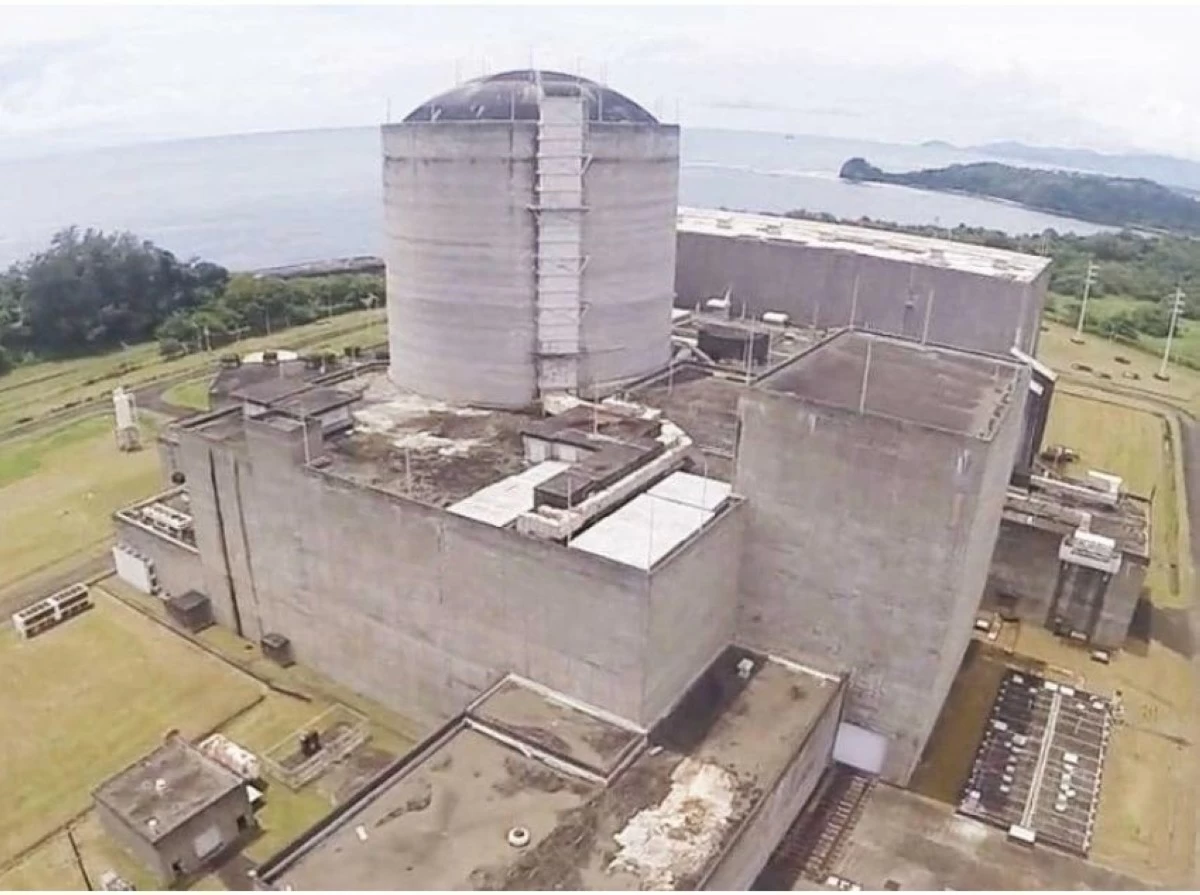
(Manila Bulletin file photo)
The Philippines’ newly ratified bill on the Philippine Atomic Regulatory Authority (PhilAtom) signals a potential return to nuclear energy, 39 years after the government shut down its first attempt. As the country reopens the door to this power technology, concerns over environmental risks, public safety and national security remain heavy on the minds of average Filipinos. The question now is: Is the Philippines truly ready to embrace nuclear energy?
Arthur D. Little (ADL), global consulting firm, shared insights on how the Philippines can become one of the first nuclear energy developers in the Association of Southeast Asian Nations. In an exclusive interview with the Manila Bulletin, the firm discussed the regulatory groundwork, feasibility studies and reactor designs that can be tailored to the country's needs.
Lars Thurmann-Moe, ADL head of energy and utilities in the Nordics, explained that global collaboration is key to integrating nuclear sources into the country’s energy mix. Nuclear projects, even small modular reactors, can be installed at up to a 300-megawatt capacity. Since this is an emerging technology, he said assistance from international experts will be needed.
“What’s good with the industry is that we have managed to collaborate well across borders, so there is an international agency that is not only overseeing, but is also developing and innovating on your stand-ups and guidelines,” Thurmann-Moe said.
He cited the strict regulations from other countries’ nuclear bodies that could help guide the Philippines, especially since local agencies have yet to outline how they plan to oversee future projects.
“If we look into the Philippines, we are very confident that the Philippine nuclear regulator and oversight authority will embed state-of-the-art regulations… They will reach out to the International Atomic Energy Agency, and understand how this is going to be done, and carefully adapt to those guidelines.”
No nuclear projects should be rushed
Matters to be addressed include site selection, zoning and reactor design. While knowledge exchange and expert recommendations are a clear starting point for the Philippines, Thurmann-Moe noted that these processes take time before any project can be commissioned and approved. No nuclear project should be rushed, even though the country already has the Bataan Nuclear Power Plant, which was mothballed decades ago due to safety and political risks.
Anna Rellama, a principal at Arthur D. Little Southeast Asia, noted that despite the plant’s long-abandoned status, nuclear technologies and pre-development transparency have significantly improved over the years. These factors previously led to nuclear developments being halted.
“The world in the ‘80s [was] completely different from the world now. Now, you can make decisions fast… data sharing and transparency are as good as they can get,” she said.
With regard to the PhilAtom Bill, which enables the establishment of a regulatory framework for nuclear energy, Rellama clarified that meaningful discussions can only begin once an official regulatory body is in place. “That’s the only time that the actual proper debate can start, where we can actually decide on these things… [Nuclear] needs to be regulated and overseen properly and independently.”
Based on international experience, Rellama said that it typically takes 10 to 15 years from a government’s political decision to actual nuclear power production.
“After Three Mile Island (1979) and Fukushima (2011), safety requirements became tougher, from operator training to backup systems and emergency planning. Today, regulators demand not only compliance but also strong organizational capacity from utilities,” she added.
Cost impact and incentive schemes
While strict regulatory enforcement is crucial, another concern is how nuclear energy would impact consumers and the local economy. Trung Ghi, partner and head of energy and utilities for SEA, said that although nuclear developments are burdened with high upfront investment costs, energy tariffs will eventually go down if the nuclear transition is successful and delivers strong social returns on investment.
Citing solar technology as an example, Ghi explained that with strong collaboration across all stages of construction and operations, nuclear energy could deliver benefits all the way down to households.
According to him, once technology pricing goes down, “everything’s going down, which then means electricity prices for these are actually going down as well. Until we get to that point.”
Rellama weighed in, stating that there will realistically be challenges to overcome—particularly in determining who will absorb the initial high costs of nuclear development, as consumers alone cannot bear all the expenses of integration.
“You cannot just mandate the DUs (distribution utilities) to absorb that. It’s not going to work. It has to be more of a whole-of-ecosystem or a whole-of-industry approach, so that even large corporations, perhaps, can participate in absorbing a lot of that new demand,” she explained.
The analysts noted that existing incentives in other countries, such as the United Kingdom’s Contract for Difference and Regulated Asset Base models, U.S. tax credits and loan guarantees, and Europe’s inclusion of nuclear in the sustainable finance taxonomy, could be adapted by the Philippines.
“For emerging technologies like Small Modular Reactors (SMRs), ADL also emphasizes that standardization and economies of multiples will be essential to bring costs down — something that only happens if early projects are de-risked with policy support,” Rellama added.
Risks of unrealistic timelines
The Department of Energy (DOE) previously outlined in its Nuclear Energy Roadmap that the Philippines may develop a commercially operational plant by 2032. Analysts believe this timeline could be unrealistic, as it needs to go through rigorous studies before reaching this point. Ghi elaborated that the country needs to start small and take gradual steps, much like the PhilAtom bill.
“You’re not going to get things ready… To have it as a baseload will be quite dangerous and risky… For example, [Malaysia], they’re doing it by 2032, I believe, but they’re small, right? So they’re not going to be building a large nuclear power plant, not yet anyway.”
To encourage nuclear investments, the DOE is considering incentives for developers. Ghi cautioned that if incentives are not carefully designed, they might attract unprepared players, which could lead to more risks.
“I think the question really needs to first look into what is that incentive that they’re proposing, and how does this mean for the players they’re attracting?” he suggested.
According to the analyst, a well-structured incentive can bring together the right mix of private companies, regulators and other stakeholders to ensure reliable operations. This would ultimately lead to lower electricity prices for consumers and justify the use of public funds to accelerate nuclear development.
Ghi added that this could lead to “reduced electricity prices eventually for end-users and consumers.”
Moving forward, these analysts hope that the local government, regulators and nuclear stakeholders will provide Filipinos with a state-of-the-art regulatory framework, as well as rigorous assessments in terms of emergency preparedness and transparent engagement, to build the trust needed to welcome nuclear.