






Manila Bulletin
 Philippines
National
House, Romualdez join push for 100% public school Internet connectivity
Philippines
National
House, Romualdez join push for 100% public school Internet connectivity
Philippines
National
House, Romualdez join push for 100% public school Internet connectivity
House, Romualdez join push for 100% public school Internet connectivity
Published Aug 23, 2025 11:51 am


At A Glance
- House Speaker Martin Romualdez has vowed to help the Department of Information and Communication Technology's (DICT) efforts to achieve 100 percent Internet connectivity for all public schools in the country by the end of the year.
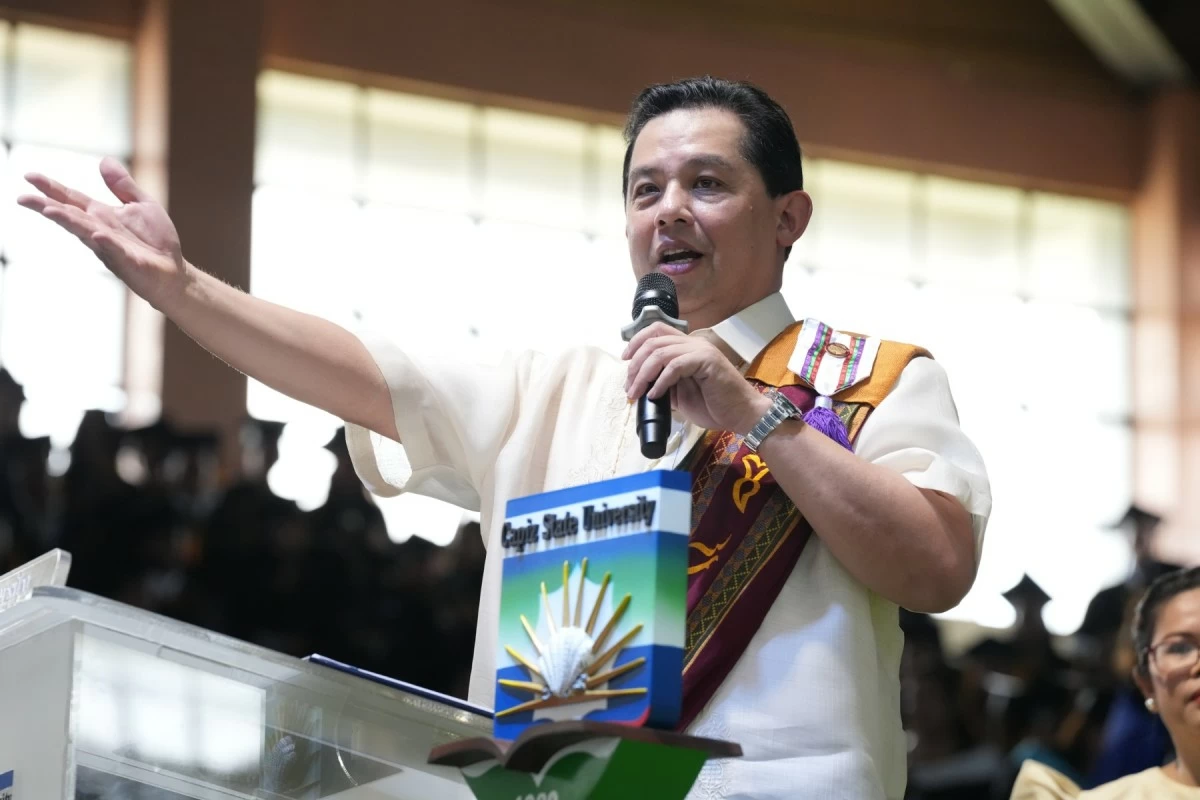
House Speaker Martin Romualdez (PPAB)
House Speaker Martin Romualdez has vowed to help the Department of Information and Communication Technology’s (DICT) efforts to achieve 100 percent Internet connectivity for all public schools in the country by the end of the year.
Romualdez said that having all public schools connected online is crucial to closing the digital gap and achieving the transformation of the education sector as envisioned by President Marcos.
“This is how our people’s taxes should be used for the benefit of our learners—so that they may become competent, skilled, and competitive, and eventually be gainfully employed in fulfilling livelihoods to help them lift their families out of poverty,” the Lakas-Christian Muslim Democrats (Lakas-CMD) president said
He made the remarks after DICT Secretary Henry Rhoel Aguda said 78 percent of public schools are connected to the Internet, leaving around 12,000 public schools mostly in geographically isolated and disadvantaged areas without Internet access.
In his speech before the Philippine Chamber of Commerce and Industry in Makati City earlier this week, Aguda assured that the government was resolute in expanding the coverage of the National Fiber Backbone project which is projected to benefit around 17 million Filipinos.
“We in the House of Representatives are fully behind the Marcos administration’s goal of a fully online Philippines and the digitalization of our bureaucracy—and this includes encompassing fast Internet access for our students,” Romualdez stressed.
“As we deliberate and craft the proposed ₱6.793 trillion national budget for 2026, we will carefully scrutinize how past funds for Internet connectivity were spent to ensure that relevant government agencies are able to fully utilize their budget to bring Internet access to our countrymen,” he said.
Romualdez emphasized that the initiative goes beyond technology, as it forms part of the President’s vision of a digital, inclusive Philippines where connectivity opens doors to quality education, improved public services, and expanded economic opportunities.
“By connecting all public schools, we are laying the foundation for a more inclusive digital economy. This will empower our students with the tools and skills they need to thrive in a future where technology drives growth and progress,” noted the House leader.
Under the DICT’s proposed funding, ₱5 billion was allocated for the implementation of the Free Public Internet Access Program which has activated 18,849 sites across the country. This will fund backbone, middle mile, and last mile ICT infrastructure, and the construction of towers, data centers, assets, among others, and will be sourced from the Spectrum Users Fee collected by the National Telecommunications Commission.
To enhance the push for digital transformation in the country’s schools, the Department of Education (DepEd) was allocated P16.5 billion for its Computerization Program for 2026.