ADVERTISEMENT

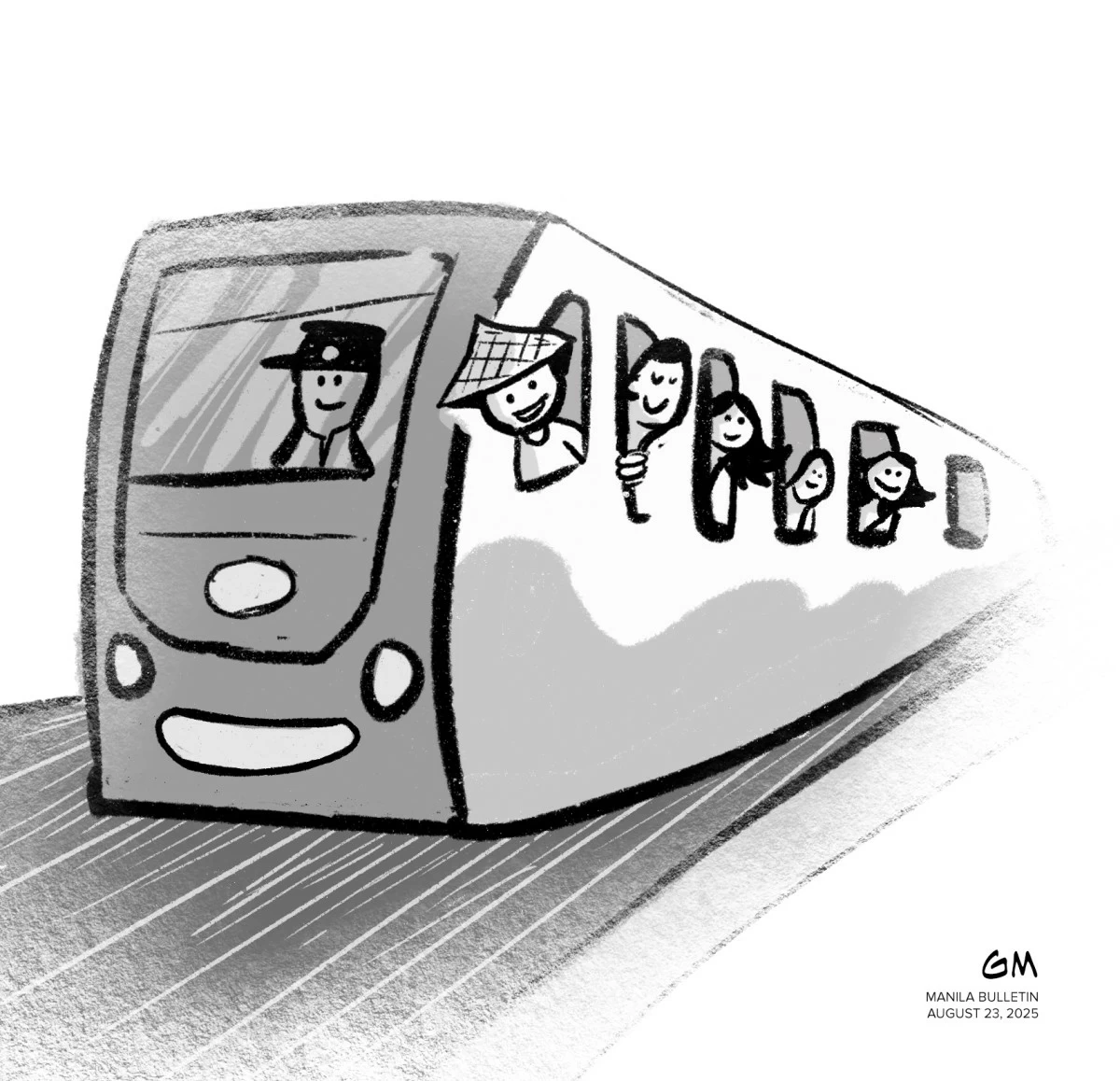
Heavier traffic and the push to have a commuter-centric system

Published Aug 23, 2025 12:05 am  |  Updated Aug 22, 2025 04:22 pm
Metro Manila’s roads have been choked with heavier-than-usual traffic in recent weeks, and the frustration is growing more palpable by the day. That’s expected to get heaviest when the Christmas season rolls in, which is in September, only a week away. If today we are experiencing 90-minute travel to destinations that took less than an hour months ago, motorists and commuters can expect more hours wasted on the road.
The causes are complex—but not unfamiliar. Too many private cars. Not enough public transport. Shrinking road space due to informal street parking, sidewalk encroachment, and commercial activity spilling onto inner roads.
Add to that the Philippine capital’s outdated urban design, which for decades has prioritized cars over people, and we now find ourselves in a gridlock crisis that no longer only clogs roads—it constrains lives.
But there’s a glimmer of change which will come years – maybe even a decade – from now.
President Ferdinand Marcos Jr. recently addressed this issue, stating that the Philippines is actively shifting away from a “car-centric” transport model—a dramatic but necessary pivot for a country that has long equated progress with car ownership.
In the third episode of his podcast aired on Aug. 7, the President admitted that the lack of reliable public transport has forced Filipinos to buy their own vehicles. It’s a painful cycle: unreliable public transport leads to more private cars, which in turn worsens congestion and reduces mobility for all.
The President outlined a goal – daily commutes should not exceed one hour each way. To meet this, the administration is investing in better infrastructure—not just new roads but new transit options. Notably, the long-unused Dalian trains are finally being reconditioned and deployed. More importantly, the country’s first-ever subway is under construction, a long-overdue upgrade to a transport system buckling under the weight of a growing population.
Transportation Secretary Vince Dizon, in a global infrastructure forum in Singapore last week, urged international partners to help realize this vision, highlighting the ambitious North-South Commuter Railway (NSCR)—a 147-kilometer line expected to serve 750,000 passengers daily by the time it’s fully operational in 2032.
But this infrastructure overhaul, while essential, is a long-term fix. In the meantime, authorities are also tackling the everyday culprits behind rising traffic congestion.
The Department of the Interior and Local Government (DILG) has proposed banning street parking on all Metro Manila roads from 5 a.m. to 10 p.m., while the MMDA suggests a more targeted rush-hour restriction. Both approaches aim to reclaim road space that has long been commandeered by private vehicles, especially in inner-city streets.
Another measure under review is the “Proof of Parking Space Act,” which would require vehicle buyers to certify they have a proper parking area before registering a new car. It’s a basic principle in cities like Tokyo and Singapore—both of which have managed to maintain modern, efficient mobility despite high population densities.
Still, these policy shifts must come with serious political will. Regulations are only as strong as their enforcement, and Metro Manila’s traffic woes have persisted for decades in part due to lax implementation and inconsistent leadership.
The push toward a commuter-focused future is not just about decongesting roads—it’s about restoring time, dignity, and opportunity to the everyday lives of millions of Filipinos. Long commutes rob people of time with family, reduce productivity, and take a mental toll. Creating a city that moves better means creating a city that lives better.
But meaningful change will depend on the continued alignment of policy, investment, enforcement—and perhaps most importantly, public support.
ADVERTISEMENT
.most-popular .layout-ratio{ padding-bottom: 79.13%; } @media (min-width: 768px) and (max-width: 1024px) { .widget-title { font-size: 15px !important; } }

{{ articles_filter_1561_widget.title }}

.most-popular .layout-ratio{ padding-bottom: 79.13%; } @media (min-width: 768px) and (max-width: 1024px) { .widget-title { font-size: 15px !important; } }

{{ articles_filter_1562_widget.title }}

.most-popular .layout-ratio{ padding-bottom: 79.13%; } @media (min-width: 768px) and (max-width: 1024px) { .widget-title { font-size: 15px !important; } }

{{ articles_filter_1563_widget.title }}

{{ articles_filter_1564_widget.title }}

.mb-article-details { position: relative; } .mb-article-details .article-body-preview, .mb-article-details .article-body-summary{ font-size: 17px; line-height: 30px; font-family: "Libre Caslon Text", serif; color: #000; } .mb-article-details .article-body-preview iframe , .mb-article-details .article-body-summary iframe{ width: 100%; margin: auto; } .read-more-background { background: linear-gradient(180deg, color(display-p3 1.000 1.000 1.000 / 0) 13.75%, color(display-p3 1.000 1.000 1.000 / 0.8) 30.79%, color(display-p3 1.000 1.000 1.000) 72.5%); position: absolute; height: 200px; width: 100%; bottom: 0; display: flex; justify-content: center; align-items: center; padding: 0; } .read-more-background a{ color: #000; } .read-more-btn { padding: 17px 45px; font-family: Inter; font-weight: 700; font-size: 18px; line-height: 16px; text-align: center; vertical-align: middle; border: 1px solid black; background-color: white; } .hidden { display: none; }
function initializeAllSwipers() { // Get all hidden inputs with cms_article_id document.querySelectorAll('[id^="cms_article_id_"]').forEach(function (input) { const cmsArticleId = input.value; const articleSelector = '#article-' + cmsArticleId + ' .body_images'; const swiperElement = document.querySelector(articleSelector); if (swiperElement && !swiperElement.classList.contains('swiper-initialized')) { new Swiper(articleSelector, { loop: true, pagination: false, navigation: { nextEl: '#article-' + cmsArticleId + ' .swiper-button-next', prevEl: '#article-' + cmsArticleId + ' .swiper-button-prev', }, }); } }); } setTimeout(initializeAllSwipers, 3000); const intersectionObserver = new IntersectionObserver( (entries) => { entries.forEach((entry) => { if (entry.isIntersecting) { const newUrl = entry.target.getAttribute("data-url"); if (newUrl) { history.pushState(null, null, newUrl); let article = entry.target; // Extract metadata const author = article.querySelector('.author-section').textContent.replace('By', '').trim(); const section = article.querySelector('.section-info ').textContent.replace(' ', ' '); const title = article.querySelector('.article-title h1').textContent; // Parse URL for Chartbeat path format const parsedUrl = new URL(newUrl, window.location.origin); const cleanUrl = parsedUrl.host + parsedUrl.pathname; // Update Chartbeat configuration if (typeof window._sf_async_config !== 'undefined') { window._sf_async_config.path = cleanUrl; window._sf_async_config.sections = section; window._sf_async_config.authors = author; } // Track virtual page view with Chartbeat if (typeof pSUPERFLY !== 'undefined' && typeof pSUPERFLY.virtualPage === 'function') { try { pSUPERFLY.virtualPage({ path: cleanUrl, title: title, sections: section, authors: author }); } catch (error) { console.error('ping error', error); } } // Optional: Update document title if (title && title !== document.title) { document.title = title; } } } }); }, { threshold: 0.1 } ); function showArticleBody(button) { const article = button.closest("article"); const summary = article.querySelector(".article-body-summary"); const body = article.querySelector(".article-body-preview"); const readMoreSection = article.querySelector(".read-more-background"); // Hide summary and read-more section summary.style.display = "none"; readMoreSection.style.display = "none"; // Show the full article body body.classList.remove("hidden"); } document.addEventListener("DOMContentLoaded", () => { let loadCount = 0; // Track how many times articles are loaded const offset = [1, 2, 3, 4, 5, 6, 7, 8, 9, 10]; // Offset values const currentUrl = window.location.pathname.substring(1); let isLoading = false; // Prevent multiple calls if (!currentUrl) { console.log("Current URL is invalid."); return; } const sentinel = document.getElementById("load-more-sentinel"); if (!sentinel) { console.log("Sentinel element not found."); return; } function isSentinelVisible() { const rect = sentinel.getBoundingClientRect(); return ( rect.top < window.innerHeight && rect.bottom >= 0 ); } function onScroll() { if (isLoading) return; if (isSentinelVisible()) { if (loadCount >= offset.length) { console.log("Maximum load attempts reached."); window.removeEventListener("scroll", onScroll); return; } isLoading = true; const currentOffset = offset[loadCount]; window.loadMoreItems().then(() => { let article = document.querySelector('#widget_1690 > div:nth-last-of-type(2) article'); intersectionObserver.observe(article) loadCount++; }).catch(error => { console.error("Error loading more items:", error); }).finally(() => { isLoading = false; }); } } window.addEventListener("scroll", onScroll); });

Sign up by email to receive news.