

ADVERTISEMENT

Review: Ford Ranger Raptor 2.0L Bi-Turbo 4X4 10AT

Floats like a butterfly…

Published Aug 22, 2025 10:22 am

At A Glance

  • The Ford Ranger Raptor may not be getting as many 'wows' because the novelty has worn off after some years in the market, but it remains one of the top choices for buyers who want a tough-looking truck.
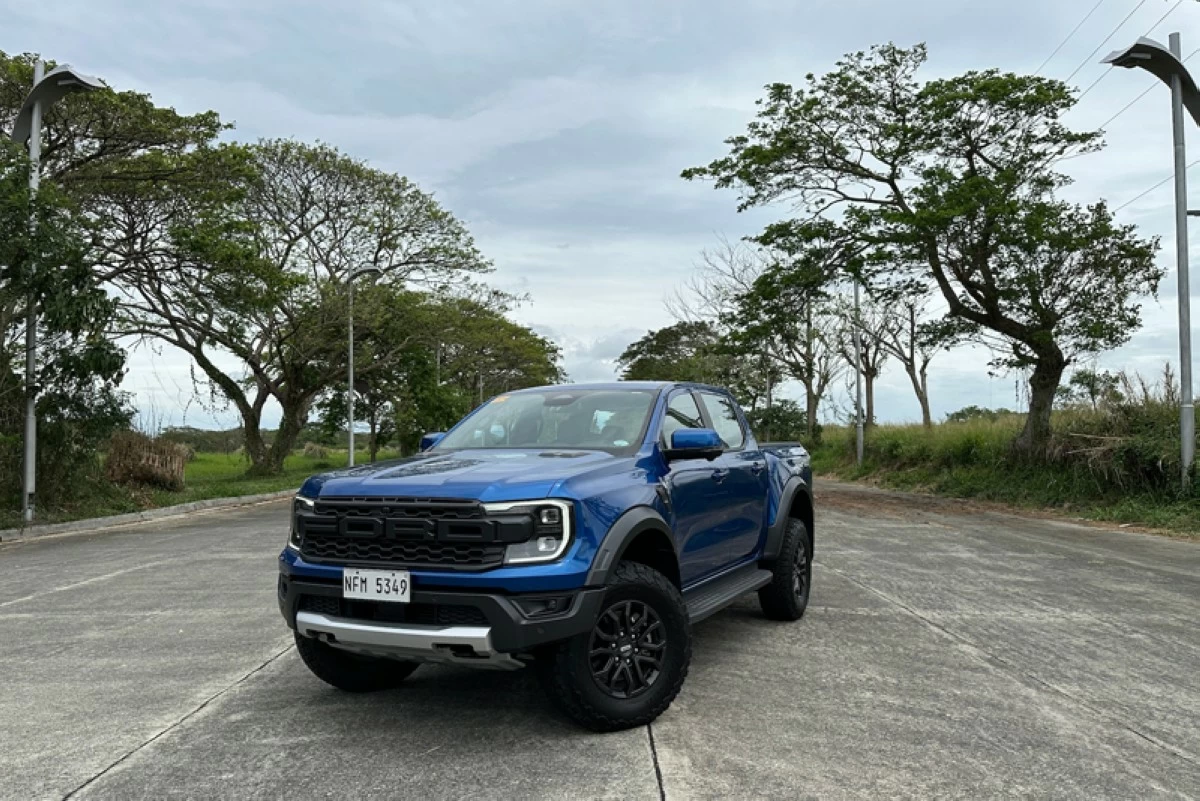
With all due respect to “The Greatest” — for the youngins, that’s the moniker of legendary boxer, Muhammad Ali — I borrow his phrase because it perfectly describes the performance of the second-generation Ranger Raptor mid-size pickup truck.
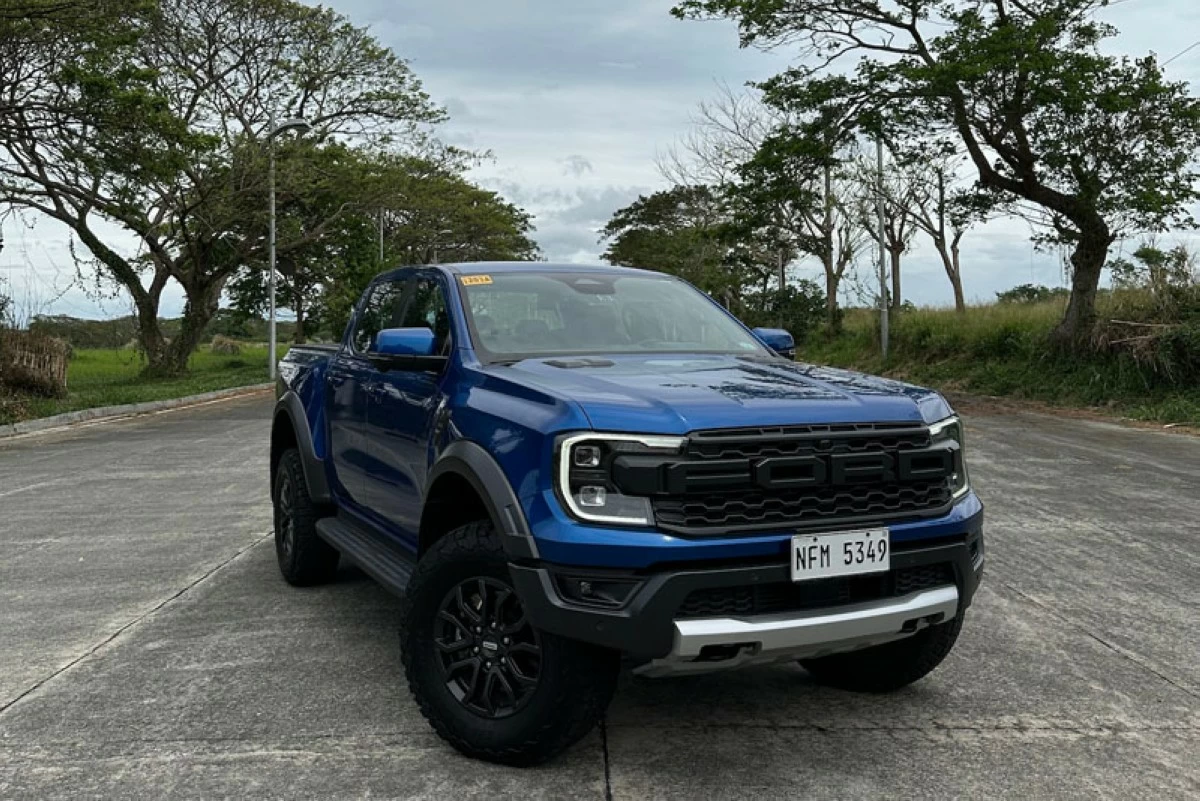
Like the T6 Ranger it is based on, the looks of the Raptor aren’t too far removed from its predecessor. The most noticeable change is the new C-clamp LED daytime running lamps that many motorists gush over. It perfectly wraps around Matrix LED headlamps (with an Adaptive Front Lighting System and auto on/off feature) and the new, wider grille. The front bumper is reshaped with a new housing for the LED fog lamps. Like the first-gen model, it has visible front (and rear) hooks, which gives onlookers a clue of its outstanding capability. The body cladding gets etching, adding texture to the body, and now extends to the slimmer rear bumper. The LED taillights also have a C-clamp design, while the reshaped easy-lift tailgate gets a lip spoiler for added functionality and ‘Ranger’ stamped across its surface. It sits on 17-inch alloy wheels with all-terrain tires and has a 230-volt outlet in the bed.
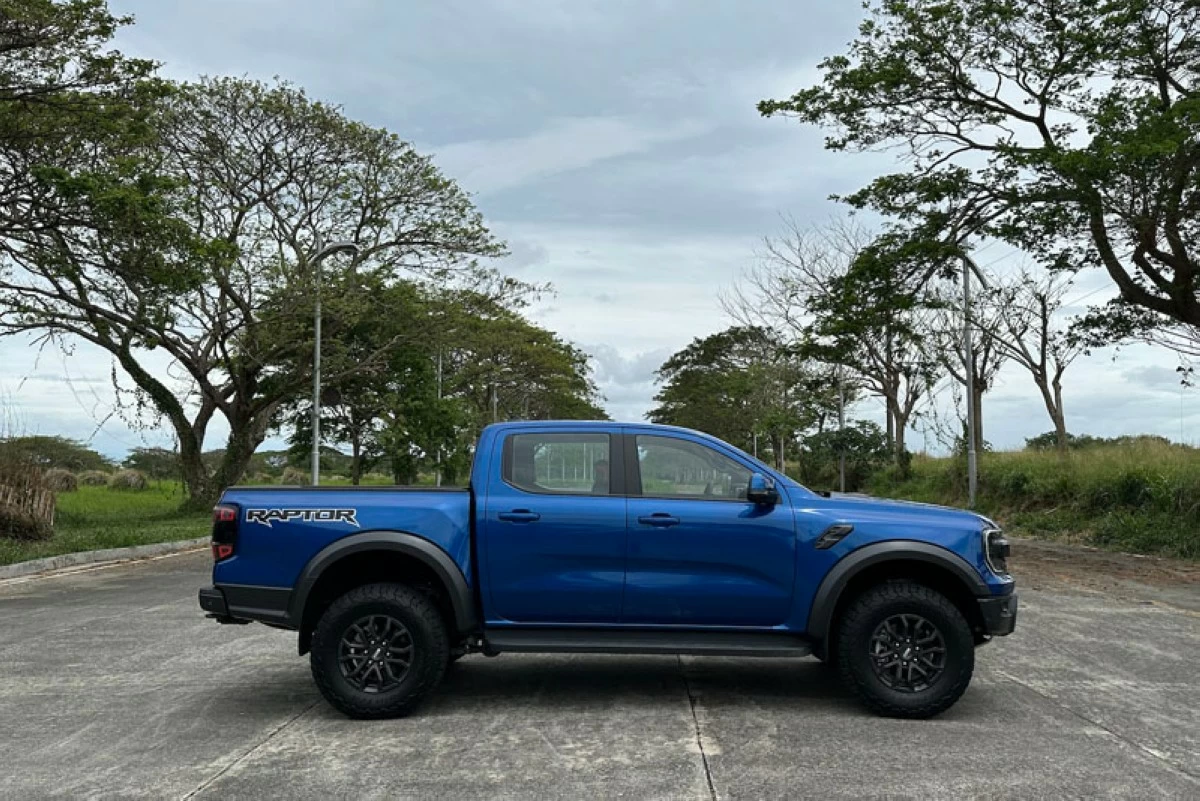
This model is undeniably sharper and leaner. It may not be getting as many ‘wows’ because the novelty has worn off after some years in the market, and rivals have beefed up tremendously to match its looks, but it remains one of the top choices for buyers who want a tough-looking truck.
Despite its rugged good looks, the Raptor is one of the most appointed pickup trucks in the market. It has a passive keyless entry system (unlocks when you reach for the door handle if you have the key in your pocket or bag). It has a welcome light, too, making getting in easy in dark garages.
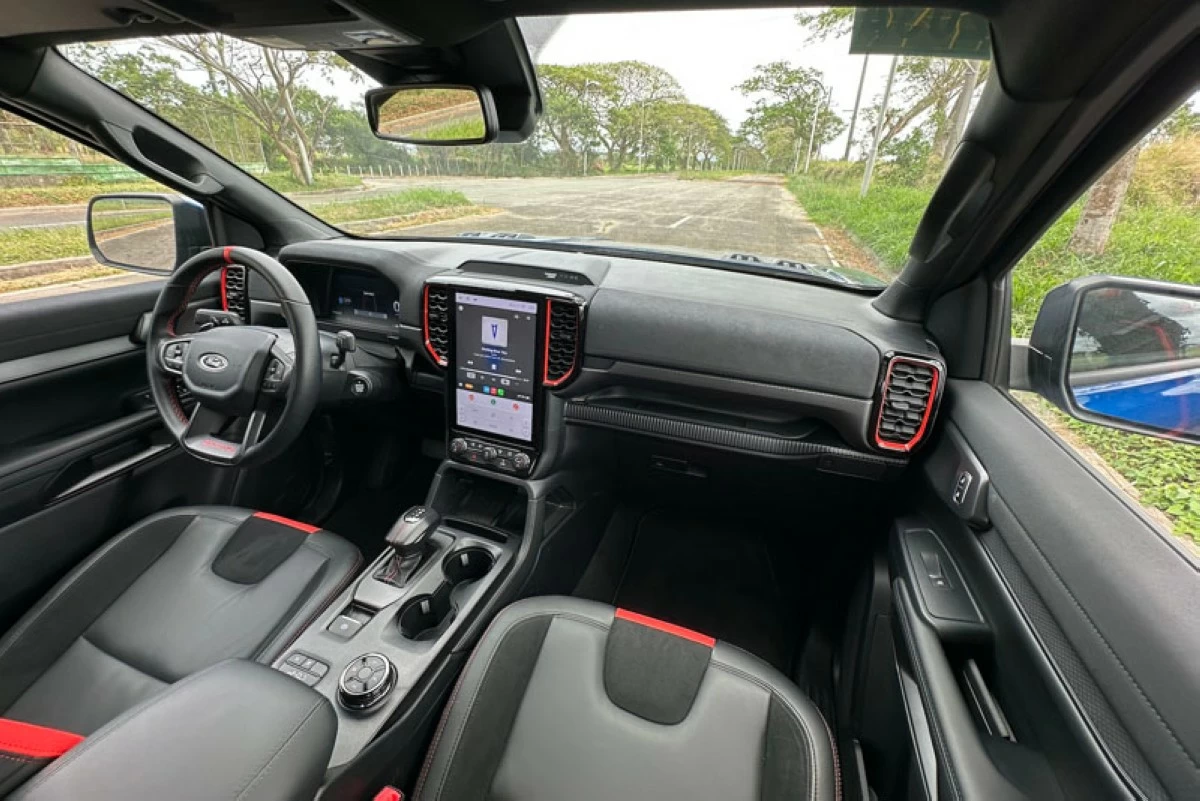
Ford added a lot more orange highlights in the all-black cabin. Aside from the top center of the leather multi-function wheel (with paddle shifters), it’s also around the vents and edges of the leather seats. The vertical orientation of the padded dashboard frees up more legroom for the front passengers and designers thoughtfully more storage solutions. Both front seats are power-adjustable and comfortably bolstered, but the rear is a simple bench with a center armrest. At least it has a fold-up feature to increase cargo space in the rear.
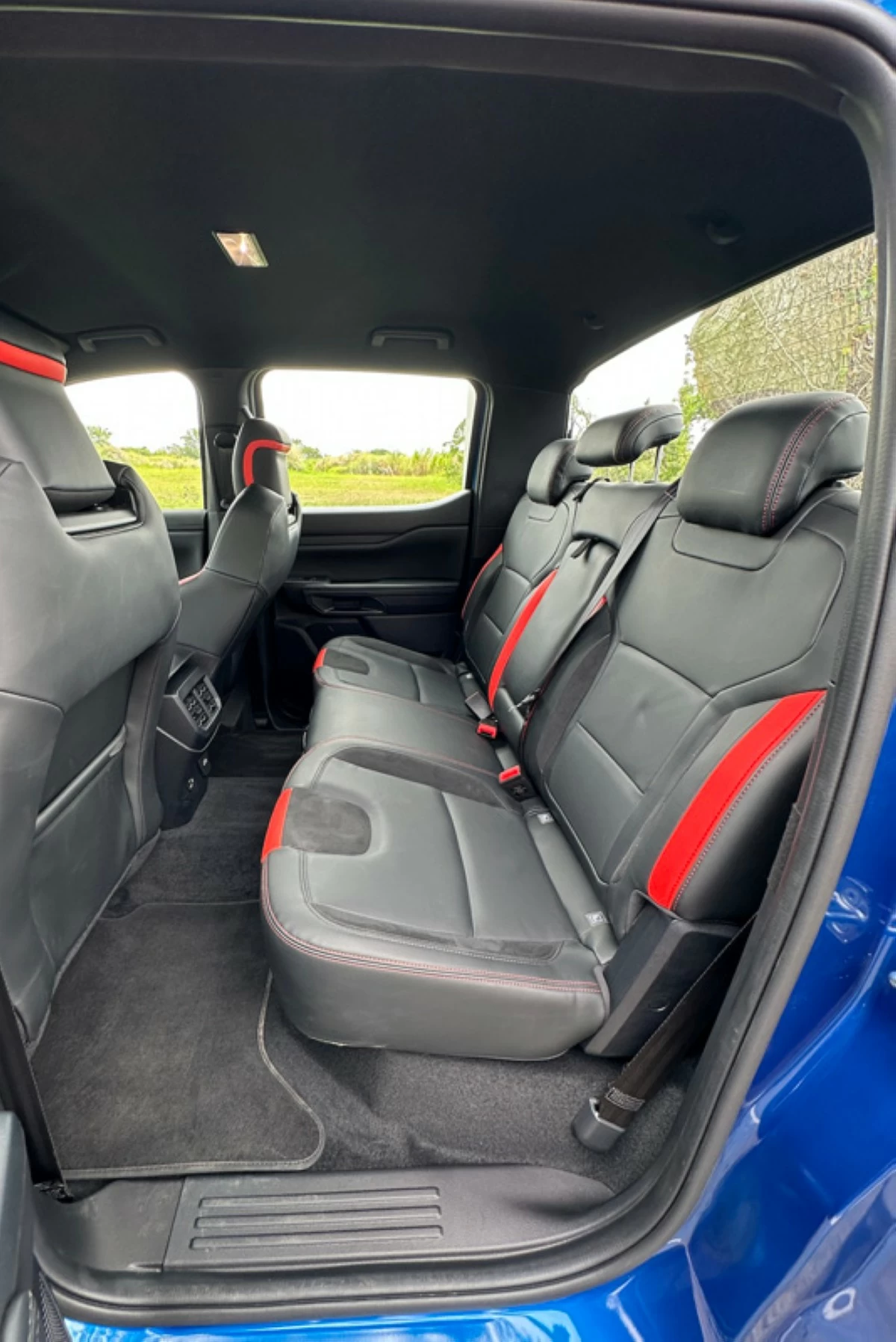
I have mixed feelings about the 12-inch colored portrait touchscreen. As pretty as it is, running on SYNC 4A with voice recognition and wireless Apple CarPlay and Android Auto, Ford put too many of the vehicle’s controls in it, including the auto-hold feature. Turning that, and other systems, on and off is a hassle because even if you have it memorized, it takes several clicks to get there, which is a major distraction during the drive. It has six speakers, USB connectivity across both rows, a dual-zone air-con (with rear vents), and a wireless charging pad in front.
There are two engine options for the Ranger Raptor. My test unit uses a 2.0-liter Bi-Turbo diesel engine that sends 210-PS and 500-Nm to the all-wheel drive layout via a 10-speed automatic transmission with an E-shifter. The output is much less than that of the V6 twin-turbo gas engine, but it didn’t even feel like it. This powertrain, along with the double wishbone suspension with Fox 2.5-inch internal bypass shock absorbers in front and coil-spring with Fox shocks internal bypass reservoir dampers and Watt’s Link at the rear, makes this pickup truck float like a butterfly. It barely shakes over potholes/uneven asphalt patches and accelerates so silky-smoothly that it will put top-ranking mid-size SUVs to shame. It returned 9.8 km/l over six days of mixed driving.
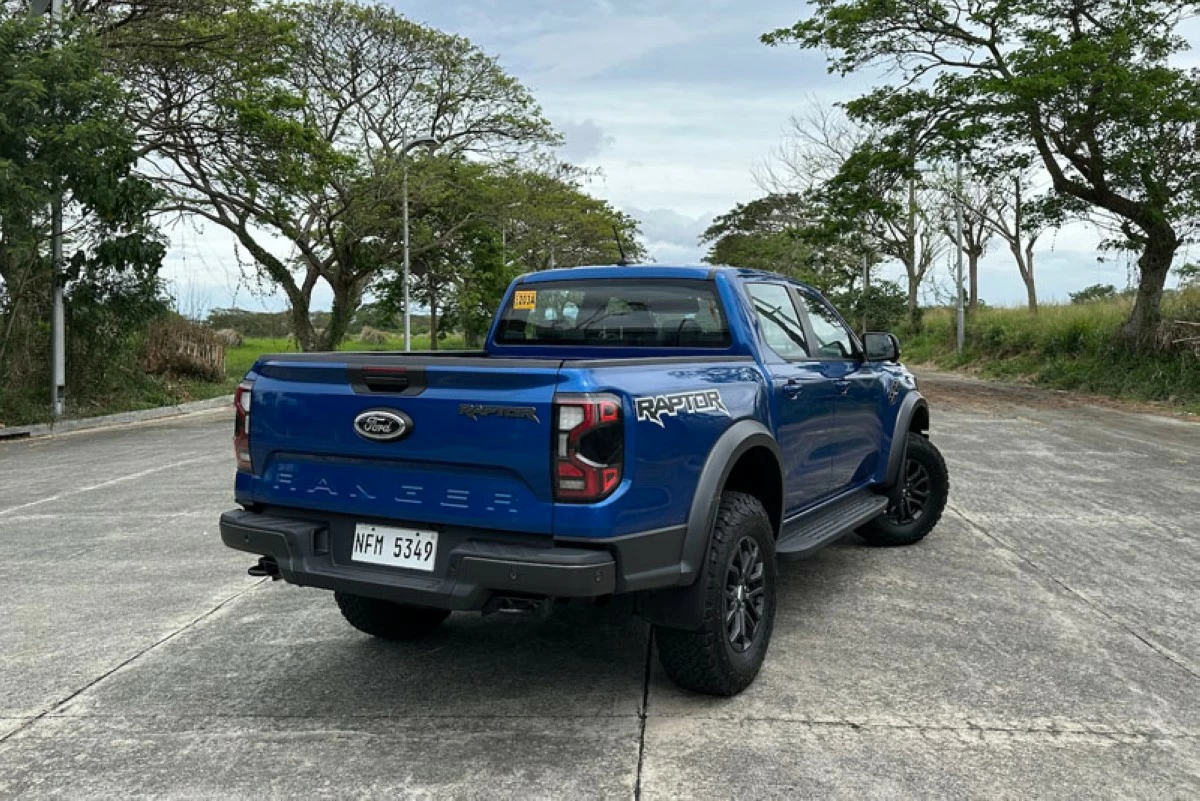
The Ford Ranger Raptor 2.0L Bi-Turbo 4X4 10AT is outstandingly comfortable, which says a lot for a pickup truck, remarkably capable, and is loaded with advanced driver-assist features, including a 360-degree camera, adaptive cruise control, lane departure warning, and lane keeping system, among others. There isn’t much it can’t do in its current state, what more with off-road third-party accessories. It’s no wonder so many Filipinos are getting stung by the Raptor.

Related Tags

Ford
ADVERTISEMENT
.most-popular .layout-ratio{ padding-bottom: 79.13%; } @media (min-width: 768px) and (max-width: 1024px) { .widget-title { font-size: 15px !important; } }

{{ articles_filter_1561_widget.title }}

.most-popular .layout-ratio{ padding-bottom: 79.13%; } @media (min-width: 768px) and (max-width: 1024px) { .widget-title { font-size: 15px !important; } }

{{ articles_filter_1562_widget.title }}

.most-popular .layout-ratio{ padding-bottom: 79.13%; } @media (min-width: 768px) and (max-width: 1024px) { .widget-title { font-size: 15px !important; } }

{{ articles_filter_1563_widget.title }}

{{ articles_filter_1564_widget.title }}

.mb-article-details { position: relative; } .mb-article-details .article-body-preview, .mb-article-details .article-body-summary{ font-size: 17px; line-height: 30px; font-family: "Libre Caslon Text", serif; color: #000; } .mb-article-details .article-body-preview iframe , .mb-article-details .article-body-summary iframe{ width: 100%; margin: auto; } .read-more-background { background: linear-gradient(180deg, color(display-p3 1.000 1.000 1.000 / 0) 13.75%, color(display-p3 1.000 1.000 1.000 / 0.8) 30.79%, color(display-p3 1.000 1.000 1.000) 72.5%); position: absolute; height: 200px; width: 100%; bottom: 0; display: flex; justify-content: center; align-items: center; padding: 0; } .read-more-background a{ color: #000; } .read-more-btn { padding: 17px 45px; font-family: Inter; font-weight: 700; font-size: 18px; line-height: 16px; text-align: center; vertical-align: middle; border: 1px solid black; background-color: white; } .hidden { display: none; }
function initializeAllSwipers() { // Get all hidden inputs with cms_article_id document.querySelectorAll('[id^="cms_article_id_"]').forEach(function (input) { const cmsArticleId = input.value; const articleSelector = '#article-' + cmsArticleId + ' .body_images'; const swiperElement = document.querySelector(articleSelector); if (swiperElement && !swiperElement.classList.contains('swiper-initialized')) { new Swiper(articleSelector, { loop: true, pagination: false, navigation: { nextEl: '#article-' + cmsArticleId + ' .swiper-button-next', prevEl: '#article-' + cmsArticleId + ' .swiper-button-prev', }, }); } }); } setTimeout(initializeAllSwipers, 3000); const intersectionObserver = new IntersectionObserver( (entries) => { entries.forEach((entry) => { if (entry.isIntersecting) { const newUrl = entry.target.getAttribute("data-url"); if (newUrl) { history.pushState(null, null, newUrl); let article = entry.target; // Extract metadata const author = article.querySelector('.author-section').textContent.replace('By', '').trim(); const section = article.querySelector('.section-info ').textContent.replace(' ', ' '); const title = article.querySelector('.article-title h1').textContent; // Parse URL for Chartbeat path format const parsedUrl = new URL(newUrl, window.location.origin); const cleanUrl = parsedUrl.host + parsedUrl.pathname; // Update Chartbeat configuration if (typeof window._sf_async_config !== 'undefined') { window._sf_async_config.path = cleanUrl; window._sf_async_config.sections = section; window._sf_async_config.authors = author; } // Track virtual page view with Chartbeat if (typeof pSUPERFLY !== 'undefined' && typeof pSUPERFLY.virtualPage === 'function') { try { pSUPERFLY.virtualPage({ path: cleanUrl, title: title, sections: section, authors: author }); } catch (error) { console.error('ping error', error); } } // Optional: Update document title if (title && title !== document.title) { document.title = title; } } } }); }, { threshold: 0.1 } ); function showArticleBody(button) { const article = button.closest("article"); const summary = article.querySelector(".article-body-summary"); const body = article.querySelector(".article-body-preview"); const readMoreSection = article.querySelector(".read-more-background"); // Hide summary and read-more section summary.style.display = "none"; readMoreSection.style.display = "none"; // Show the full article body body.classList.remove("hidden"); } document.addEventListener("DOMContentLoaded", () => { let loadCount = 0; // Track how many times articles are loaded const offset = [1, 2, 3, 4, 5, 6, 7, 8, 9, 10]; // Offset values const currentUrl = window.location.pathname.substring(1); let isLoading = false; // Prevent multiple calls if (!currentUrl) { console.log("Current URL is invalid."); return; } const sentinel = document.getElementById("load-more-sentinel"); if (!sentinel) { console.log("Sentinel element not found."); return; } function isSentinelVisible() { const rect = sentinel.getBoundingClientRect(); return ( rect.top < window.innerHeight && rect.bottom >= 0 ); } function onScroll() { if (isLoading) return; if (isSentinelVisible()) { if (loadCount >= offset.length) { console.log("Maximum load attempts reached."); window.removeEventListener("scroll", onScroll); return; } isLoading = true; const currentOffset = offset[loadCount]; window.loadMoreItems().then(() => { let article = document.querySelector('#widget_1690 > div:nth-last-of-type(2) article'); intersectionObserver.observe(article) loadCount++; }).catch(error => { console.error("Error loading more items:", error); }).finally(() => { isLoading = false; }); } } window.addEventListener("scroll", onScroll); });

Sign up by email to receive news.