







Marcos reaffirms PH commitment to humanitarian law
Published Aug 22, 2025 01:58 pm


At A Glance
- During the meeting, the President reaffirmed the Philippines' support for the promotion of humanitarian law as a foundation of peace, security, and human dignity.
President Marcos highlighted the Philippines’ role in promoting international humanitarian law as he received International Committee of the Red Cross (ICRC) President Mirjana Spoljaric Egger in Malacañan this week.
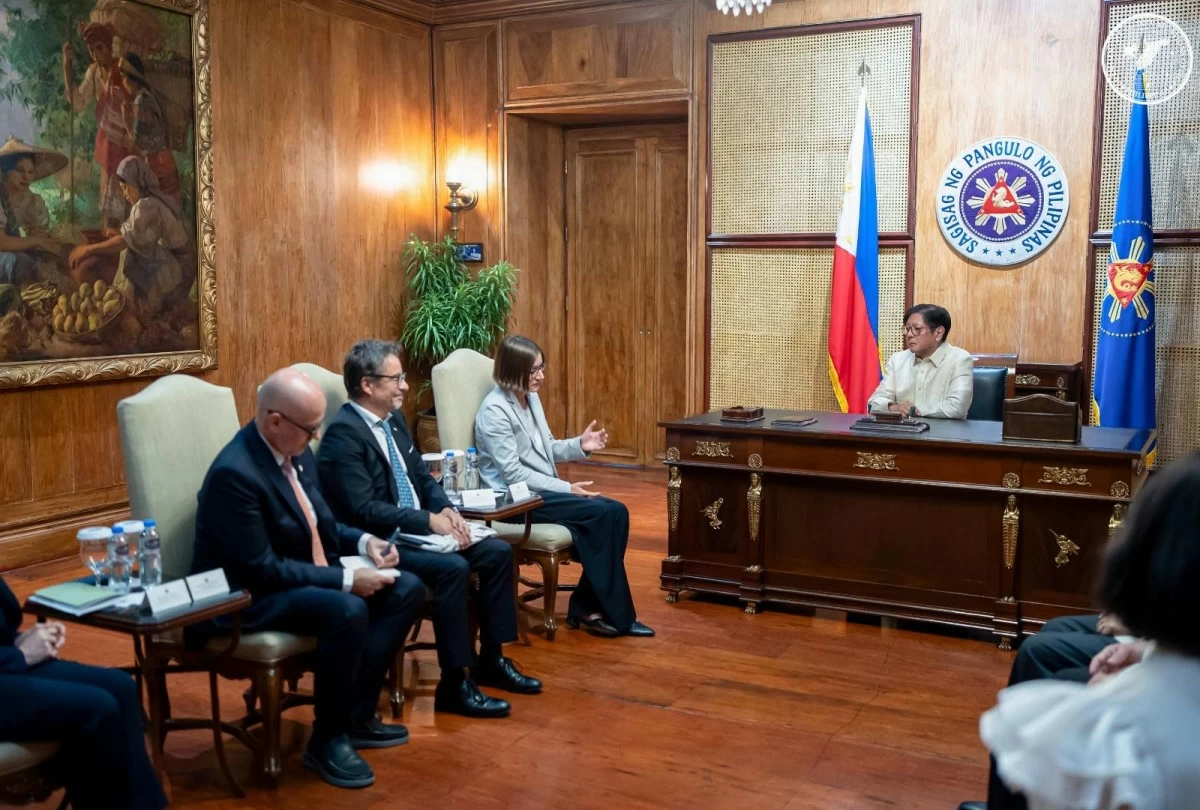
President Ferdinand 'Bongbong' Marcos Jr. receives International Committee of the Red Cross (ICRC) President Mirjana Spoljaric Egger for a courtesy call at Malacañan Palace on Aug. 19. (PCO)
“Upholding international humanitarian law largely rests on the firm resolve of national governments,” Marcos said during the courtesy call on Aug. 19.
“Ultimately, we bear the responsibility of translating international commitments into domestic policies and practices to protect the most vulnerable,” he added.
During the meeting, the President reaffirmed the Philippines’ support for the promotion of humanitarian law as a foundation of peace, security, and human dignity.
Marcos and Spoljaric also discussed the Philippines’ voice in fostering peace and dialogue in the Asia-Pacific and its contribution to addressing global humanitarian crises and armed conflict.
Spoljaric highlighted the Philippines’ leadership in ASEAN and its potential to support dialogue for ceasefires in conflict-affected regions.
The meeting followed the International Humanitarian Law Asia Pacific Regional Conference held in Manila on Aug. 11 to 14, co-hosted by the Philippines and ICRC.
At the conference, the Philippines shared its experience in setting up an Inter-Agency Committee on International Humanitarian Law through Executive Order No. 77, signed last year by Marcos.
The Philippines is one of only six countries in the Asia-Pacific with a permanent national IHL committee.
The ICRC and the Philippines have worked together since World War II, with joint efforts in humanitarian assistance during armed conflicts, natural disasters, and other crises.
In the country, ICRC provides support by protecting civilians, monitoring detention facilities, advocating humane treatment of prisoners, and restoring family links.
ICRC maintains offices in Manila, Cotabato, Zamboanga, Butuan, and the Visayas, and works closely with the Philippine Red Cross, its partner since the 1970s.
Established in 1863 in Geneva, the ICRC is an impartial, neutral, and independent humanitarian organization with about 18,000 staff in around 100 countries.
Its mandate is to protect the lives and dignity of those affected by conflict and violence, and to promote respect for international humanitarian law.