

ADVERTISEMENT

HSBC: BSP to cut key rate to 4.5% by first quarter 2026

Published Aug 22, 2025 02:57 pm

At A Glance

  • In a shift from its recent cautious stance, British banking giant HSBC now believes the Bangko Sentral ng Pilipinas (BSP) has the room to quicken and deepen its monetary easing cycle, driven by continued positive developments in the inflation outlook.
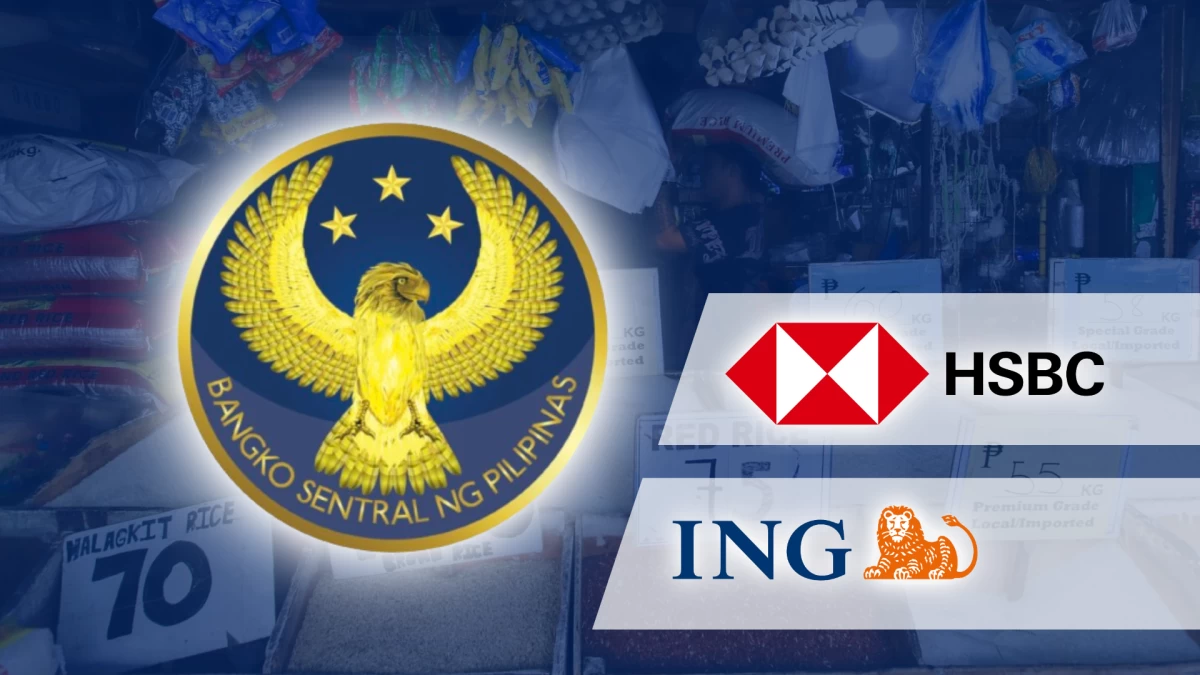
In a shift from its recent cautious stance, British banking giant HSBC now believes the Bangko Sentral ng Pilipinas (BSP) has the room to quicken and deepen its monetary easing cycle, driven by continued positive developments in the inflation outlook.
According to HSBC ASEAN Economist Aris Dacanay, the bank expects two 25 basis point (bp) reductions from the BSP this year, bringing the key rate down to five percent, supported by contained inflation.
Dacanay also expects another quarter-point cut in the first quarter of 2026, which would lower the rate further to 4.5 percent.
“Given the performance of inflation so far, the BSP, we believe, has the runway to quicken and, most especially, deepen its easing cycle,” Dacanay said in a commentary published Friday, Aug. 22.
The rate of increase in consumer prices reached its lowest pace in nearly six years in July at 0.9 percent. It can be recalled that this below one-percent inflation rate was driven by the steepest drop in rice prices in July since 1995.
Citing tamest inflation, Dacanay now expects the BSP to deliver another 25 bps reduction next week, which, if realized, would bring the key policy rate down to five percent from the current 5.25 percent.
“With price pressures subdued, the real policy rate in the Philippines has remained elevated, giving the BSP room to deepen its easing cycle,” Dacanay said.
Apart from this, Dacanay also anticipates more reductions, arguing that the BSP has space to shave rates further “because savings have finally returned.”
He previously anticipated that the central bank would end its easing cycle when the policy rate reached five percent, which the market is looking forward to on Aug. 28.
But now, he expects the BSP to lower its policy rate by 25 bps to 4.75 percent in the fourth quarter of 2025, followed by another cut to 4.5 percent in the first quarter of 2026, if rice price hikes remain under control.
Dacanay noted that if the central bank proceeds further with policy easing next week, the gap between its rate and the United States (US) Federal Reserve’s upper-bound rate could shrink to just 50 bps.
“That would be the narrowest policy rate differential seen since the BSP shifted to an inflation targeting framework back in 2002,” Dacanay noted. “And we think the BSP does have the room and, perhaps, the opportunity to do the unprecedented.”
Dacanay noted that lower borrowing costs will bolster investment and credit despite the threat of the looming global trade slowdown. However, he said these areas, alongside consumption, “are not growing as fast as they used to be prior to the pandemic,” hence the need for further easing.
Meanwhile, Deepali Bhargava, regional head of research at ING Asia-Pacific, maintained her forecast of a cut to five percent, citing below-target inflation in recent months. She added that the second-quarter growth uptick would not be enough to prevent the BSP from easing further.
“We don’t believe that the relative strength in growth data will deter the central bank from cutting rates in August as CPI [consumer price index] inflation remains firmly below the inflation target,” Bhargava said.
According to the Philippine Statistics Authority (PSA), the Philippine economy expanded by 5.5 percent in the second quarter of 2025, one percentage point (ppt) slower than the 6.5 percent recorded in the same period last year.
While significantly slower than last year’s pace, second-quarter growth was still faster than the first quarter’s 5.4 percent. The four-quarter high also matched the lower end of the government’s revised growth target of 5.5 to 6.5 percent.
“Additionally, recent comments by the BSP suggest more active steps to intervene in foreign exchange (forex) markets to contain currency volatility,” Bhargava said, noting that a stronger peso would help place price pressures under control.

Related Tags

HSBC Bangko Sentral ng Pilipinas (BSP) BSP policy rates
ADVERTISEMENT
.most-popular .layout-ratio{ padding-bottom: 79.13%; } @media (min-width: 768px) and (max-width: 1024px) { .widget-title { font-size: 15px !important; } }

{{ articles_filter_1561_widget.title }}

.most-popular .layout-ratio{ padding-bottom: 79.13%; } @media (min-width: 768px) and (max-width: 1024px) { .widget-title { font-size: 15px !important; } }

{{ articles_filter_1562_widget.title }}

.most-popular .layout-ratio{ padding-bottom: 79.13%; } @media (min-width: 768px) and (max-width: 1024px) { .widget-title { font-size: 15px !important; } }

{{ articles_filter_1563_widget.title }}

{{ articles_filter_1564_widget.title }}

.mb-article-details { position: relative; } .mb-article-details .article-body-preview, .mb-article-details .article-body-summary{ font-size: 17px; line-height: 30px; font-family: "Libre Caslon Text", serif; color: #000; } .mb-article-details .article-body-preview iframe , .mb-article-details .article-body-summary iframe{ width: 100%; margin: auto; } .read-more-background { background: linear-gradient(180deg, color(display-p3 1.000 1.000 1.000 / 0) 13.75%, color(display-p3 1.000 1.000 1.000 / 0.8) 30.79%, color(display-p3 1.000 1.000 1.000) 72.5%); position: absolute; height: 200px; width: 100%; bottom: 0; display: flex; justify-content: center; align-items: center; padding: 0; } .read-more-background a{ color: #000; } .read-more-btn { padding: 17px 45px; font-family: Inter; font-weight: 700; font-size: 18px; line-height: 16px; text-align: center; vertical-align: middle; border: 1px solid black; background-color: white; } .hidden { display: none; }
function initializeAllSwipers() { // Get all hidden inputs with cms_article_id document.querySelectorAll('[id^="cms_article_id_"]').forEach(function (input) { const cmsArticleId = input.value; const articleSelector = '#article-' + cmsArticleId + ' .body_images'; const swiperElement = document.querySelector(articleSelector); if (swiperElement && !swiperElement.classList.contains('swiper-initialized')) { new Swiper(articleSelector, { loop: true, pagination: false, navigation: { nextEl: '#article-' + cmsArticleId + ' .swiper-button-next', prevEl: '#article-' + cmsArticleId + ' .swiper-button-prev', }, }); } }); } setTimeout(initializeAllSwipers, 3000); const intersectionObserver = new IntersectionObserver( (entries) => { entries.forEach((entry) => { if (entry.isIntersecting) { const newUrl = entry.target.getAttribute("data-url"); if (newUrl) { history.pushState(null, null, newUrl); let article = entry.target; // Extract metadata const author = article.querySelector('.author-section').textContent.replace('By', '').trim(); const section = article.querySelector('.section-info ').textContent.replace(' ', ' '); const title = article.querySelector('.article-title h1').textContent; // Parse URL for Chartbeat path format const parsedUrl = new URL(newUrl, window.location.origin); const cleanUrl = parsedUrl.host + parsedUrl.pathname; // Update Chartbeat configuration if (typeof window._sf_async_config !== 'undefined') { window._sf_async_config.path = cleanUrl; window._sf_async_config.sections = section; window._sf_async_config.authors = author; } // Track virtual page view with Chartbeat if (typeof pSUPERFLY !== 'undefined' && typeof pSUPERFLY.virtualPage === 'function') { try { pSUPERFLY.virtualPage({ path: cleanUrl, title: title, sections: section, authors: author }); } catch (error) { console.error('ping error', error); } } // Optional: Update document title if (title && title !== document.title) { document.title = title; } } } }); }, { threshold: 0.1 } ); function showArticleBody(button) { const article = button.closest("article"); const summary = article.querySelector(".article-body-summary"); const body = article.querySelector(".article-body-preview"); const readMoreSection = article.querySelector(".read-more-background"); // Hide summary and read-more section summary.style.display = "none"; readMoreSection.style.display = "none"; // Show the full article body body.classList.remove("hidden"); } document.addEventListener("DOMContentLoaded", () => { let loadCount = 0; // Track how many times articles are loaded const offset = [1, 2, 3, 4, 5, 6, 7, 8, 9, 10]; // Offset values const currentUrl = window.location.pathname.substring(1); let isLoading = false; // Prevent multiple calls if (!currentUrl) { console.log("Current URL is invalid."); return; } const sentinel = document.getElementById("load-more-sentinel"); if (!sentinel) { console.log("Sentinel element not found."); return; } function isSentinelVisible() { const rect = sentinel.getBoundingClientRect(); return ( rect.top < window.innerHeight && rect.bottom >= 0 ); } function onScroll() { if (isLoading) return; if (isSentinelVisible()) { if (loadCount >= offset.length) { console.log("Maximum load attempts reached."); window.removeEventListener("scroll", onScroll); return; } isLoading = true; const currentOffset = offset[loadCount]; window.loadMoreItems().then(() => { let article = document.querySelector('#widget_1690 > div:nth-last-of-type(2) article'); intersectionObserver.observe(article) loadCount++; }).catch(error => { console.error("Error loading more items:", error); }).finally(() => { isLoading = false; }); } } window.addEventListener("scroll", onScroll); });

Sign up by email to receive news.