







How Filipino art survives through the ages
BSP highlights Filipino contemporary art in new National Museum exhibit
Published Aug 22, 2025 03:53 pm


At A Glance
- The BSP's present loan of contemporary works fills a gap in the Museum's collection and is an initiative that other government agencies can follow.
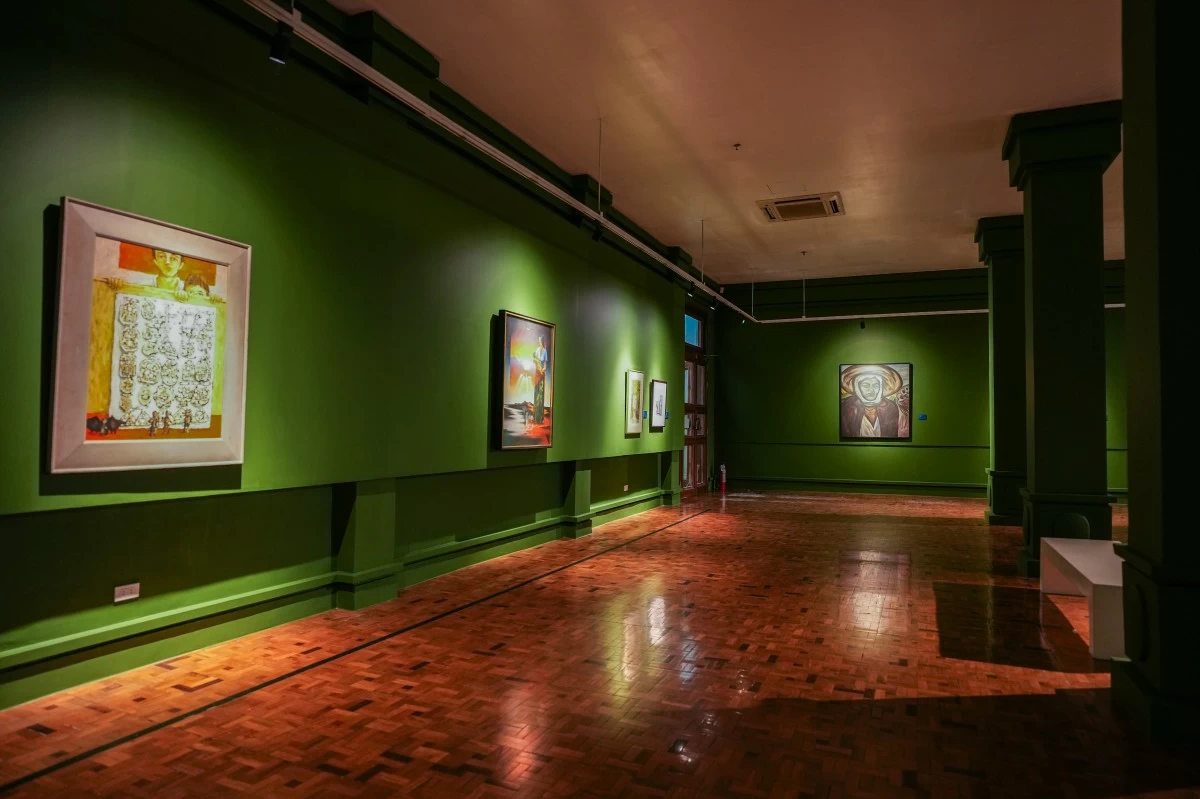
ART THROUGH THE AGES Contemporary Filipino artworks, on loan from the BSP, are currently up for viewing at the National Museum
Contemporary works long unseen are on show in the National Museum of Fine Arts. Drawn from the collection of the Bangko Sentral ng Pilipinas (BSP), the exhibit consists of paintings and sculptures dating from the 1980s to the early 2000s.
In the exhibit are works of National Artist BenCab; Negros artists Charlie Co and Nunelucio Alvarado; Social Realists Pablo Baens Santos, Edgar Talusan Fernandez, Antipas Delotavo, and Renato Habulan; Salingpusa artist Emmanuel Garibay; Laguna expressionist Danilo Dalena; abstract artist Lee Aguinaldo; conceptual artist Roberto Chabet; installation artist Junyee. Many works are by women artists, Ofelia Gelveson-Tequi, Geraldine Javier, Imelda Cajipe-Endaya, Patricia Eustaquio, and other stars of the Philippine artistic firmament.
National government revenues are never enough to cover current and infrastructure needs. Understandably, Congress is unable to appropriate sufficient funds to add to the National Museum collection. On the other hand, Government Owned or Controlled Corporations (GOCC) have greater leeway. They earn operating income, their boards decide on operating budgets, and once in a while, they set something aside for art and culture. The BSP has led the way, starting from Gov. Gregorio Licaros, who built the present BSP complex along Roxas Boulevard, to his successors Amando Tetangco and your columnist.
The National Museum's art collection was lost in February 1945 at the end of World War II. The Philippine National Library and Museum, then located on the ground floor of the Legislative Building, was given only hours by the Japanese to evacuate everything—books, artwork, historical and natural history items, everything. With only push carts, the staff was able to save little more than Tizal’s manuscripts of Noli and Fili and the greatest rarities of the Tabacalera Filipiniana collection.
The Museum’s art collection had to be built from scratch after 1945, much of it from gifts. Juan Luna’s “Spoliarium” was donated by Spain. Hidalgo’s “Assassination of Governor General Bustamante” was donated by the Leandro Locsins. The Dimiao (Bohol) retablo was acquired with funds specially allocated by President Ferdinand E. Marcos. Juan Luna’s “La Bulaqueña” was formerly in Malacañang’s Music Room. The Intramuros Administration has placed on loan Spanish Colonial Period works. The Carlos Francisco murals of the history of the Philippines were commissioned for the Manila City Hall by former Mayor Antonio Villegas.
The BSP has already lent to the National Museum numerous works, including its prized Hidalgos, “La Barca de Aqueronte” and “Las Virgenes Christianas.” Its present loan of contemporary works fills a gap in the Museum’s collection and is an initiative that other government agencies can follow.
The same approach has been taken by Spain. Madrid’s Museo Nacional del Prado has works of supreme importance by Raphael, Titian, El Greco, Goya, including the world-famous “Las Meninas” by Velázquez and the “Garden of Earthly Delights” by Hieronymus Bosch. Most of these came from the Royal Collection, donated some 200 years ago by King Ferdinand VII. Notwithstanding the donation, the Royal Palaces of Madrid, Aranjuez, El Escorial, La Granja, etc., still contain great paintings, tapestries, furniture, porcelain, sculpture, and other furnishings that demonstrate power, culture, history, and artistry.
In the recently inaugurated Galeria de la Colecciones Reales, Spain has made the contents of Royal Palaces more accessible to the public. The Galeria holds temporary exhibits of objects from Royal Palaces, presenting them in museum conditions, properly arranged, lighted, and labeled for visitors’ enjoyment and education.
We have no Royal Palaces, but our national and local government units, and GOCC, also have fabulous artworks. The BSP loan, filling two galleries, follows the same approach and leads the way for future shows enriched by loans from other government offices. Malacañang has paintings, sculptures, furniture, works on paper, and other decorative arts objects. To a lesser extent, so do other agencies:
• As head of the Government Service Insurance System (GSIS) has a comprehensive collection of works by H.R. Ocampo and F. Aguilar Alcuaz. The partly GSIS-owned Manila Hotel also has a magnificent Amorsolo painting of pre-Hispanic Muslim traders.
• The Cultural Center of the Philippines has Victorio Edades’ “The Builders,” the work that introduced modern art to the Philippines.
• Technical Education and Skills Development Authority (TESDA) has a collection of Ang Kiukoks.
• The Development Academy of the Philippines (DAP) has an art collection in its Tagaytay campus.
• Manila Mayor Antonio Villegas commissioned Carlos Francisco to elevate the Reception Hall with murals of the country’s history. They are now in the National Museum, except for its centerpiece of the Mayor himself and his projects.
• University of the Philippines Diliman welcomes students with two nude men, Guillermo Tolentino’s “Oblation” with fig leaf and Napoleon Abueva’s without. Various colleges have exceptional works.
Bravo to the BSP and the National Museum. May KKK be the first of many more.
Comments are cordially invited, addressed to [email protected]