

ADVERTISEMENT

DepEd seeks DPWH action on urgent school infrastructure gaps

Published Aug 22, 2025 07:30 pm

At A Glance

  • DepEd urges DPWH to repair school infrastructure and unsafe routes
  • Nationwide struggles highlight poor access to schools in remote areas
  • DepEd pushes for resilient, disaster-proof bridges and access roads
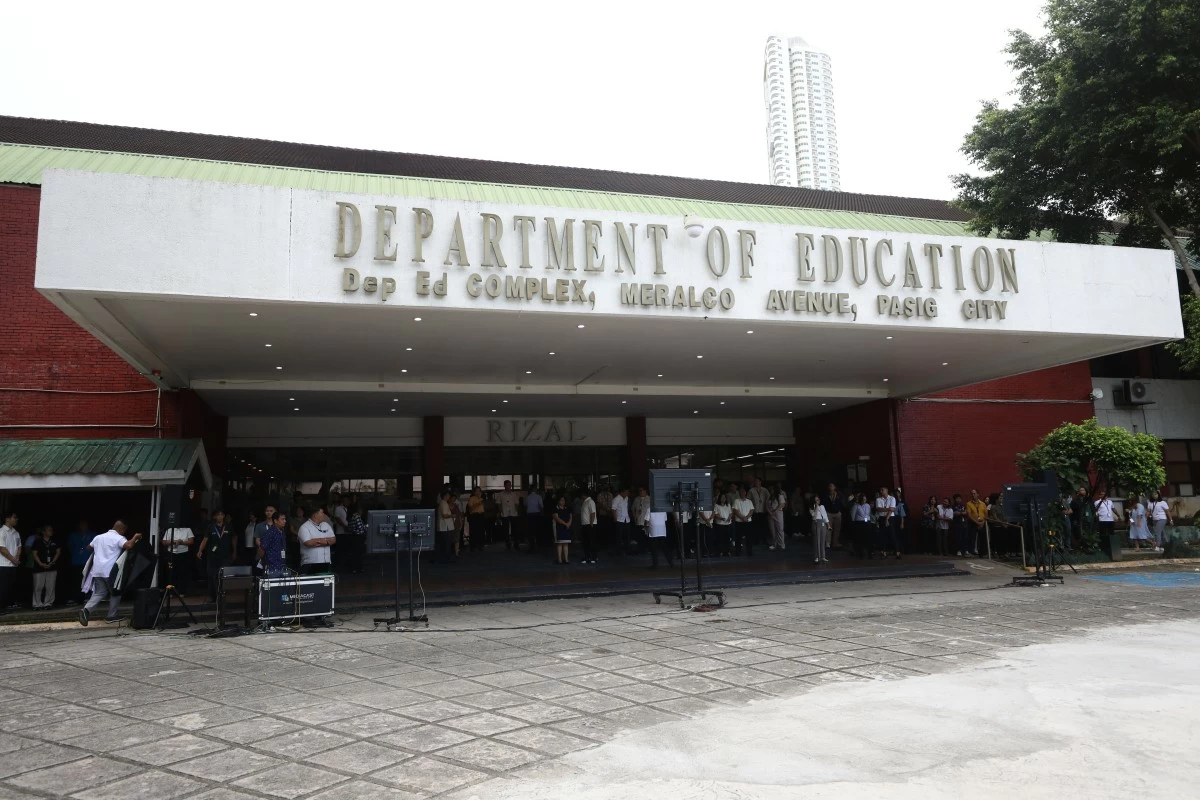
DepEd urges DPWH to repair unsafe school routes, citing nationwide struggles in remote areas and pushing for resilient, disaster-proof infrastructure. (DepEd / file)
Recognizing that sustainable, long-term solutions are urgently needed to make school access safe and reliable, the Department of Education (DepEd) has sought the assistance of the Department of Public Works and Highways (DPWH) in “addressing the infrastructure needs” of affected public schools across the country.
In a letter dated August 17, Education Secretary Sonny Angara requested that DPWH Secretary Manuel Bonoan address the infrastructure needs of public schools—particularly a remote school in Kayapa, Nueva Vizcaya, where students are forced to cling to steel cables and cross a river to reach their classrooms.
Angara noted that students of Pinayag National High School in Sitio Macdu, Barangay Pinayag, “risk their lives each day just to reach school.”
The bridge that once linked Barangay Latbang to Barangay Pinayag was destroyed by Super Typhoon Pepito in November 2024.
Nearly a year later, what remains is a pair of steel cables stretched precariously across the river — the children’s daily lifeline.
The plight of the students, Angara said, should serve as a wake-up call demanding immediate action.
“Their story is a reflection of the broader infrastructure challenges that persist across our public school system,” Angara said. “Sustainable and long-term solutions are urgently needed to make school access safe and reliable,” he added.
DepEd said Angara had earlier sent a letter dated July 17, where he requested the immediate repair of the damaged bridge between Latbang and Pinayag Village in Kayapa, Nueva Vizcaya, following a viral video showing students risking their lives to cross it just to attend school.
“With no safe alternative routes, they rely on frayed ropes and cables, especially dangerous during heavy rains,” Angara said. “This not only endangers lives but also disrupts their education,” he added.
School infrastructure problems beyond Nueva Vizcaya
DepEd pointed out that there are similar cases in other parts of the country.
In Camarines Sur, for instance, teachers from Barangay Tinalmud in Pasacao hike through knee-deep mud, flood-swollen trails, and even rough seas during the “habagat” season just to reach their classrooms.
Their determination has drawn admiration, but Angara admits it is not sustainable.
“Their story is a reflection of the broader infrastructure challenges that persist across our public school system,” Angara said. “While we are inspired by the dedication of our teachers, we recognize that long-term solutions are needed to make access to schools safe, regular, and sustainable for both learners and personnel,” he added.
Repair bridges, build resilient access routes
Angara has asked DPWH to prioritize repairing damaged bridges and constructing resilient access routes in disaster-prone and geographically isolated areas.
The appeal is both practical and symbolic: classrooms alone are not enough if students cannot safely reach them.
“DepEd is committed to strengthening its partnership with DPWH to ensure that classrooms and access routes are strong, resilient, and truly conducive to learning,” Angara said. “We hope that our agencies can continue collaborating on urgent infrastructure needs in our schools, especially in disaster-prone or geographically isolated areas,” he added.

Related Tags

DepEd DPWH school infrastructure school access roads bridge repair Philippines resilient school infrastructure Nueva Vizcaya students Sonny Angara
ADVERTISEMENT
.most-popular .layout-ratio{ padding-bottom: 79.13%; } @media (min-width: 768px) and (max-width: 1024px) { .widget-title { font-size: 15px !important; } }

{{ articles_filter_1561_widget.title }}

.most-popular .layout-ratio{ padding-bottom: 79.13%; } @media (min-width: 768px) and (max-width: 1024px) { .widget-title { font-size: 15px !important; } }

{{ articles_filter_1562_widget.title }}

.most-popular .layout-ratio{ padding-bottom: 79.13%; } @media (min-width: 768px) and (max-width: 1024px) { .widget-title { font-size: 15px !important; } }

{{ articles_filter_1563_widget.title }}

{{ articles_filter_1564_widget.title }}

.mb-article-details { position: relative; } .mb-article-details .article-body-preview, .mb-article-details .article-body-summary{ font-size: 17px; line-height: 30px; font-family: "Libre Caslon Text", serif; color: #000; } .mb-article-details .article-body-preview iframe , .mb-article-details .article-body-summary iframe{ width: 100%; margin: auto; } .read-more-background { background: linear-gradient(180deg, color(display-p3 1.000 1.000 1.000 / 0) 13.75%, color(display-p3 1.000 1.000 1.000 / 0.8) 30.79%, color(display-p3 1.000 1.000 1.000) 72.5%); position: absolute; height: 200px; width: 100%; bottom: 0; display: flex; justify-content: center; align-items: center; padding: 0; } .read-more-background a{ color: #000; } .read-more-btn { padding: 17px 45px; font-family: Inter; font-weight: 700; font-size: 18px; line-height: 16px; text-align: center; vertical-align: middle; border: 1px solid black; background-color: white; } .hidden { display: none; }
function initializeAllSwipers() { // Get all hidden inputs with cms_article_id document.querySelectorAll('[id^="cms_article_id_"]').forEach(function (input) { const cmsArticleId = input.value; const articleSelector = '#article-' + cmsArticleId + ' .body_images'; const swiperElement = document.querySelector(articleSelector); if (swiperElement && !swiperElement.classList.contains('swiper-initialized')) { new Swiper(articleSelector, { loop: true, pagination: false, navigation: { nextEl: '#article-' + cmsArticleId + ' .swiper-button-next', prevEl: '#article-' + cmsArticleId + ' .swiper-button-prev', }, }); } }); } setTimeout(initializeAllSwipers, 3000); const intersectionObserver = new IntersectionObserver( (entries) => { entries.forEach((entry) => { if (entry.isIntersecting) { const newUrl = entry.target.getAttribute("data-url"); if (newUrl) { history.pushState(null, null, newUrl); let article = entry.target; // Extract metadata const author = article.querySelector('.author-section').textContent.replace('By', '').trim(); const section = article.querySelector('.section-info ').textContent.replace(' ', ' '); const title = article.querySelector('.article-title h1').textContent; // Parse URL for Chartbeat path format const parsedUrl = new URL(newUrl, window.location.origin); const cleanUrl = parsedUrl.host + parsedUrl.pathname; // Update Chartbeat configuration if (typeof window._sf_async_config !== 'undefined') { window._sf_async_config.path = cleanUrl; window._sf_async_config.sections = section; window._sf_async_config.authors = author; } // Track virtual page view with Chartbeat if (typeof pSUPERFLY !== 'undefined' && typeof pSUPERFLY.virtualPage === 'function') { try { pSUPERFLY.virtualPage({ path: cleanUrl, title: title, sections: section, authors: author }); } catch (error) { console.error('ping error', error); } } // Optional: Update document title if (title && title !== document.title) { document.title = title; } } } }); }, { threshold: 0.1 } ); function showArticleBody(button) { const article = button.closest("article"); const summary = article.querySelector(".article-body-summary"); const body = article.querySelector(".article-body-preview"); const readMoreSection = article.querySelector(".read-more-background"); // Hide summary and read-more section summary.style.display = "none"; readMoreSection.style.display = "none"; // Show the full article body body.classList.remove("hidden"); } document.addEventListener("DOMContentLoaded", () => { let loadCount = 0; // Track how many times articles are loaded const offset = [1, 2, 3, 4, 5, 6, 7, 8, 9, 10]; // Offset values const currentUrl = window.location.pathname.substring(1); let isLoading = false; // Prevent multiple calls if (!currentUrl) { console.log("Current URL is invalid."); return; } const sentinel = document.getElementById("load-more-sentinel"); if (!sentinel) { console.log("Sentinel element not found."); return; } function isSentinelVisible() { const rect = sentinel.getBoundingClientRect(); return ( rect.top < window.innerHeight && rect.bottom >= 0 ); } function onScroll() { if (isLoading) return; if (isSentinelVisible()) { if (loadCount >= offset.length) { console.log("Maximum load attempts reached."); window.removeEventListener("scroll", onScroll); return; } isLoading = true; const currentOffset = offset[loadCount]; window.loadMoreItems().then(() => { let article = document.querySelector('#widget_1690 > div:nth-last-of-type(2) article'); intersectionObserver.observe(article) loadCount++; }).catch(error => { console.error("Error loading more items:", error); }).finally(() => { isLoading = false; }); } } window.addEventListener("scroll", onScroll); });

Sign up by email to receive news.