ADVERTISEMENT

Vietnam's rice popularity among Filipinos spurs DA policy review

Published Aug 22, 2025 03:21 pm
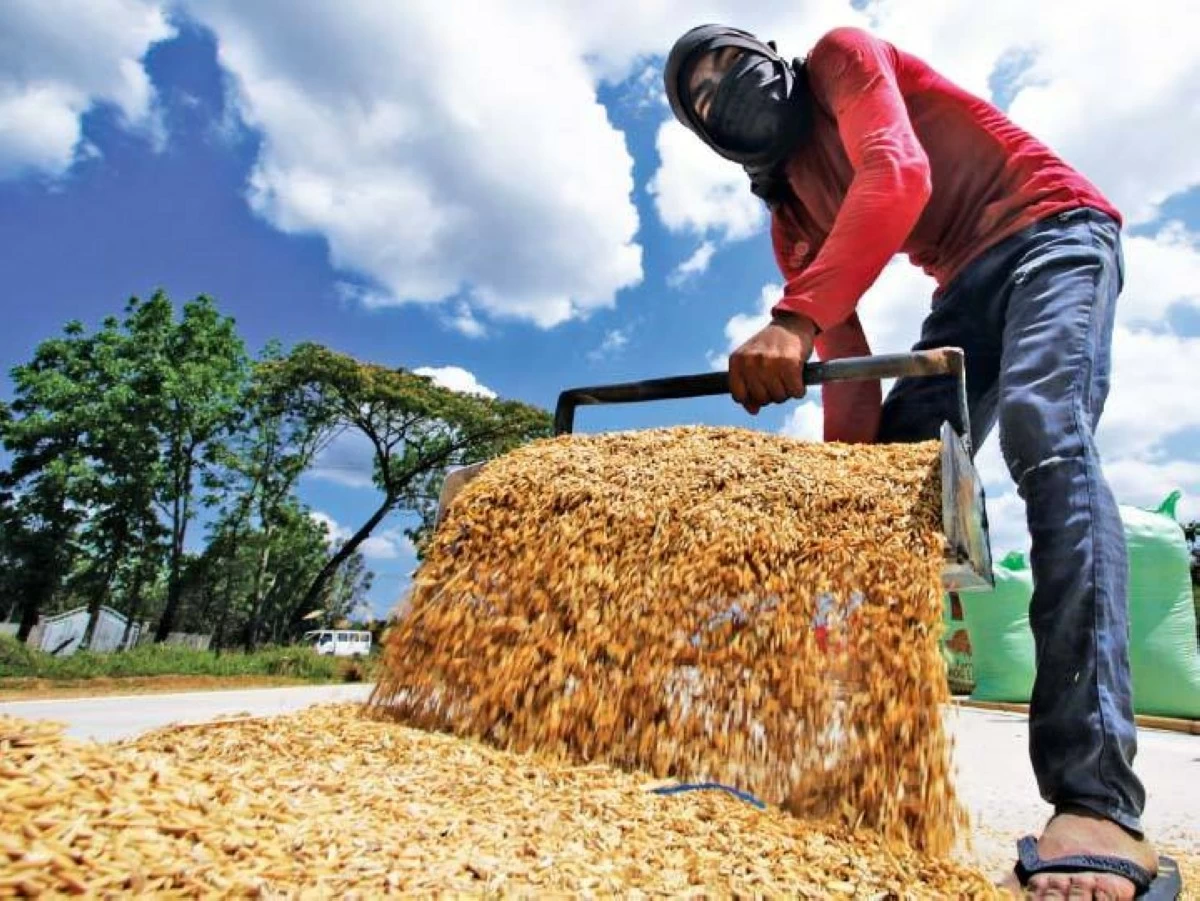
With the Philippines expected to remain as the world’s largest importer of rice for another year, the Department of Agriculture (DA) is considering a shift in the country’s agricultural policy to help local farmers stay competitive.
Agriculture Secretary Francisco Tiu Laurel said he has instructed the agency’s Rice Industry Development Office (RIDO) to examine the shift in rice preferences among Filipinos.
Tiu Laurel wants the RIDO to put the spotlight on the growing demand for imported rice in the country, particularly Vietnamese varieties.
He said the popularity of the rice variety may reflect a trend in consumer priorities, with greater attention given to texture, aroma, and overall eating experience, among others.
“This trend is worth watching. It may be telling us something important about what Filipino consumers are looking for,” Tiu Laurel said in a statement on Friday, Aug. 22.
“It may now be a question of quality over quantity, and that could require a shift in our agricultural policy,” he added.
Last year, the Philippines imported a record-high 4.78 million metric tons (MT) of rice, 32 percent higher than the 3.61 million MT recorded in 2023.
For 2025, the United States Department of Agriculture (USDA) projects that the country will remain the world’s top rice importer with an estimate of 4.9 million MT, which was earlier reduced from an initial forecast of 5.4 million MT due to the incoming 60-day rice import ban.
The Philippines earlier dislodged China from the top position during the marketing year 2022 to 2023, when it purchased 3.9 million MT of rice abroad.
Based on data from the Bureau of Plant Industry (BPI), 2.67 million MT of rice had arrived in the country as of Aug. 14.
Vietnam remains the country’s top rice source, accounting for 2.09 million MT or 78 percent of the total imports.
Citing data from the Vietnam Trade Office in Manila, the DA said the most popular Vietnamese varieties in the country are DT8 and OM5451.
These varieties offer a softer and stickier texture when cooked and have a low gelatinization temperature that enhances digestibility—qualities health-conscious Filipinos are now looking for.
Despite this, the DA said there remains a strong preference for locally available grains that are long and slender, as well as the soft texture of well-cooked rice.
“I think, in terms of quality, we have the varieties to compete with imported rice—if that is what the market requires,” said Agriculture Undersecretary Christopher Morales, who heads RIDO.
Morales said a recent comparative analysis showed that several inbred varieties distributed under the government’s Rice Competitiveness Enhancement Fund (RCEF) have qualities similar to the premium Vietnamese ST25 rice.
ST25 is prized for its long, slender grains, quality taste, fragrant aroma, resistance to salinity and disease, and short cultivation period that allows up to three harvests per year.
Morales said 13 local varieties—including Rc 218, Rc 160, Rc 480, and Rc 512—offer a potential roadmap for local farmers and millers to compete with Vietnamese rice varieties and other imported rice.
He said developing premium-quality rice locally will enable farmers to adapt to evolving market demands and even explore export potential.
ADVERTISEMENT
.most-popular .layout-ratio{ padding-bottom: 79.13%; } @media (min-width: 768px) and (max-width: 1024px) { .widget-title { font-size: 15px !important; } }

{{ articles_filter_1561_widget.title }}

.most-popular .layout-ratio{ padding-bottom: 79.13%; } @media (min-width: 768px) and (max-width: 1024px) { .widget-title { font-size: 15px !important; } }

{{ articles_filter_1562_widget.title }}

.most-popular .layout-ratio{ padding-bottom: 79.13%; } @media (min-width: 768px) and (max-width: 1024px) { .widget-title { font-size: 15px !important; } }

{{ articles_filter_1563_widget.title }}

{{ articles_filter_1564_widget.title }}

.mb-article-details { position: relative; } .mb-article-details .article-body-preview, .mb-article-details .article-body-summary{ font-size: 17px; line-height: 30px; font-family: "Libre Caslon Text", serif; color: #000; } .mb-article-details .article-body-preview iframe , .mb-article-details .article-body-summary iframe{ width: 100%; margin: auto; } .read-more-background { background: linear-gradient(180deg, color(display-p3 1.000 1.000 1.000 / 0) 13.75%, color(display-p3 1.000 1.000 1.000 / 0.8) 30.79%, color(display-p3 1.000 1.000 1.000) 72.5%); position: absolute; height: 200px; width: 100%; bottom: 0; display: flex; justify-content: center; align-items: center; padding: 0; } .read-more-background a{ color: #000; } .read-more-btn { padding: 17px 45px; font-family: Inter; font-weight: 700; font-size: 18px; line-height: 16px; text-align: center; vertical-align: middle; border: 1px solid black; background-color: white; } .hidden { display: none; }
function initializeAllSwipers() { // Get all hidden inputs with cms_article_id document.querySelectorAll('[id^="cms_article_id_"]').forEach(function (input) { const cmsArticleId = input.value; const articleSelector = '#article-' + cmsArticleId + ' .body_images'; const swiperElement = document.querySelector(articleSelector); if (swiperElement && !swiperElement.classList.contains('swiper-initialized')) { new Swiper(articleSelector, { loop: true, pagination: false, navigation: { nextEl: '#article-' + cmsArticleId + ' .swiper-button-next', prevEl: '#article-' + cmsArticleId + ' .swiper-button-prev', }, }); } }); } setTimeout(initializeAllSwipers, 3000); const intersectionObserver = new IntersectionObserver( (entries) => { entries.forEach((entry) => { if (entry.isIntersecting) { const newUrl = entry.target.getAttribute("data-url"); if (newUrl) { history.pushState(null, null, newUrl); let article = entry.target; // Extract metadata const author = article.querySelector('.author-section').textContent.replace('By', '').trim(); const section = article.querySelector('.section-info ').textContent.replace(' ', ' '); const title = article.querySelector('.article-title h1').textContent; // Parse URL for Chartbeat path format const parsedUrl = new URL(newUrl, window.location.origin); const cleanUrl = parsedUrl.host + parsedUrl.pathname; // Update Chartbeat configuration if (typeof window._sf_async_config !== 'undefined') { window._sf_async_config.path = cleanUrl; window._sf_async_config.sections = section; window._sf_async_config.authors = author; } // Track virtual page view with Chartbeat if (typeof pSUPERFLY !== 'undefined' && typeof pSUPERFLY.virtualPage === 'function') { try { pSUPERFLY.virtualPage({ path: cleanUrl, title: title, sections: section, authors: author }); } catch (error) { console.error('ping error', error); } } // Optional: Update document title if (title && title !== document.title) { document.title = title; } } } }); }, { threshold: 0.1 } ); function showArticleBody(button) { const article = button.closest("article"); const summary = article.querySelector(".article-body-summary"); const body = article.querySelector(".article-body-preview"); const readMoreSection = article.querySelector(".read-more-background"); // Hide summary and read-more section summary.style.display = "none"; readMoreSection.style.display = "none"; // Show the full article body body.classList.remove("hidden"); } document.addEventListener("DOMContentLoaded", () => { let loadCount = 0; // Track how many times articles are loaded const offset = [1, 2, 3, 4, 5, 6, 7, 8, 9, 10]; // Offset values const currentUrl = window.location.pathname.substring(1); let isLoading = false; // Prevent multiple calls if (!currentUrl) { console.log("Current URL is invalid."); return; } const sentinel = document.getElementById("load-more-sentinel"); if (!sentinel) { console.log("Sentinel element not found."); return; } function isSentinelVisible() { const rect = sentinel.getBoundingClientRect(); return ( rect.top < window.innerHeight && rect.bottom >= 0 ); } function onScroll() { if (isLoading) return; if (isSentinelVisible()) { if (loadCount >= offset.length) { console.log("Maximum load attempts reached."); window.removeEventListener("scroll", onScroll); return; } isLoading = true; const currentOffset = offset[loadCount]; window.loadMoreItems().then(() => { let article = document.querySelector('#widget_1690 > div:nth-last-of-type(2) article'); intersectionObserver.observe(article) loadCount++; }).catch(error => { console.error("Error loading more items:", error); }).finally(() => { isLoading = false; }); } } window.addEventListener("scroll", onScroll); });

Sign up by email to receive news.