

ADVERTISEMENT

Marcos honors Ninoy on 42nd death anniversary, calls for reflection, reconciliation

Published Aug 21, 2025 08:28 am  |  Updated Aug 21, 2025 02:44 pm

At A Glance

  • The President noted that four decades after Aquino's assassination, the nation is now in a better position to revisit the event with perspective and greater clarity.
President Marcos has marked the 42nd death anniversary of Senator Benigno “Ninoy” Aquino Jr., framing the commemoration as a moment of reflection and reconciliation.
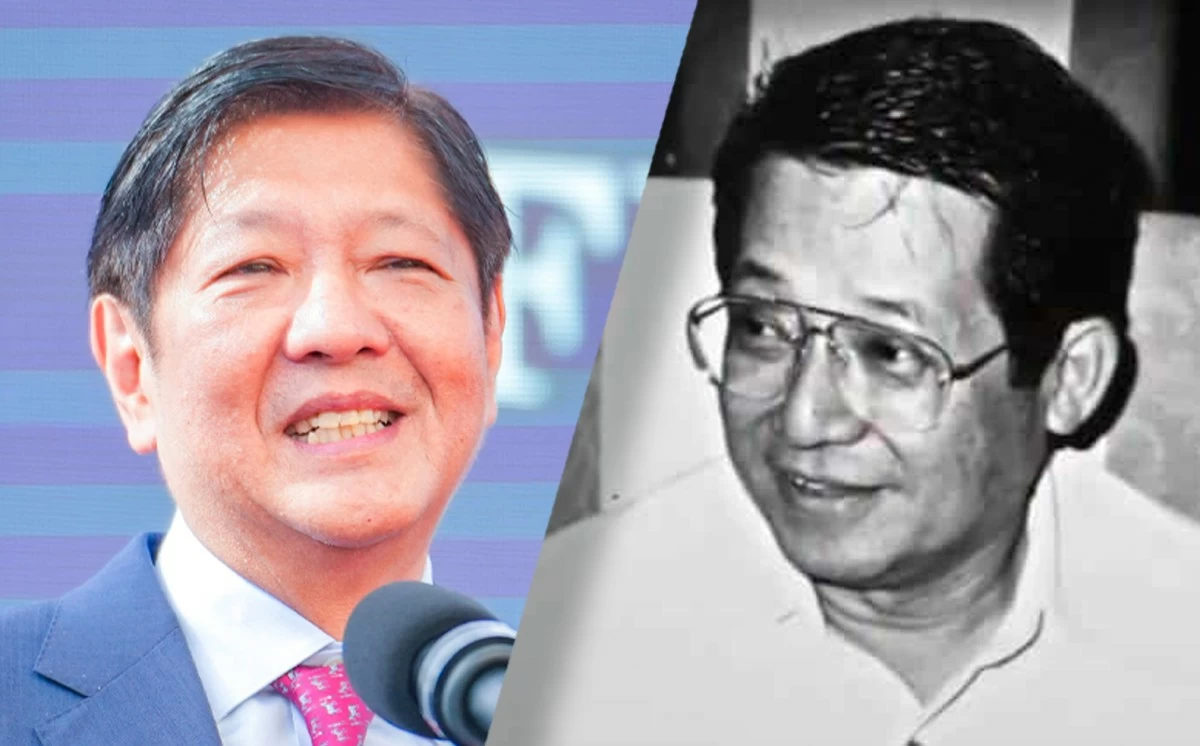
President Ferdinand 'Bongbong' Marcos Jr. and the late senator Benigno 'Ninoy' Aquino Jr. (File photos)
“The commemoration of Ninoy Aquino Day brings to light a chapter in our nation’s shared story that continues to echo across generations and public memory,” Marcos said in a statement released by Malacañang on Thursday, Aug. 21.
The President noted that four decades after Aquino’s assassination, the nation is now in a better position to revisit the event with perspective and greater clarity.
“History invites reflection more than reaction, and from that reflection arises a clearer understanding of civic duty,” he added.
Marcos, whose late namesake father was president when Aquino was assassinated on Aug. 21, 1983, also pointed to the lessons offered by political transitions in the country.
“Over the years, the Philippines has undergone a profound transformation, one defined by a broader public discourse about power, memory, and citizenship,” he said.
“As someone raised within a political tradition formed by these moments, I have come to understand that history offers less final judgment than continuing instruction,” he added.
The President said these lessons guide public officials in how they serve, listen, and carry the responsibilities of office with a larger sense of purpose.
"This day, therefore, becomes an invitation to govern with sobriety, conscience, and foresight," Marcos said.
The commemoration, he added, carries weight only when the past is translated into action and institutions reflect the values learned from history.
“In honoring this day, the Republic signals its readiness to uphold leadership that strives towards wholeness and reconciliation,” he said.
Marcos also linked the observance to his vision of steady governance.
“Through this observance, we advance the work of statecraft: disciplined, steady, and shaped by the enduring imperative to choose peace above quarrel, and dignity beyond differences,” he said.
“May we all have a solemn and meaningful remembrance,” he added.

This was not the first time President Marcos surprised Filipinos by releasing a message commemorating Aquino's death. In 2023, he described the opposition leader as an example of relentlessness and resolve.
"I stand united with all Filipinos worldwide in commemorating Ninoy Aquino Day. By standing for his beliefs and fighting for battles he deemed right, he became an example of relentlessness and resolve for many Filipinos," he said two years ago.
Born on Nov. 27, 1932, in Tarlac, Aquino showed brilliance early in life. He worked as a journalist before turning to politics, where he became the youngest mayor in the country at 22, later served as a governor, and eventually became a senator. By the late 1960s, he was recognized as one of the sharpest and most outspoken critics of then-President Ferdinand Marcos.
Known for his eloquence and bold criticism of the administration, Aquino believed in participatory democracy, accountability in government, and the importance of safeguarding civil liberties. In the Senate, he consistently warned of the dangers of authoritarianism and reminded Filipinos that public officials are duty-bound to serve — not silence — their citizens.
When martial law was declared in 1972, he was arrested, jailed, and placed in solitary confinement. Aquino spent seven years in prison — enduring long stretches of isolation — until he suffered a heart attack and was allowed to travel to the United States for medical treatment.
Even in exile, he continued to speak out, meeting with Filipino communities and world leaders to rally support for democracy. Despite repeated warnings that his return could cost him his life, he came back in August 1983, believing that he needed to be with his people — a decision that ultimately awakened a nation and changed the course of history.

Related Tags

President Marcos Bongbong Marcos Ninoy Aquino Ninoy Aquino Day
ADVERTISEMENT
.most-popular .layout-ratio{ padding-bottom: 79.13%; } @media (min-width: 768px) and (max-width: 1024px) { .widget-title { font-size: 15px !important; } }

{{ articles_filter_1561_widget.title }}

.most-popular .layout-ratio{ padding-bottom: 79.13%; } @media (min-width: 768px) and (max-width: 1024px) { .widget-title { font-size: 15px !important; } }

{{ articles_filter_1562_widget.title }}

.most-popular .layout-ratio{ padding-bottom: 79.13%; } @media (min-width: 768px) and (max-width: 1024px) { .widget-title { font-size: 15px !important; } }

{{ articles_filter_1563_widget.title }}

{{ articles_filter_1564_widget.title }}

.mb-article-details { position: relative; } .mb-article-details .article-body-preview, .mb-article-details .article-body-summary{ font-size: 17px; line-height: 30px; font-family: "Libre Caslon Text", serif; color: #000; } .mb-article-details .article-body-preview iframe , .mb-article-details .article-body-summary iframe{ width: 100%; margin: auto; } .read-more-background { background: linear-gradient(180deg, color(display-p3 1.000 1.000 1.000 / 0) 13.75%, color(display-p3 1.000 1.000 1.000 / 0.8) 30.79%, color(display-p3 1.000 1.000 1.000) 72.5%); position: absolute; height: 200px; width: 100%; bottom: 0; display: flex; justify-content: center; align-items: center; padding: 0; } .read-more-background a{ color: #000; } .read-more-btn { padding: 17px 45px; font-family: Inter; font-weight: 700; font-size: 18px; line-height: 16px; text-align: center; vertical-align: middle; border: 1px solid black; background-color: white; } .hidden { display: none; }
function initializeAllSwipers() { // Get all hidden inputs with cms_article_id document.querySelectorAll('[id^="cms_article_id_"]').forEach(function (input) { const cmsArticleId = input.value; const articleSelector = '#article-' + cmsArticleId + ' .body_images'; const swiperElement = document.querySelector(articleSelector); if (swiperElement && !swiperElement.classList.contains('swiper-initialized')) { new Swiper(articleSelector, { loop: true, pagination: false, navigation: { nextEl: '#article-' + cmsArticleId + ' .swiper-button-next', prevEl: '#article-' + cmsArticleId + ' .swiper-button-prev', }, }); } }); } setTimeout(initializeAllSwipers, 3000); const intersectionObserver = new IntersectionObserver( (entries) => { entries.forEach((entry) => { if (entry.isIntersecting) { const newUrl = entry.target.getAttribute("data-url"); if (newUrl) { history.pushState(null, null, newUrl); let article = entry.target; // Extract metadata const author = article.querySelector('.author-section').textContent.replace('By', '').trim(); const section = article.querySelector('.section-info ').textContent.replace(' ', ' '); const title = article.querySelector('.article-title h1').textContent; // Parse URL for Chartbeat path format const parsedUrl = new URL(newUrl, window.location.origin); const cleanUrl = parsedUrl.host + parsedUrl.pathname; // Update Chartbeat configuration if (typeof window._sf_async_config !== 'undefined') { window._sf_async_config.path = cleanUrl; window._sf_async_config.sections = section; window._sf_async_config.authors = author; } // Track virtual page view with Chartbeat if (typeof pSUPERFLY !== 'undefined' && typeof pSUPERFLY.virtualPage === 'function') { try { pSUPERFLY.virtualPage({ path: cleanUrl, title: title, sections: section, authors: author }); } catch (error) { console.error('ping error', error); } } // Optional: Update document title if (title && title !== document.title) { document.title = title; } } } }); }, { threshold: 0.1 } ); function showArticleBody(button) { const article = button.closest("article"); const summary = article.querySelector(".article-body-summary"); const body = article.querySelector(".article-body-preview"); const readMoreSection = article.querySelector(".read-more-background"); // Hide summary and read-more section summary.style.display = "none"; readMoreSection.style.display = "none"; // Show the full article body body.classList.remove("hidden"); } document.addEventListener("DOMContentLoaded", () => { let loadCount = 0; // Track how many times articles are loaded const offset = [1, 2, 3, 4, 5, 6, 7, 8, 9, 10]; // Offset values const currentUrl = window.location.pathname.substring(1); let isLoading = false; // Prevent multiple calls if (!currentUrl) { console.log("Current URL is invalid."); return; } const sentinel = document.getElementById("load-more-sentinel"); if (!sentinel) { console.log("Sentinel element not found."); return; } function isSentinelVisible() { const rect = sentinel.getBoundingClientRect(); return ( rect.top < window.innerHeight && rect.bottom >= 0 ); } function onScroll() { if (isLoading) return; if (isSentinelVisible()) { if (loadCount >= offset.length) { console.log("Maximum load attempts reached."); window.removeEventListener("scroll", onScroll); return; } isLoading = true; const currentOffset = offset[loadCount]; window.loadMoreItems().then(() => { let article = document.querySelector('#widget_1690 > div:nth-last-of-type(2) article'); intersectionObserver.observe(article) loadCount++; }).catch(error => { console.error("Error loading more items:", error); }).finally(() => { isLoading = false; }); } } window.addEventListener("scroll", onScroll); });

Sign up by email to receive news.