






Manila Bulletin
 Business
Trade & Industry
Bataan nuclear plant eyed for 600-MW hyperscale data center
Business
Trade & Industry
Bataan nuclear plant eyed for 600-MW hyperscale data center
Business
Trade & Industry
Bataan nuclear plant eyed for 600-MW hyperscale data center
Bataan nuclear plant eyed for 600-MW hyperscale data center
Published Aug 21, 2025 11:56 am
|
Updated Aug 21, 2025 03:08 pm


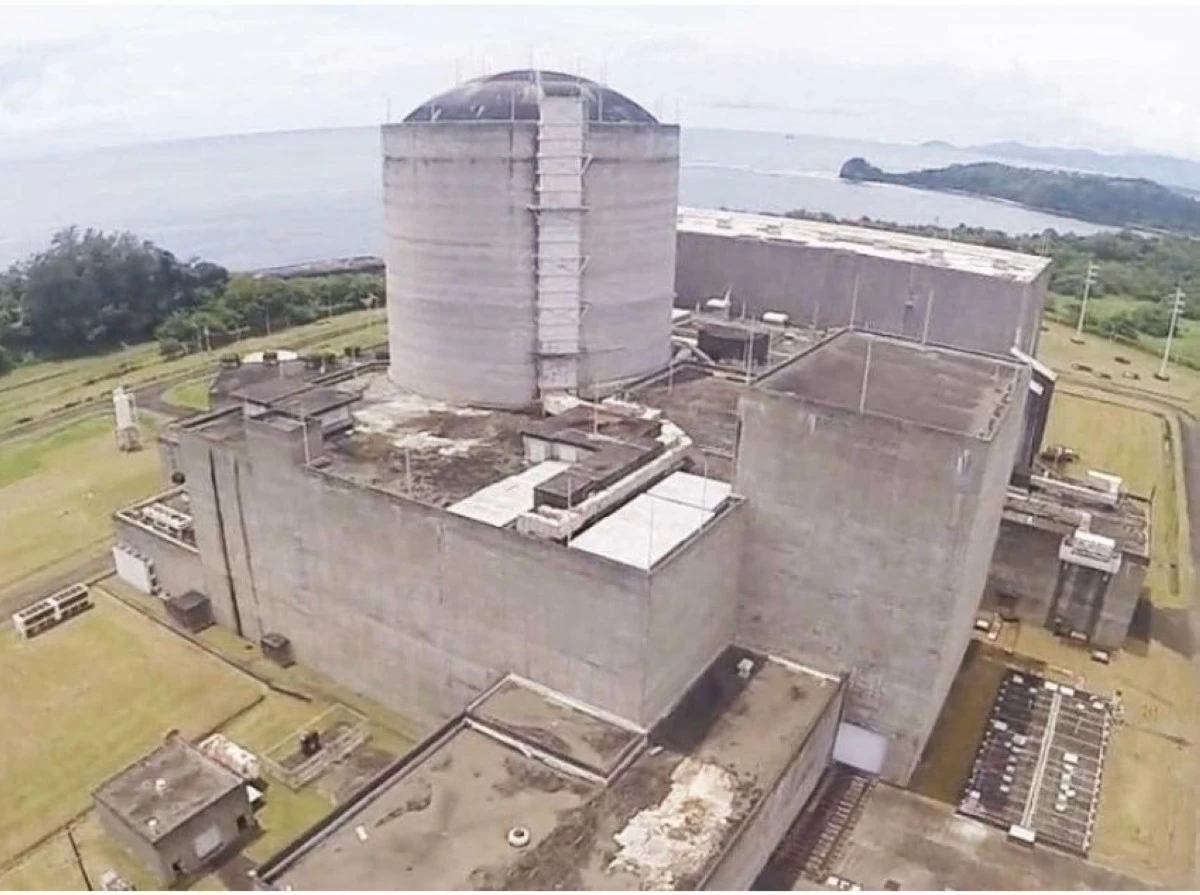
(Manila Bulletin file photo)
The Department of Information and Communications Technology (DICT) is carrying out a study to assess the feasibility of converting the long-mothballed Bataan Nuclear Power Plant (BNPP) into a hyperscale data center.
As it stands, DICT Secretary Henry Aguda said the BNPP already has the “ingredients” to meet the needs of hyperscalers or tech giants that require massive data storage.
Aguda noted that the dormant nuclear plant has the infrastructure, location, and fiber optic connectivity suitable for a hyperscale data center.
He said the local government of Bataan and other potential locators have been pushing the national government to breathe new life into the BNPP to cement the country’s position in the rapidly growing data center industry.
The official said the DICT began its technical feasibility study on the prospect earlier this year, with target completion within the fourth quarter.
He explained that the study will primarily evaluate if the project is actionable, adding that a potential public-private partnership is not yet being considered.
Currently, the Department of Energy (DOE) is overseeing a study on the revival of the 620-megawatt (MW) BNPP, which is being conducted by South Korea-based power firm Korea Hydro & Nuclear Power Co. Ltd. (KHNP).
The outcome of the study would guide the government on the next steps in the power plant, such as whether it can still be repowered and the cost of bringing it back to commercial operations.
Manila Bulletin reported in March that the study is facing delays due to compliance concerns between the governments of the Philippines and South Korea, although its conclusion is still targeted within the year.
Aguda told reporters that the DOE-led study will now conclude in November, with the DICT’s own study ending immediately after.
While there is still no concrete plan on the matter, Aguda said the potential conversion of the BNPP to a data center would help the country close the gap with Singapore.
The BNPP data center could potentially add 600 MW to the country’s current data center capacity of about 180 MW, bringing the total to 780 MW—just over 200 MW short of Singapore’s one-gigawatt capacity.
“And in the next three years, that's what we're trying to build. We want to build from [180] now to one gigawatt,” Aguda said during the Philippine Chamber of Commerce and Industry (PCCI) General Membership Meeting.
He said the country will likely be a major hub for hyperscalers moving forward, following the government’s strong drive to lower the cost of power.
“The notion that power is expensive in the Philippines has to be corrected. I think we are cheaper than Singapore and as competitive as Malaysia now,” he emphasized, citing the push for new energy sources such as renewables.
Aguda said connectivity is another hurdle that the government is trying to address through the National Fiber Backbone (NFB) project.
Meanwhile, he said it is not yet in the pipeline of the Marcos administration to build a data center that would house the national government’s data.
The secretary stated that, due to the ongoing campaign to strengthen connectivity, the agency is more likely to partner with a data center firm for data storage.
“To build a facility like that will take you two years. And now, we're in a hurry to provide the service right away. So, the fastest way is to tap the private sector first,” he said.