







42 years later, how today's youth see Ninoy Aquino's legacy
Published Aug 21, 2025 12:01 am
|
Updated Aug 20, 2025 04:27 pm


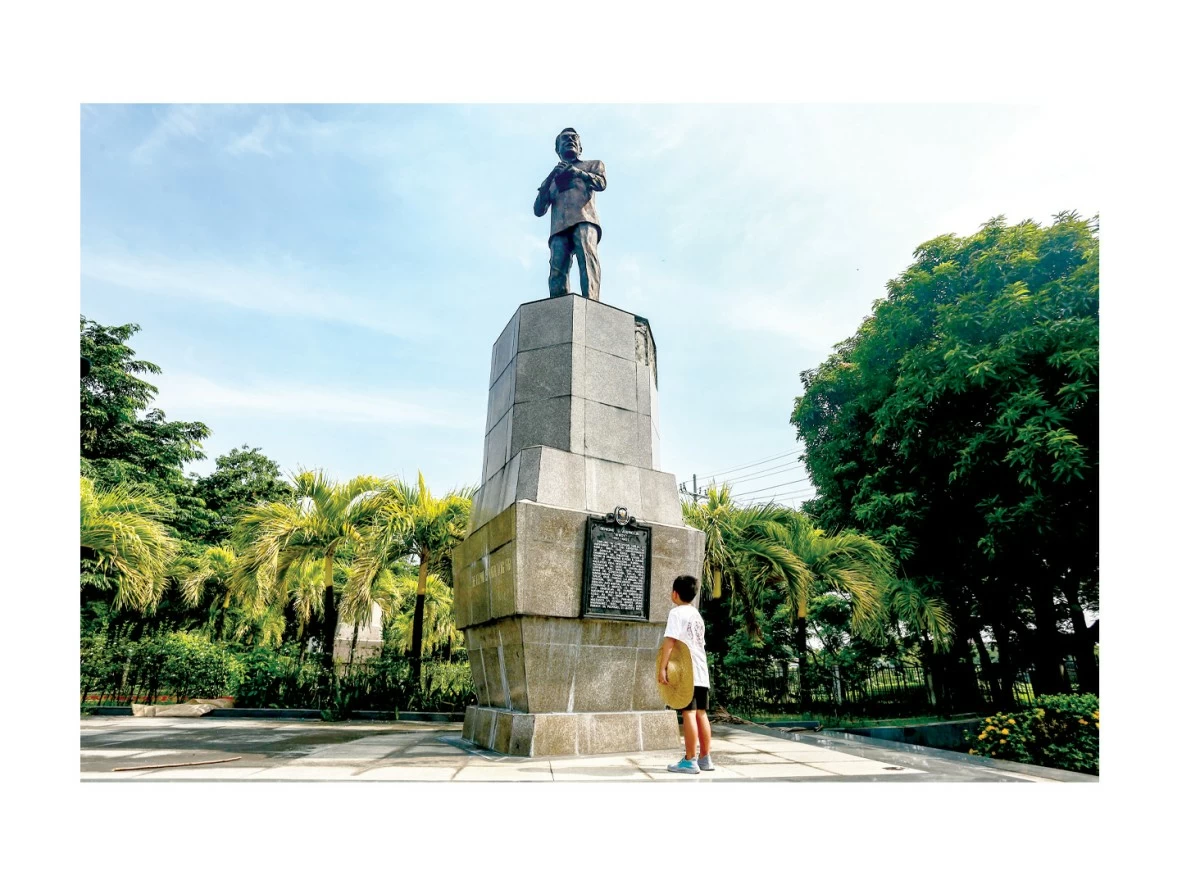
Ninoy Aquino monument (Manila Bulletin photo)
“A symbol of courage and conviction.”
This is how many young Filipinos today remember the late Senator Benigno “Ninoy” Aquino Jr., who, on Aug. 21, 1983, was assassinated at the airport tarmac moments after his arrival in Manila.
As the nation commemorates Ninoy’s 42nd death anniversary, young Filipinos are revisiting the story of the opposition senator who returned from exile to challenge a dictatorship. His death ignited a wave of resistance and sparked widespread outrage, helping fuel the People Power Revolution that eventually restored democracy in the country.
More than four decades later, do young Filipinos still feel connected to this story? We interviewed at least a dozen students and were enlightened by the answers given by those who were not yet born when Ninoy lived and walked among the people like an ordinary man.
Born on Nov. 27, 1932, in Tarlac, Aquino showed brilliance early in life. He worked as a journalist before turning to politics, where he became the youngest mayor in the country at 22, later served as a governor, and eventually became a senator. By the late 1960s, he was recognized as one of the sharpest and most outspoken critics of then-President Ferdinand Marcos.
Known for his eloquence and bold criticism of the administration, Aquino believed in participatory democracy, accountability in government, and the importance of safeguarding civil liberties. In the Senate, he consistently warned of the dangers of authoritarianism and reminded Filipinos that public officials are duty-bound to serve — not silence — their citizens.
When martial law was declared in 1972, he was arrested, jailed, and placed in solitary confinement. Aquino spent seven years in prison — enduring long stretches of isolation — until he suffered a heart attack and was allowed to travel to the United States for medical treatment.
Even in exile, he continued to speak out, meeting with Filipino communities and world leaders to rally support for democracy. Despite repeated warnings that his return could cost him his life, he came back in August 1983, believing that he needed to be with his people — a decision that ultimately awakened a nation and changed the course of history.
Remembering the assassination
Gavin Arceo, 22, editor-in-chief of Komunikator, the official publication of Adamson University’s Communication Department, said the first thing that comes to mind when he hears Ninoy’s name is that scene of the senator landing in Manila and the fatal shot that followed. To him, what happened at the airport was not simply a tragedy — it was a turning point.
“This event was the eye-opener that triggered protests against oppression,” he said.
Daniel Lawrence Avila, 21, operations director of Adamson University’s official campus radio station, related how he first learned about Ninoy’s assassination.
“I remember hearing the story for the first time during our Araling Panlipunan class in grade school, and it has never been erased from my memory ever since,” he said.
Why Ninoy still matters
Both college students believe Ninoy’s story continues to hold power for the youth today. Arceo points to the value of remembering history, especially at a time when people still face oppression in different forms.
“It can be a reminder to the younger generation to speak up for what’s right,” he said.
Avila agrees, saying keeping Ninoy relevant means ensuring that future generations hear — and tell — the true story.
“Just like how it sparked a revolution back then, it can spark the mind of someone to learn about the darkest times of Philippine history,” he explained.
‘The Filipino is worth dying for’
Asked to describe Ninoy in one word, Arceo chose “martyr.” He recalled Aquino’s famous line — “The Filipino is worth dying for” — and said the senator’s sacrifice made Filipinos realize their rights and freedoms.
Avila used the word “steadfast” to describe Aquino, admiring how he remained true to his beliefs even in the face of persecution. “Despite the challenges he faced in trying to tell the truth about the regime, he remained committed to his beliefs,” he added.
Cleng Caballes, a Bachelor of Secondary Education student, chose the word “potential” to describe what Ninoy could have contributed to society if his life had not been cut short. “His leadership and his works made a mark on our country,” she said.
Jerome Placido, a Grade 8 student in Quezon City, chose the word “sacrifice.” He believes Ninoy sacrificed his own life because, despite knowing the dangers, he stood up for what he believed in.
Calling him the “hero of democracy,” Placido reflected that Ninoy’s courage to be the voice of the opposition sparked the nation’s collective courage.
“Na ang pagmamahal sa bayan ay hindi lamang puro salita, kundi gawa. Dapat huwag tayong matakot na magsalita para sa ikabubuti at lagi nating piliin ang kapakanan ng mas nakararami (Love of country is not just words, but action. We should never be afraid to speak out for the greater good),” Placido said.
Lessons for the youth
For these students, the message is clear. “Standing up for what’s right — the younger generation should carry this, for we shouldn’t let powerful people push us around,” Arceo said.
Avila hopes that young Filipinos will stay firm in their dreams and values just as Ninoy did. “We can all learn to be firm with our aspirations, stick with them, and strive to reach our full potential, no matter how hard the challenges we face,” he said.
Courage can spark unity
“True change starts from courage,” said Jear Sison, 17, a senior high school student at the Systems Technology Institute (STI), emphasizing how Ninoy’s courage helped spark unity. For him, the memorable phrase, 'Hindi ka nag-iisa' served as a rallying cry among Filipinos to stand together in the movement to restore democracy.
Many of the young people we interviewed said the first thing that comes to mind when Ninoy’s name is mentioned is his assassination at what is now the Ninoy Aquino International Airport (NAIA).
Khiert Lana, 13, a student at Quirino High School, said the same. Incidentally, the airport will one day be part of his workplace, as he plans to become a flight attendant.
“Ang pumapasok sa isip ko ay ang pagbaril sa kanya sa airport (What comes to mind is his assassination at the airport),” he said.
Beyond that, he sees Aquino’s legacy as a call to serve. “Sa kanyang pagiging matatag at pagmamahal sa Pilipinas ay paalala sa mga tao na ang tunay na pagbabago ay nagmumula sa tapat at buong-pusong paglilingkod sa bayan, kahit siya’y nahihirapan (His strength and love for the country remind us that true change begins with honest and wholehearted service to the nation, even in times of hardship),” Lana said.
From a life cut short emerged a legacy that continues to inspire.