






Manila Bulletin
 Business
Trade & Industry
NAIA operator justifies fee increase as gov't-mandated to fund improvements
Business
Trade & Industry
NAIA operator justifies fee increase as gov't-mandated to fund improvements
Business
Trade & Industry
NAIA operator justifies fee increase as gov't-mandated to fund improvements
NAIA operator justifies fee increase as gov't-mandated to fund improvements
Published Aug 20, 2025 04:17 pm


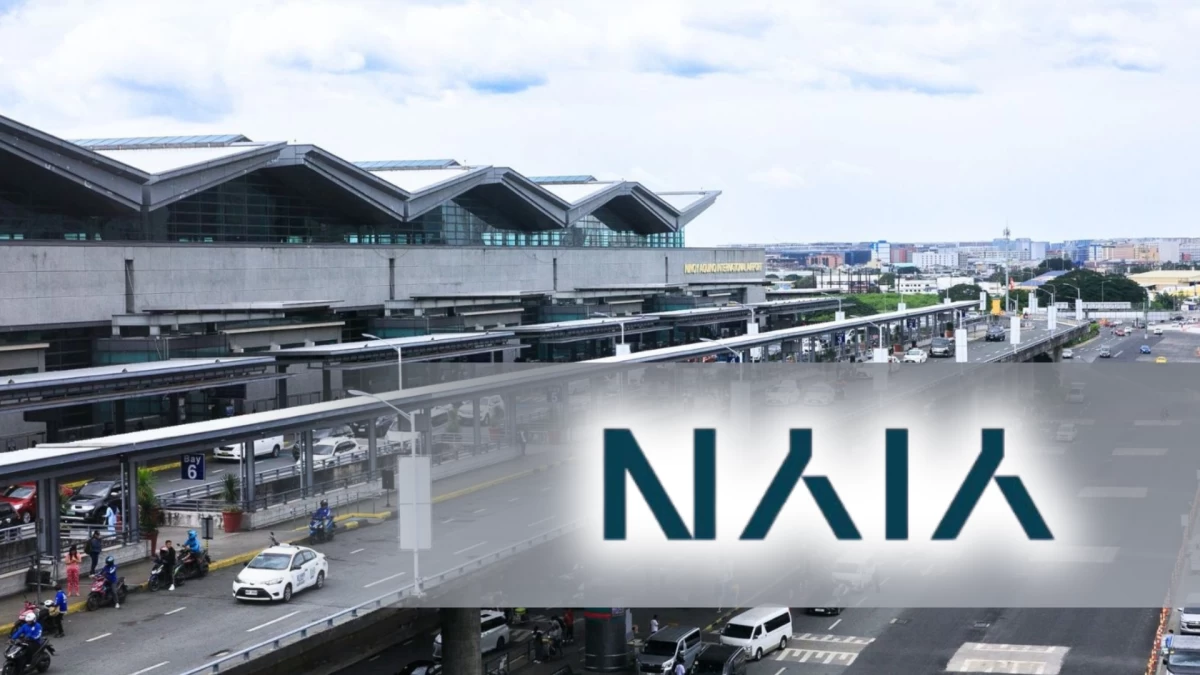
New NAIA Infra Corp. (NNIC), the private operator of the Ninoy Aquino International Airport (NAIA), said the scheduled hike in passenger service charges (PSC) next month is not an arbitrary move but rather in pursuit of a government mandate.
“The PSC adjustment is a government-mandated, inflation-delayed update, necessary to sustain these improvements and deliver the larger modernization that passengers deserve,” said NNIC in a statement.


Embodied under Administrative Order (AO) No. 1 of the regulator Manila International Airport Authority (MIAA), the PSC for domestic and international flights will rise starting September.
Currently, the PSC stands at ₱550 for international departing passengers, while ₱200 for domestic flights. This is set to increase to ₱950 and ₱390, respectively.
NNIC said the incoming hike was approved by the Department of Transportation (DOTr) and the Marcos Cabinet, with the Asian Development Bank (ADB) serving as an adviser.
“Any winning bidder would have implemented the same schedule,” the operator said.
It said that the PSC adjustment marks the first update in over 20 years.
Based on AO No. 1, the fee will be adjusted again in the sixth, 11th, 16th, and 21st years of the NNIC’s 25-year concession period.
Earlier this week, a coalition of labor groups, aviation workers, and overseas Filipino workers (OFWs) renewed its call on the governments to stop the incoming fee hikes.
The group, PUSO ng NAIA, said the government stands to gain ₱36 billion annually from the increase, or roughly ₱900 billion across the 25-year period.
“To reach ₱900 billion, the government is counting on relentless fee increases. That means higher costs for workers, OFWs,” said Romy Sauler, head secretariat of PUSO ng NAIA.
Contrary to this assertion, NNIC said that OFWs will remain exempt from paying international PSC, as mandated by existing regulations.
“We recognize the sacrifice and contribution of our modern-day heroes. Their exemption from terminal fees continues under the new framework,” it said.
NNIC noted that even after next month’s adjustment, the new rates will remain below inflation-adjusted values of ₱1,300 to ₱1,400 for international flights and ₱480 to ₱520 for domestic.
NAIA’s PSC is currently the lowest among major Philippine airports and among the most affordable in Asia.
The updated fees will align the airport with those of regional airports and international airports abroad.
The PSC is a fee charged for each departing passenger, already included in the ticket when passengers book their flights.
NNIC said funds generated from the PSC will go directly to airport operations and passenger service improvements.
Meanwhile, PUSO ng NAIA also alleged that the government failed to conduct genuine public hearings, as well as “created a category of non-regulated fees with no safeguards and unlawfully delegated quasi-legislative powers” to NNIC when it won the concession to operate the country’s main gateway last year.
In turn, NNIC said the turnover of NAIA’s operations was the result of a “competitive and transparent bidding process, with safeguards to protect the public interest.”
The operator said the public-private partnership (PPP) model was pursued by the government to ensure that funds, expertise, and technology are brought in to modernize NAIA without burdening taxpayers.
“NAIA is the country’s busiest and most complex airport, and we remain committed to ensuring it continues to operate safely, efficiently, and affordably for the Filipino public,” it added.
Handling more than 50 million passengers annually, the company said it is urgent that the airport undergoes modernization.
Since September 2024, NNIC has renovated restrooms, installed new air-conditioning systems, restored elevators and escalators, built wider curbside lanes, and established an OFW lounge with rest areas, among others.
The operator is also undertaking preparations for the future Terminals 4 and 5, which will increase the gateway’s overall capacity.