






Manila Bulletin
 Business
Trade & Industry
Aurora ecozone seen as potential site for US defense firms
Business
Trade & Industry
Aurora ecozone seen as potential site for US defense firms
Business
Trade & Industry
Aurora ecozone seen as potential site for US defense firms
Aurora ecozone seen as potential site for US defense firms
Published Aug 20, 2025 03:01 pm


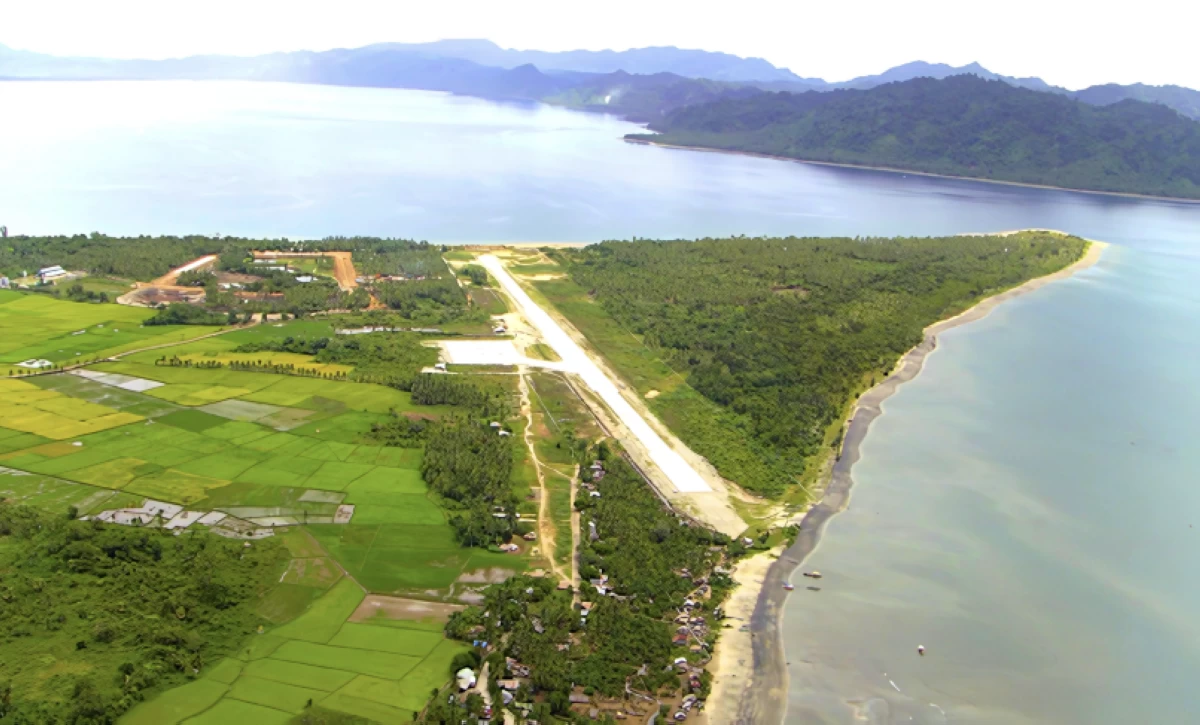
The existing airstrip in APECO which is set to be developed into a commercial airport (APECO website)
The Aurora Pacific Economic Zone and Freeport Authority (APECO) is leveraging its strategic position facing the Pacific Ocean as an alternative site for United States (US)-based defense firms seeking to expand their manufacturing capacity in the country.
APECO made this pitch during its engagements with delegates of the US-ASEAN Business Council (USABC) during last week’s US Aerospace, Defense, and Security (ADS) mission.
“APECO offers a strategic location where US defense companies can find room to grow, not in competition with Subic, but in complement to it,” said APECO President and Chief Executive Officer (CEO) Gil Taway IV in a statement.
“Together, these zones can strengthen the Philippines’ role in regional security and economic resilience,” he added.
APECO said it discussed with American business leaders the ecozone’s viability as a hub for warehousing, expansion projects, and defense-related services.
In particular, APECO said its ecozone located in the coastal town of Casiguran is ideal for a maintenance, repair, and operations (MRO) firm for ships and aircraft.
“The defense sector is a natural fit for us, given our location and resources. We see this as a step toward positioning APECO as not just a local ecozone, but a strategic player in the wider Indo-Pacific landscape,” said Taway.
Taway said that one of the key assets of APECO is its airstrip, which is capable of servicing chartered flights.
APECO is working toward securing a permit-to-operate from the Civil Aviation Authority of the Philippines (CAAP) to formalize operations at the airstrip, opening the door for potential MRO activities for aircraft.
Last June, it bared plans of turning the airstrip into a commercial airport, connecting the Casiguran-based ecozone to the global investment market.
During the ADS mission from Aug. 14 to 15, a total of 26 American defense and aerospace companies visited the country to deepen its engagement with the government and local firms.
“Missions like this are vital to advancing the next phase of military modernization in the Philippines,” said ADS committee chair Dale McDowall in a statement on USABC’s website.
“This work strengthens the nation’s readiness and elevates its strategic posture in a rapidly evolving Indo-Pacific region,” he added.
The ADS mission presented opportunities for co-production, joint development, technology transfers, and workforce development across defense systems, dual-use technologies, and cyber capabilities.
Apart from defense, discussions also covered civil aviation, disaster resilience, and the broader role of the ADS sector in driving inclusive economic growth.