






Manila Bulletin
 Business
Banking & Finance
Fraud fears, high borrowing costs main barriers to credit adoption in Philippines—TransUnion
Business
Banking & Finance
Fraud fears, high borrowing costs main barriers to credit adoption in Philippines—TransUnion
Business
Banking & Finance
Fraud fears, high borrowing costs main barriers to credit adoption in Philippines—TransUnion
Fraud fears, high borrowing costs main barriers to credit adoption in Philippines—TransUnion
BSP vows continued fight vs. financial crimes
By Derco Rosal
Published Aug 19, 2025 06:40 pm


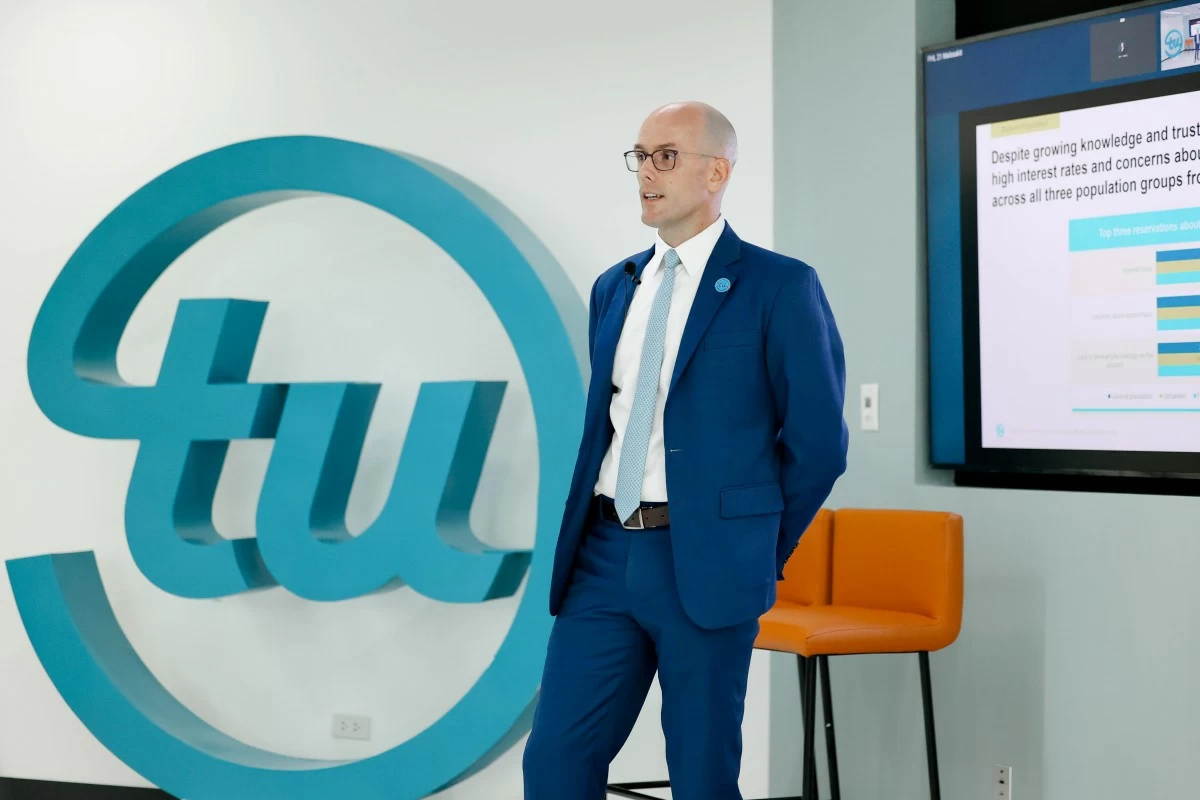
Peter Faulhaber, TransUnion Philippines president and CEO
High borrowing costs and fear of fraud emerged as the top concerns barring Filipinos from credit adoption this year, even as sentiment around credit remained stable, according to the latest survey.
“External barriers, led by interest rates and fear of fraud, are the top concerns hindering credit adoption across population groups,” global information and insights company TransUnion said in its 2025 Credit Perception Index (CPI).
TransUnion reported that the Philippines’ CPI score, which assesses how Filipinos perceive credit, stands at 73 out of 100. This reflects stable sentiment around credit.
Peter Faulhaber, TransUnion Philippines president and chief executive officer, said this steady score was driven by “growing trust in credit products.”
“More encouragingly, this year’s CPI results also tell us that Filipinos are eager to learn more about financial options that are relevant, accessible, and suited to their needs,” Faulhaber said.
To note, high interest rates were cited as the top reason for avoiding credit, with 59 percent of the general population, 52 percent of the unbanked, and 61 percent of fintech users saying it discouraged them from borrowing.
Concerns over scams and fraud came next, with 52 percent of the general population, 47 percent of the unbanked, and 52 percent of fintech users citing it as a major deterrent to credit usage. These reflect “widespread apprehension about security threats across different population groups, regardless of their CPI score.”
As such, security and trust, alongside convenience, emerged as Filipinos’ top considerations when selecting lenders. Accessibility of lending products, interest rates, and the speed of lender’s service come next.
TransUnion pointed out that a “critical challenge is that while trust is improving, consumers still require stronger assurances through safer and more supportive credit environments.”
Traditional banks are still viewed as safe for financial transactions, but the share of Filipinos who felt secure dropped from 93 percent to 88 percent this year. The same trend was seen in e-wallets, virtual banks, and buy now, pay later (BNPL) services, indicating a broad decline in perceived safety.
In light of the Bangko Sentral ng Pilipinas’ (BSP) third exit this year from international money-laundering watchdog’s lists of high-risk jurisdictions, the central bank has promised to “fight financial crimes and uphold global standards.”
BSP Governor Eli M. Remolona said in a statement released on Tuesday, Aug. 19., that the central bank “remains firmly committed to driving financial sector reforms and strengthening anti-money laundering/countering terrorism and proliferation financing (AML/CTPF) supervision.”
Remolona, who also heads the Anti-Money Laundering Council (AMLC), said efforts are underway to boost the Philippines’ capacity to combat financial crimes and align with global standards.
To recall, the Philippines was removed from money-laundering watchlists in the first half of this year—the grey list in February, the United Kingdom’s list of high-risk third countries in March, and the European Commission’s (EC) list in June.
“This development is expected to generate benefits, including lower remittance fees and improved relationship of Philippine banks with foreign counterparts, which drives business activities,” the BSP said.