







DILG, NAPC team up to ease PH poverty incidence
By Chito Chavez
Published Aug 19, 2025 12:26 pm
|
Updated Aug 19, 2025 02:20 pm


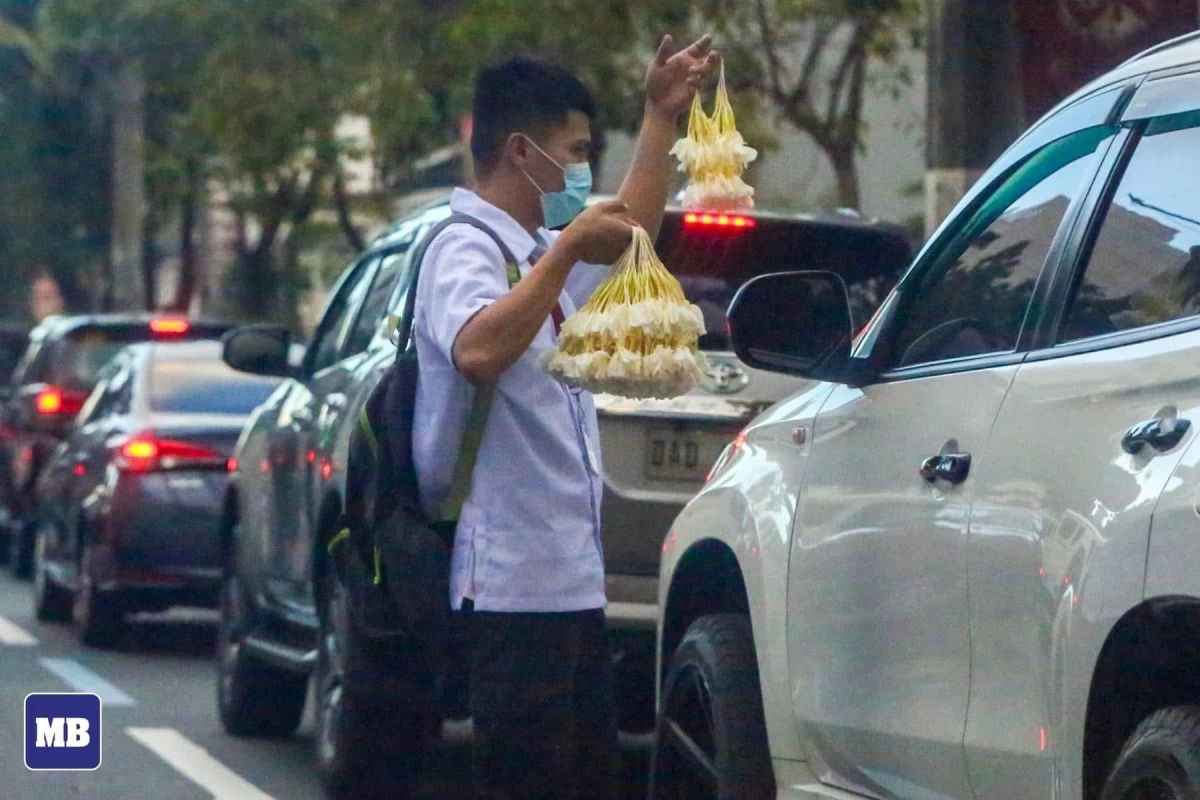
(MB FILE PHOTO)
The Department of the Interior and Local Government (DILG) and the National Poverty Commission (NAPC) have forged an agreement aimed at alleviating incidents of poverty in the country.
In the joint memorandum circular (JMC), the DILG and the NAPC released guidelines for the formulation of local poverty reduction action plans in pursuit of a strong push towards single-digit poverty by 2028.
The JMC outlines the policy guidelines for the formulation of Local Poverty Reduction Action Plans (LPRAP) in all provinces, cities and municipalities across the country, affirming the government’s commitment to fighting poverty.
Signed by DILG Secretary Juanito Victor “Jonvic’’ Remulla and NAPC Secretary Lope Santos III, the agreement supports the goal of President Ferdinand “Bongbong’’ Marcos, Jr. of achieving a single-digit poverty incidence by 2028, in accordance with the Philippine Development Plan 2023-2028.
Further, the DILG noted that it lays the foundation for achieving the goals of AmBisyon Natin 2040 or poverty eradication by 2040.
“The DILG fully supports the implementation of this JMC. Through this policy, we are institutionalizing a bottom-up approach that ensures the voices of the poor and marginalized are heard and reflected in local planning. This is effective governance in action, where every sector plays a role in building a more equitable Bagong Pilipinas,” Remulla said.
For his part, Santos stated that the circular “is an important step forward in our fight against poverty.’’
“We are grateful to our partners in the DILG, as well as the LGUs (local government units), agenciesaQQQq and the basic sectors, for their continued support and dedication in ensuring that the rights of the poor are protected and upheld,’’ Santos emphasized.
He lamented that the LPRAPs will surely be important tools in ensuring that the local development plans of the LGUs are aligned and synergized with the national plan for the efficient and targeted use of government resources.
Under the JMC, the LGUs are tasked to formulate LPRAPs through Local Poverty Reduction Action Committees (LPRACs), multi-sectoral bodies composed of 24 members representing both the government and the basic sectors or civil society organizations (BS/CSOs).
“LPRAPs are LGU plans containing poverty-reduction programs and projects developed through consultations among national government agencies, LGUs, the basic sectors, and other stakeholders to ensure the plans are responsive, timely, and effective,’’ the DILG explained.
These plans also serve as the building blocks of the National Poverty Reduction Plan (NPRP), which consolidates all anti-poverty initiatives of the government. Both the NPRP and LPRAPs are designed to meet the needs of poor, marginalized, and underserved communities in line with Magna Carta of the Poor (MCP) and Republic Act No. 11291.
Further, the DILG bared that the MCP guarantees the five fundamental rights of the poor: adequate food, decent work, relevant and quality education, adequate housing, and the highest attainable standard of health.
It added that these rights serve as the foundation for government anti-poverty programs aimed at breaking the intergenerational cycle of poverty.
Based on the Philippine Statistics Authority (PSA) report, poverty incidence dropped from 18.1 percent in 2021 to 15.5 percent in 2023 after just 1.5 years into President Marcos’ administration .
Citing its salient feature, the DILG asserted that the JMC is a crucial step towards realizing the aspiration of a Bagong Pilipinas where no Filipino, especially the poor and marginalized, is left behind.