






Manila Bulletin
 Philippines
National
Romualdez: House to scrutinize budget 'as ally, not adversary' of executive branch
Philippines
National
Romualdez: House to scrutinize budget 'as ally, not adversary' of executive branch
Philippines
National
Romualdez: House to scrutinize budget 'as ally, not adversary' of executive branch
Romualdez: House to scrutinize budget 'as ally, not adversary' of executive branch
Published Aug 18, 2025 02:31 pm


At A Glance
- Speaker Martin Romualdez told the executive branch on Monday, Aug. 18 that the House of Representatives will carry out its review of the P6.793-trillion National Expenditure Program (NEP) as an ally and not as an adversary.
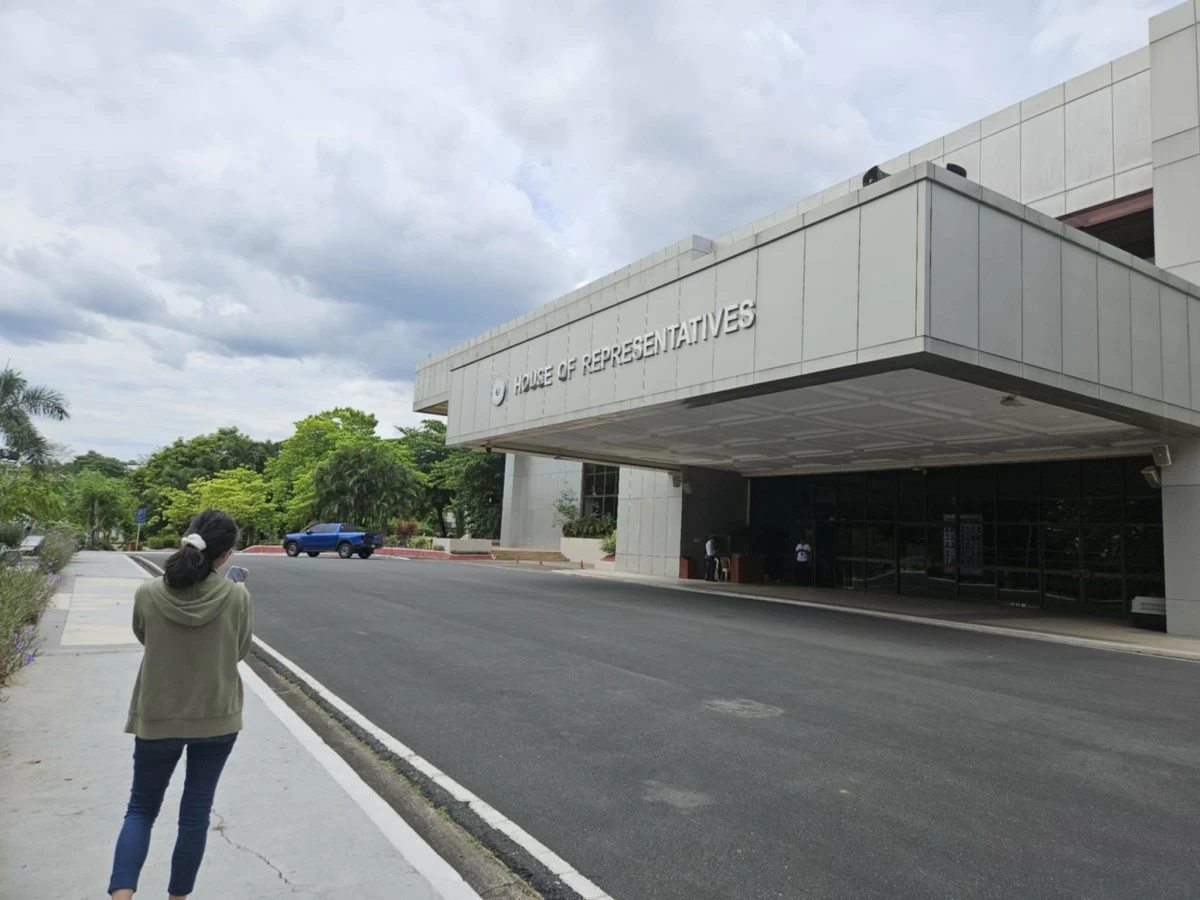
The House of Representatives (Ellson Quismorio/ MANILA BULLETIN)
Speaker Martin Romualdez told the executive branch on Monday, Aug. 18 that the House of Representatives will carry out its review of the P6.793-trillion National Expenditure Program (NEP) as an ally and not as an adversary.
“To our partners in the Executive Branch, allow me to be clear: we will scrutinize, we will question, we will deliberate thoroughly. But we will do so not as adversaries, but as allies united by a shared purpose,” Romualdez said in his welcome speech to members of the Development Budget Coordination Committee (DBCC).
"For at the end of the day, at the heart of our collaboration lies a common goal: to deliver a better, more dignified life for every Filipino family,” he said.
The DBCC--composed of the Department of Budget and Management (DBM), Department of Economy, Planning, and Development (DEPD), Department of Finance (DOF), and Bangko Sentral ng Pilipinas (BSP)--was the first body to hold a briefing with the Committee on Appropriations chaired by Nueva Ecija 1st district Rep. Mikaela Angela "Mika" Suansing.
The appropriations committee is the panel tasked with perusing the NEP, which is the basis of the General Appropriations Bill (GAB) or proposed national budget.
The 2026 NEP worth P6.793 trillion is 7.4 percent higher than the enacted 2025 national budget of P6.326 trillion budget.
In his fourth State of the Nation Address (SONA) last July 28, President Marcos warned that he wouldn't sign a national budget that is not aligned with the NEP.
Romualdez likened national fund allocation to budgeting by a Filipino family. “Just as every Filipino household plans its budget with care, we too must ensure that each peso serves a meaningful purpose,” he said.
“This is not merely a fiscal principle — it is a moral imperative. It is our solemn duty to translate this proposed P6.793 trillion budget into classrooms for our youth, medicine for our sick, roads for our farmers, jobs for our youth, and security for our nation,” said the Speaker.
He says the budget hearings--conducted in eexercise of the House's power of the purse--aren't just “a routine in fiscal exercise".
“It is where the lifeblood of our nation — the people’s money — is measured against the people’s needs. Here, in this august chamber, we commence the critical work of transforming vision into action, and action into lasting progress,” he added.
He informed DBCC members, who are also part of the President’s economic team, that the House “has opened its doors wider than ever before.”
“We ended the practice of the 'small committee’. We welcomed civil society observers. Because the Filipino people deserve full transparency in how their hard-earned money is planned, allocated, and spent,” he said.
“Kapag malinaw ang proseso, malinaw din ang tiwala. At kapag may tiwala ang taumbayan, may lakas ang pamahalaan (When the process is clear, trust is also clear. And when the people have trust, the government has strength). Transparency is not an option — it is the cornerstone of democratic governance,” he added.
Biggest budget ever
In her own opening remarks, Suansing underscored the chamber’s commitment to meaningful reforms and people-first budgeting.
“We envision the budget for FY 2026 to be centered on the Filipino people — both in terms of expenditure priorities and the budget process itself. This is why we fully support the framework laid out by the DBCC, which emphasizes human capital development in crafting the 2026 national budget — by prioritizing investments in quality education, healthcare and workforce upskilling,” the 33-year-old Harvard University graduate said during the briefing.
Suansing says that Congress will ensure that the country’s largest-ever proposed budget results in visible and tangible improvements in the daily lives of Filipinos.
“Mararamdaman at makikita po ninyo ito — mas maginhawang pagpapagamot, mas dekalidad na edukasyon at mga classroom, mas maraming dekalidad na trabaho, at mas magandang mga kalsada para sa mga magsasaka upang mas mapadali ang pagdala ng inyo pong mga produkto sa merkado,” she pointed out.
(You will feel and see this—more convenient medical treatment, higher-quality education and classrooms, more quality jobs, and better roads for farmers to make it easier to bring your products to market.)
As for the new pro-transparency measures being implemented by the House, Suansing said these reflect a deeper principle that Filipinos should have a direct stake in how their taxes are spent.
“Our commitment is firm: In this budget and in the years to come, we are bringing the Filipino people back to the center of the budget process where you rightfully belong,” she said.