






Manila Bulletin
 Business
Trade & Industry
Philippines pivots to new trade pacts amid US tariff uncertainties
Business
Trade & Industry
Philippines pivots to new trade pacts amid US tariff uncertainties
Business
Trade & Industry
Philippines pivots to new trade pacts amid US tariff uncertainties
Philippines pivots to new trade pacts amid US tariff uncertainties
Published Aug 18, 2025 03:58 pm


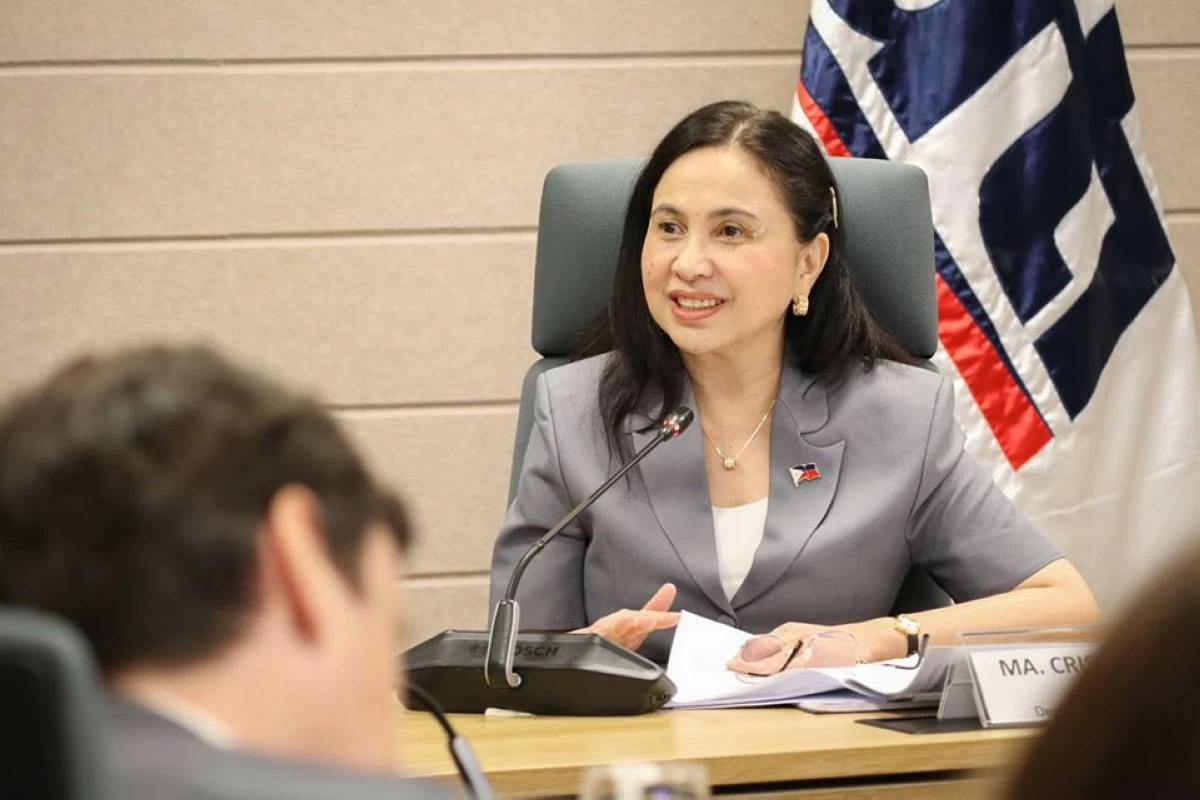
DTI Secretary Cristina Roque (DTI photo)
The Philippines is banking on new trade agreements to boost market access and reverse the decline in exports and foreign investments due to uncertainties driven by the tariff policy of the United States (US), according to Trade Secretary Cristina Roque.
Based on data from the Philippine Statistics Authority (PSA), the country’s merchandise exports fell to $5.57 billion in June, down 17 percent from $6.73 billion in the same month last year.
Electronic products, which include semiconductors that are under threat to face a massive 100 percent tariff by the US, dipped to $2.99 billion in the same month from $3.96 billion last year.
The US remained the top destination of the country’s exports in June, amounting to $897.80 million or 16 percent of the total value.
Meanwhile, foreign direct investments registered with investment promotion agencies (IPAs) stood at ₱67.38 billion in the second quarter, down 64 percent from ₱189.50 billion in the same period last year.
The decline in both exports and investments coincides with ongoing uncertainties in global trade due to the reciprocal tariffs imposed by the US. Earlier this month, the Philippines was officially slapped with a 19 percent tariff.
“Of course these things happen, but we'll always find ways to really get it up again. So all of us have a whole government approach in making sure that we get this done,” Roque said in a chance interview.
Despite the official imposition of tariffs long threatened by US President Donald Trump, Roque said there are still uncertainties as to the nitty-gritty of the country’s reciprocal trade agreement with America since both sides are still negotiating.
To recall, the Philippines offered to remove the tariffs against American-made cars, soy, wheat, and pharmaceutical products in exchange for reducing its tariff rate from 20 percent to 19 percent.
“And for us, because of all these uncertainties with the US tariffs, we're really finding other avenues to sell the products of the Philippines,” said Roque.
The secretary has long championed the diversification of the country’s export markets to ensure that local industries are safeguarded from policy changes to its number one export market, the US.
“The US tariff is really up to the US, so we just have to adapt to whatever changes or whatever they want from us. But on the side of the exporters, they need to find other markets also,” she added.
Roque said the government is taking charge of expanding the country’s export markets through business missions and state visits headed by none other than President Marcos.
During the visit to India earlier this month, the government secured 18 business deals with Indian companies, with investment pledges totaling $466 million.
As part of the government’s efforts, she said the next business mission will be to Cambodia next month, with additional visits to the US, Japan, and France already planned.
Complementing these foreign trips, the government is targeting several trade agreements (FTA) with its trade allies to further spur access to exports and investments.
Roque said her agency is currently working on refining the Japan–Philippines Economic Partnership Agreement (JPEPA) to enhance the country’s exports to the Asian giant, particularly for agricultural exports such as bananas.
Other trade agreements on the pipeline include the United Arab Emirates (UAE), Canada, Chile, the European Union, and the Comprehensive and Progressive Agreement for Trans-Pacific Partnership (CPTPP).
“The world is the market. If you look at their population as compared to the world, it will show you that we should really find other avenues to explore,” Roque said.
In the same breath, the secretary said the country’s exports could also look into exploring more of the local market, leveraging the country’s economic over 115 million population,
Further, she said that foreign investments will likely be more robust in the second half of the year once tariff-induced jitters finally subside.
Currently, the Philippines shares the 19 percent tariff rate with four other Southeast Asia countries, namely Cambodia, Malaysia, Thailand, and Indonesia.
“I think when our Southeast Asian neighbors, once their actual percentage compared to us comes out, then I think it will settle down,” said Roque.
“Then the business people can already choose whether to really stay here or [not]. But I think we’ll still have an edge because 19 percent is not that big compared to the other countries,” she continued.