

ADVERTISEMENT

Over 150 people are still missing after devastating flooding in northwest Pakistan

Published Aug 18, 2025 08:40 pm
PESHAWAR, Pakistan — Anguished Pakistanis searched remote areas for bodies swept away by weekend flash floods as the death toll reached 277 on Monday, while one official replied to the lack of evacuation warnings by saying people should have built homes elsewhere.
A changing climate has made residents of northern Pakistan's river-carved mountainous areas more vulnerable to sudden, heavy rains.
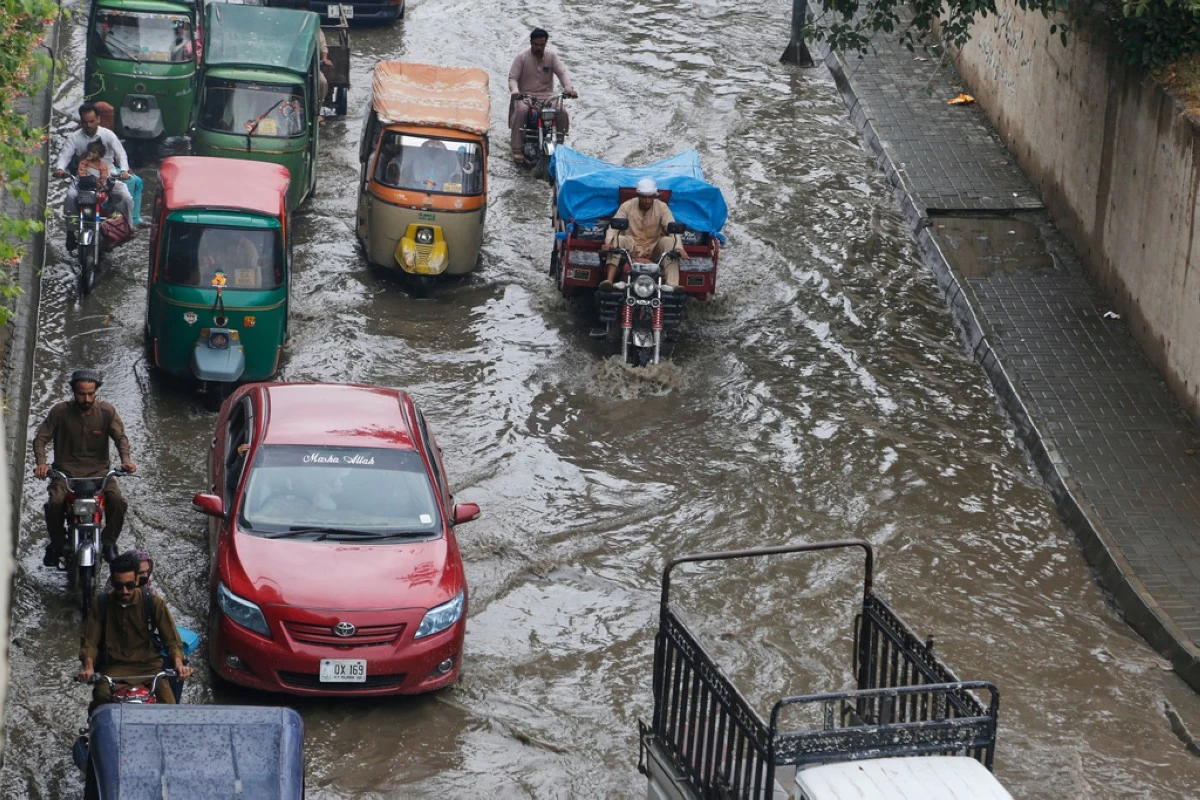
Vehicles and motorcyclists drive through a flooded road after heavy rainfall in Peshawar, Pakistan, Monday, Aug. 18, 2025. (AP Photo/Muhammad Sajjad)
More than 150 people were still missing in the district of Buner in Khyber Pakhtunkhwa province after Friday's flash floods.
Villagers have said there had been no warning broadcast from mosque loudspeakers, a traditional method for alerting emergencies in remote areas. The government has said the sudden downpour was so intense that the deluge struck before residents could be informed.
Emergency services spokesman Mohammad Suhail said three bodies were found on Monday. The army has deployed engineers and heavy machinery to clear the rubble.
On Sunday, provincial chief minister Ali Amin Gandapur said many deaths could have been avoided if residents had not built homes along waterways. He said the government would encourage displaced families to relocate to safer areas, where they would be assisted in rebuilding homes.
Pakistan has seen higher-than-normal monsoon rains since June 26 that have killed at least 645 people across the country, with 400 deaths in the northwest. The National Disaster Management Authority issued an alert for further flooding after new rains began Sunday in many parts of the country.
On Monday, torrential rains triggered a flash flood that struck Darori village in northwestern Swabi district, killing 15 people, government official Awais Babar said.
He said rescuers evacuated nearly 100 people, mostly women and children, who had taken refuge on the roofs of homes. Disaster management officials said the floods inundated streets in other districts in the northwest and in Pakistan-administered Kashmir.
Prime Minister Shehbaz Sharif chaired a high-level meeting Monday to review relief efforts in flood-hit areas of Khyber Pakhtunkhwa as well as northern Gilgit-Baltistan and Pakistan-administered Kashmir.
At the meeting, officials estimated flood-related damages to public and private property at more than 126 million rupees ($450,000), according to a government statement.
The U.N. humanitarian agency said it had mobilized groups in hard-hit areas where damaged roads and communication lines have cut off communities. Relief agencies were providing food, water and other aid.
Flooding has also hit India-administered Kashmir, where at least 67 people were killed and dozens remain missing after flash floods swept through the region during an annual Hindu pilgrimage last week.
In 2022, catastrophic floods linked to climate change killed nearly 1,700 people in Pakistan and left hundreds of thousands homeless.

Related Tags

World news
ADVERTISEMENT
.most-popular .layout-ratio{ padding-bottom: 79.13%; } @media (min-width: 768px) and (max-width: 1024px) { .widget-title { font-size: 15px !important; } }

{{ articles_filter_1561_widget.title }}

.most-popular .layout-ratio{ padding-bottom: 79.13%; } @media (min-width: 768px) and (max-width: 1024px) { .widget-title { font-size: 15px !important; } }

{{ articles_filter_1562_widget.title }}

.most-popular .layout-ratio{ padding-bottom: 79.13%; } @media (min-width: 768px) and (max-width: 1024px) { .widget-title { font-size: 15px !important; } }

{{ articles_filter_1563_widget.title }}

{{ articles_filter_1564_widget.title }}

.mb-article-details { position: relative; } .mb-article-details .article-body-preview, .mb-article-details .article-body-summary{ font-size: 17px; line-height: 30px; font-family: "Libre Caslon Text", serif; color: #000; } .mb-article-details .article-body-preview iframe , .mb-article-details .article-body-summary iframe{ width: 100%; margin: auto; } .read-more-background { background: linear-gradient(180deg, color(display-p3 1.000 1.000 1.000 / 0) 13.75%, color(display-p3 1.000 1.000 1.000 / 0.8) 30.79%, color(display-p3 1.000 1.000 1.000) 72.5%); position: absolute; height: 200px; width: 100%; bottom: 0; display: flex; justify-content: center; align-items: center; padding: 0; } .read-more-background a{ color: #000; } .read-more-btn { padding: 17px 45px; font-family: Inter; font-weight: 700; font-size: 18px; line-height: 16px; text-align: center; vertical-align: middle; border: 1px solid black; background-color: white; } .hidden { display: none; }
function initializeAllSwipers() { // Get all hidden inputs with cms_article_id document.querySelectorAll('[id^="cms_article_id_"]').forEach(function (input) { const cmsArticleId = input.value; const articleSelector = '#article-' + cmsArticleId + ' .body_images'; const swiperElement = document.querySelector(articleSelector); if (swiperElement && !swiperElement.classList.contains('swiper-initialized')) { new Swiper(articleSelector, { loop: true, pagination: false, navigation: { nextEl: '#article-' + cmsArticleId + ' .swiper-button-next', prevEl: '#article-' + cmsArticleId + ' .swiper-button-prev', }, }); } }); } setTimeout(initializeAllSwipers, 3000); const intersectionObserver = new IntersectionObserver( (entries) => { entries.forEach((entry) => { if (entry.isIntersecting) { const newUrl = entry.target.getAttribute("data-url"); if (newUrl) { history.pushState(null, null, newUrl); let article = entry.target; // Extract metadata const author = article.querySelector('.author-section').textContent.replace('By', '').trim(); const section = article.querySelector('.section-info ').textContent.replace(' ', ' '); const title = article.querySelector('.article-title h1').textContent; // Parse URL for Chartbeat path format const parsedUrl = new URL(newUrl, window.location.origin); const cleanUrl = parsedUrl.host + parsedUrl.pathname; // Update Chartbeat configuration if (typeof window._sf_async_config !== 'undefined') { window._sf_async_config.path = cleanUrl; window._sf_async_config.sections = section; window._sf_async_config.authors = author; } // Track virtual page view with Chartbeat if (typeof pSUPERFLY !== 'undefined' && typeof pSUPERFLY.virtualPage === 'function') { try { pSUPERFLY.virtualPage({ path: cleanUrl, title: title, sections: section, authors: author }); } catch (error) { console.error('ping error', error); } } // Optional: Update document title if (title && title !== document.title) { document.title = title; } } } }); }, { threshold: 0.1 } ); function showArticleBody(button) { const article = button.closest("article"); const summary = article.querySelector(".article-body-summary"); const body = article.querySelector(".article-body-preview"); const readMoreSection = article.querySelector(".read-more-background"); // Hide summary and read-more section summary.style.display = "none"; readMoreSection.style.display = "none"; // Show the full article body body.classList.remove("hidden"); } document.addEventListener("DOMContentLoaded", () => { let loadCount = 0; // Track how many times articles are loaded const offset = [1, 2, 3, 4, 5, 6, 7, 8, 9, 10]; // Offset values const currentUrl = window.location.pathname.substring(1); let isLoading = false; // Prevent multiple calls if (!currentUrl) { console.log("Current URL is invalid."); return; } const sentinel = document.getElementById("load-more-sentinel"); if (!sentinel) { console.log("Sentinel element not found."); return; } function isSentinelVisible() { const rect = sentinel.getBoundingClientRect(); return ( rect.top < window.innerHeight && rect.bottom >= 0 ); } function onScroll() { if (isLoading) return; if (isSentinelVisible()) { if (loadCount >= offset.length) { console.log("Maximum load attempts reached."); window.removeEventListener("scroll", onScroll); return; } isLoading = true; const currentOffset = offset[loadCount]; window.loadMoreItems().then(() => { let article = document.querySelector('#widget_1690 > div:nth-last-of-type(2) article'); intersectionObserver.observe(article) loadCount++; }).catch(error => { console.error("Error loading more items:", error); }).finally(() => { isLoading = false; }); } } window.addEventListener("scroll", onScroll); });

Sign up by email to receive news.