

ADVERTISEMENT

Marcos admin borrows ₱507 billion from retail investors through RTBs amid high demand

Published Aug 18, 2025 03:07 pm

At A Glance

  • Driven by "a very strong market demand," the national government concluded its offer period on Monday, borrowing a total ₱507.2 billion during the sale of retired treasury bonds (RTBs) from both local and foreign lenders.
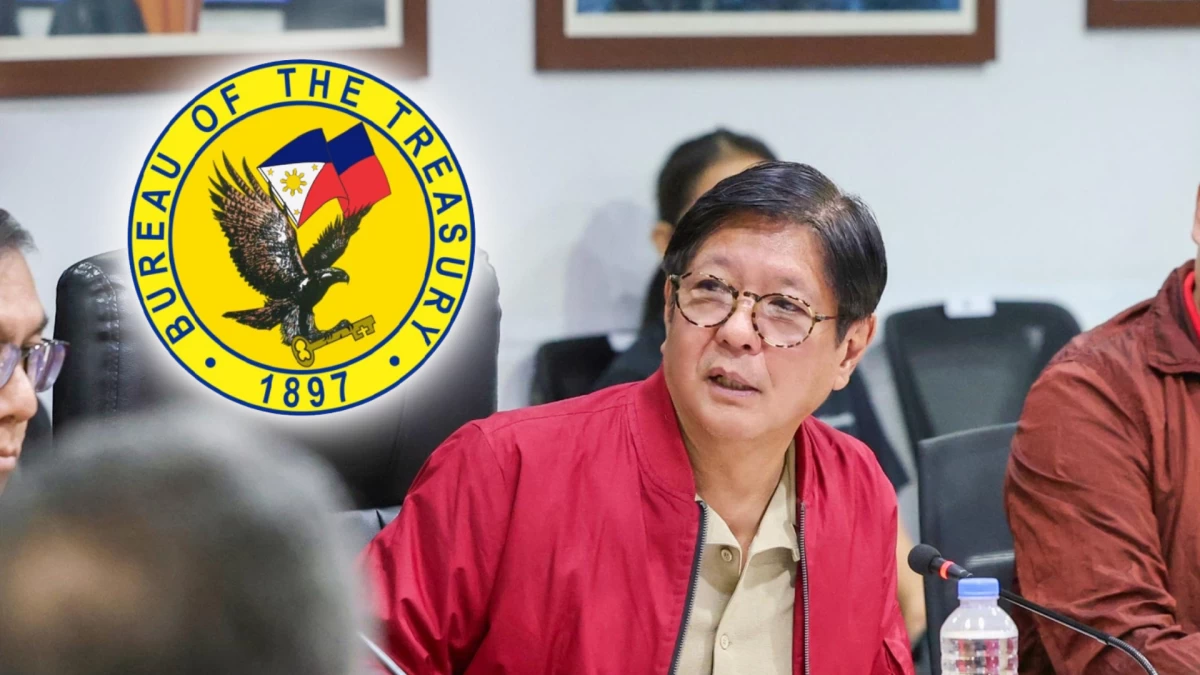
Driven by “very strong market demand,” the national government concluded its offer period for five-year retail treasury bonds (RTBs) last week, borrowing a total of ₱507.2 billion from both local and foreign lenders.
Of the total, issued at a six-percent annual interest, ₱425.5 billion came in as new money or fresh funds, including the ₱210 billion awarded during the rate-setting auction on Aug. 5, according to the Bureau of the Treasury (BTr).
Another ₱81.7 billion was raised through a bond exchange in the first four days of the offer period.
National Treasurer Sharon P. Almanza told reporters on the sidelines of the 2026 budget briefing at the House of Representatives on Monday, Aug. 18, that “foreign participation [during the RTB sale] is substantial, which we didn’t see in the past.” She said foreign participation increased from less than five percent previously to a double-digit participation rate.
The BTr said the proceeds from these RTBs maturing in August 2030 “will be used to support the government’s budgetary requirements for various projects and programs in education, health, infrastructure, agriculture, among others.”
Almanza said that “very good fundamentals” and market expectations of key interest rates continuing to decline were the main drivers of the strong demand for the IOUs.
Efforts that led to increased interest in the latest RTB sale include regional roadshows in Baguio, Zambales, Pampanga, Laguna, Quezon, Naga, Tacloban, Cebu, Davao, and Butuan. Alongside these roadshows were a mix of both familiar and new locations aimed at further broadening retail participation and enhancing public awareness of the issuance.
“Online financial literacy sessions were [also] conducted for overseas Filipino (OF) communities, local retail investors, and various institutions, including schools and cooperatives,” the BTr said.
The latest RTB offering had been available for a minimum investment of ₱5,000, either through bank branches or online platforms such as the BTr ordering facility, Bonds.PH, Overseas Filipino Bank (OFBank) and Land Bank of the Philippines (Landbank) mobile apps, and Philippine Digital Asset Exchange (PDAX).
“What made [the 31st RTB issuance] particularly notable was its distinction as the first-ever RTBs to be made available on the widely used digital wallet platform GCash, via the GBonds function,” the BTr said.
RTBs are government-issued debt securities that serve a dual purpose: they are an investment for the public and a borrowing instrument for the government.
For investors, RTBs provide a safe and accessible way to earn fixed interest income. For the government, they are a means of raising funds from domestic sources to finance national programs and manage debt, effectively allowing Filipinos to “lend” to the state while growing their savings.

Related Tags

retail treasury bonds (RTBs) Sharon Almanza Bureau of the Treasury (BTr)
ADVERTISEMENT
.most-popular .layout-ratio{ padding-bottom: 79.13%; } @media (min-width: 768px) and (max-width: 1024px) { .widget-title { font-size: 15px !important; } }

{{ articles_filter_1561_widget.title }}

.most-popular .layout-ratio{ padding-bottom: 79.13%; } @media (min-width: 768px) and (max-width: 1024px) { .widget-title { font-size: 15px !important; } }

{{ articles_filter_1562_widget.title }}

.most-popular .layout-ratio{ padding-bottom: 79.13%; } @media (min-width: 768px) and (max-width: 1024px) { .widget-title { font-size: 15px !important; } }

{{ articles_filter_1563_widget.title }}

{{ articles_filter_1564_widget.title }}

.mb-article-details { position: relative; } .mb-article-details .article-body-preview, .mb-article-details .article-body-summary{ font-size: 17px; line-height: 30px; font-family: "Libre Caslon Text", serif; color: #000; } .mb-article-details .article-body-preview iframe , .mb-article-details .article-body-summary iframe{ width: 100%; margin: auto; } .read-more-background { background: linear-gradient(180deg, color(display-p3 1.000 1.000 1.000 / 0) 13.75%, color(display-p3 1.000 1.000 1.000 / 0.8) 30.79%, color(display-p3 1.000 1.000 1.000) 72.5%); position: absolute; height: 200px; width: 100%; bottom: 0; display: flex; justify-content: center; align-items: center; padding: 0; } .read-more-background a{ color: #000; } .read-more-btn { padding: 17px 45px; font-family: Inter; font-weight: 700; font-size: 18px; line-height: 16px; text-align: center; vertical-align: middle; border: 1px solid black; background-color: white; } .hidden { display: none; }
function initializeAllSwipers() { // Get all hidden inputs with cms_article_id document.querySelectorAll('[id^="cms_article_id_"]').forEach(function (input) { const cmsArticleId = input.value; const articleSelector = '#article-' + cmsArticleId + ' .body_images'; const swiperElement = document.querySelector(articleSelector); if (swiperElement && !swiperElement.classList.contains('swiper-initialized')) { new Swiper(articleSelector, { loop: true, pagination: false, navigation: { nextEl: '#article-' + cmsArticleId + ' .swiper-button-next', prevEl: '#article-' + cmsArticleId + ' .swiper-button-prev', }, }); } }); } setTimeout(initializeAllSwipers, 3000); const intersectionObserver = new IntersectionObserver( (entries) => { entries.forEach((entry) => { if (entry.isIntersecting) { const newUrl = entry.target.getAttribute("data-url"); if (newUrl) { history.pushState(null, null, newUrl); let article = entry.target; // Extract metadata const author = article.querySelector('.author-section').textContent.replace('By', '').trim(); const section = article.querySelector('.section-info ').textContent.replace(' ', ' '); const title = article.querySelector('.article-title h1').textContent; // Parse URL for Chartbeat path format const parsedUrl = new URL(newUrl, window.location.origin); const cleanUrl = parsedUrl.host + parsedUrl.pathname; // Update Chartbeat configuration if (typeof window._sf_async_config !== 'undefined') { window._sf_async_config.path = cleanUrl; window._sf_async_config.sections = section; window._sf_async_config.authors = author; } // Track virtual page view with Chartbeat if (typeof pSUPERFLY !== 'undefined' && typeof pSUPERFLY.virtualPage === 'function') { try { pSUPERFLY.virtualPage({ path: cleanUrl, title: title, sections: section, authors: author }); } catch (error) { console.error('ping error', error); } } // Optional: Update document title if (title && title !== document.title) { document.title = title; } } } }); }, { threshold: 0.1 } ); function showArticleBody(button) { const article = button.closest("article"); const summary = article.querySelector(".article-body-summary"); const body = article.querySelector(".article-body-preview"); const readMoreSection = article.querySelector(".read-more-background"); // Hide summary and read-more section summary.style.display = "none"; readMoreSection.style.display = "none"; // Show the full article body body.classList.remove("hidden"); } document.addEventListener("DOMContentLoaded", () => { let loadCount = 0; // Track how many times articles are loaded const offset = [1, 2, 3, 4, 5, 6, 7, 8, 9, 10]; // Offset values const currentUrl = window.location.pathname.substring(1); let isLoading = false; // Prevent multiple calls if (!currentUrl) { console.log("Current URL is invalid."); return; } const sentinel = document.getElementById("load-more-sentinel"); if (!sentinel) { console.log("Sentinel element not found."); return; } function isSentinelVisible() { const rect = sentinel.getBoundingClientRect(); return ( rect.top < window.innerHeight && rect.bottom >= 0 ); } function onScroll() { if (isLoading) return; if (isSentinelVisible()) { if (loadCount >= offset.length) { console.log("Maximum load attempts reached."); window.removeEventListener("scroll", onScroll); return; } isLoading = true; const currentOffset = offset[loadCount]; window.loadMoreItems().then(() => { let article = document.querySelector('#widget_1690 > div:nth-last-of-type(2) article'); intersectionObserver.observe(article) loadCount++; }).catch(error => { console.error("Error loading more items:", error); }).finally(() => { isLoading = false; }); } } window.addEventListener("scroll", onScroll); });

Sign up by email to receive news.