






Manila Bulletin
 Philippines
National
'Hindi tayo magpo-provoke': PH won't deploy Navy ships to Bajo de Masinloc in aftermath of WPS collision
Philippines
National
'Hindi tayo magpo-provoke': PH won't deploy Navy ships to Bajo de Masinloc in aftermath of WPS collision
Philippines
National
'Hindi tayo magpo-provoke': PH won't deploy Navy ships to Bajo de Masinloc in aftermath of WPS collision
'Hindi tayo magpo-provoke': PH won't deploy Navy ships to Bajo de Masinloc in aftermath of WPS collision
Published Aug 18, 2025 04:34 pm


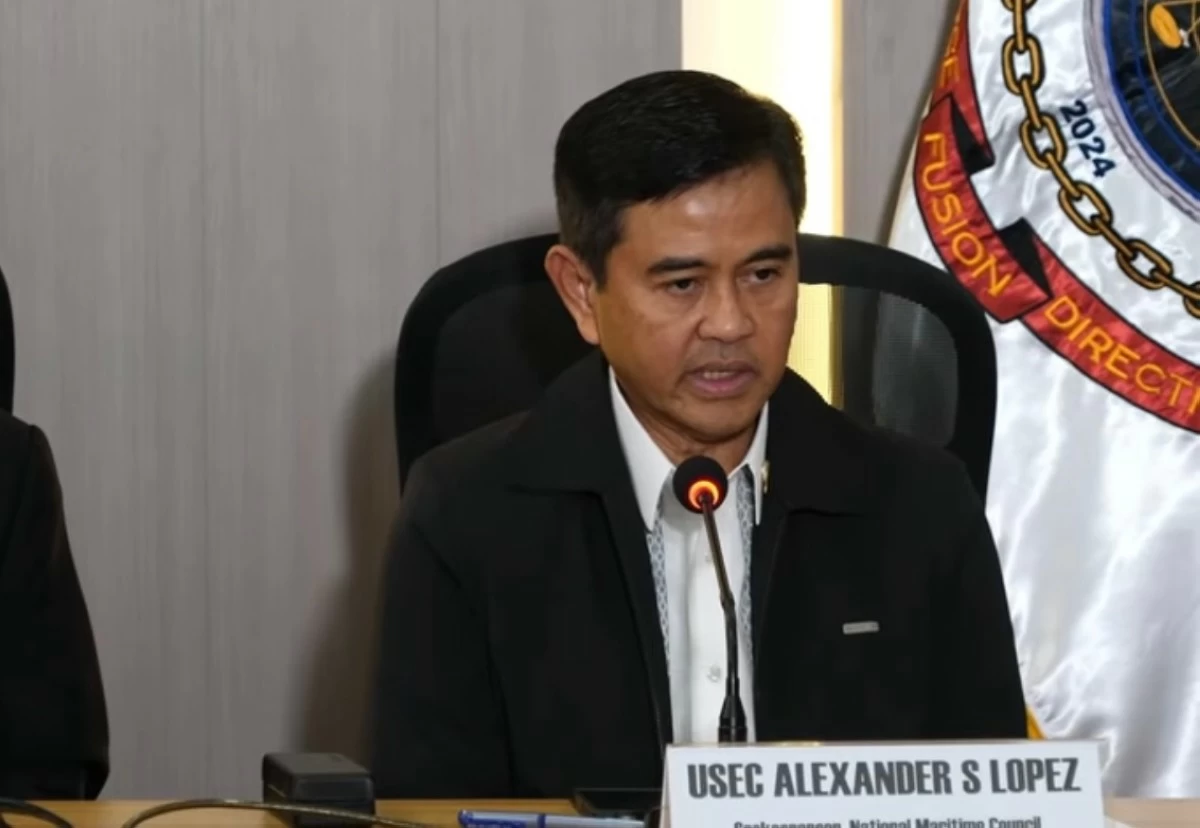
National Maritime Council (NMC) spokesperson Undersecretary Alexander Lopez (RTVM screenshot)
The Philippine government ruled out deploying Navy ships to Bajo de Masinloc (Scarborough or Panatag Shoal) a week after the collision of two Chinese vessels in the tension-filled waters, the National Maritime Council (NMC) announced Monday, Aug. 18.
NMC spokesperson Undersecretary Alexander Lopez said this should not be seen as a sign of cowardice, rather, a strong resolve of President Marcos Jr. that diplomacy should remain as the primary tool in addressing tensions in the West Philippine Sea (WPS).
“Ang reaksyon natin dito ay hindi tayo magpapadala ng Navy natin para tapatan ang isang Navy. Bakit? Kasi once you deploy a Navy vessel there, you come in like war-like, para bang nanunutya ka, nanghahamon ka. That is not the policy stand of our government (Our reaction is we will not deploy a Navy [ship] to match another Navy. Why? It’s because once you deploy a Navy [vessel] there, you come in war-like, it’s like you are taunting, like you are provocating. That is not the policy stand of our government),” he said in a press conference in Manila.
“Hindi naman masasabi na hindi tayo magdedeploy doon ay naduduwag tayo. Hindi (We cannot say that the decision not to deploy means we are being cowards. No.) We are just being prudent, we are just being practical,” he added.
Lopez stressed Marcos’ independent foreign policy, which the latter reiterated during his fourth State of the Nation Address (SONA) last month, that the Philippines will be “a friend to all and enemy to none.”
“Napakaliwanag ng direktiba ng ating Pangulo (The directive of our President is clear), whatever we do, we will not be the ones to provoke,” he said.
“We do not want this situation to escalate, and if ever it escalates, it is not to the best interest of our country, it is not even to the best interest of China for that matter, and to the region. So we might as well tone it down and bring it down to a level where we can manage it. Otherwise, we do not know what will happen,” he said.
To recall, a China Coast Guard (CCG) and a People’s Liberation Army-Navy (PLA-N) warship collided in Bajo de Masinloc while chasing a Philippine Coast Guard (PCG) vessel on Aug. 11.
Various stakeholders sounded the alarm on the deployment of warships by China to Bajo de Masinloc, which Armed Forces of the Philippines (AFP) chief General Romeo Brawner Jr. flagged as a violation of a 2012 agreement between the Philippines and China.
After a standoff in Bajo de Masinloc in 2012, a deal between Manila and Beijing was brokered by the United States, stating that both countries should withdraw their naval vessels from the area and neither should send gray ships from then on. The Philippines adhered to the agreement but China did not, effectively taking control of the shoal by maintaining a steady presence of Chinese navy warships, as well as coast guard and maritime militia vessels.
Last week, Brawner disclosed that the AFP and PCG will hold a conference with Marcos to possibly craft a new WPS patrol plan in the wake of the Bajo de Masinloc collision. He had said that among the things that would be discussed with the President was the possible deployment of Philippine Navy warships to Bajo de Masinloc to accompany civilian vessels of the PCG during patrol operations.
National Security Adviser Eduardo Año thumbed down the idea, saying this could further escalate tension in the WPS.
And to end the speculations once and for all, the NMC also announced during the press conference that the proposition for a joint patrol between the AFP and PCG in Bajo de Masinloc will no longer be considered.
“We do not know what will happen if two Navy vessels are there kasi doon pwedeng mangyari ang miscalculation (a miscalculation could occur), misjudgment, and that is the thing that we do not want,” Lopez said.
AFP and PCG spokespersons for WPS Rear Adm. Roy Vincent Trinidad and Commodore Jay Tarriela vowed that their agencies would adhere to the NMC's call, and would continue to perform their mandate of protecting the integrity of the national territory and defending the country’s sovereignty and sovereign rights.