







Have we entered the hybrid filler revolution?
Bringing this world-class innovation to the Philippine shores
Published Aug 18, 2025 08:50 pm


At A Glance
- With over 40,000 patients treated globally using similar hybrid approaches and widespread adoption by leading practitioners worldwide, this technique has established itself as a new
- standard of care in facial rejuvenation.
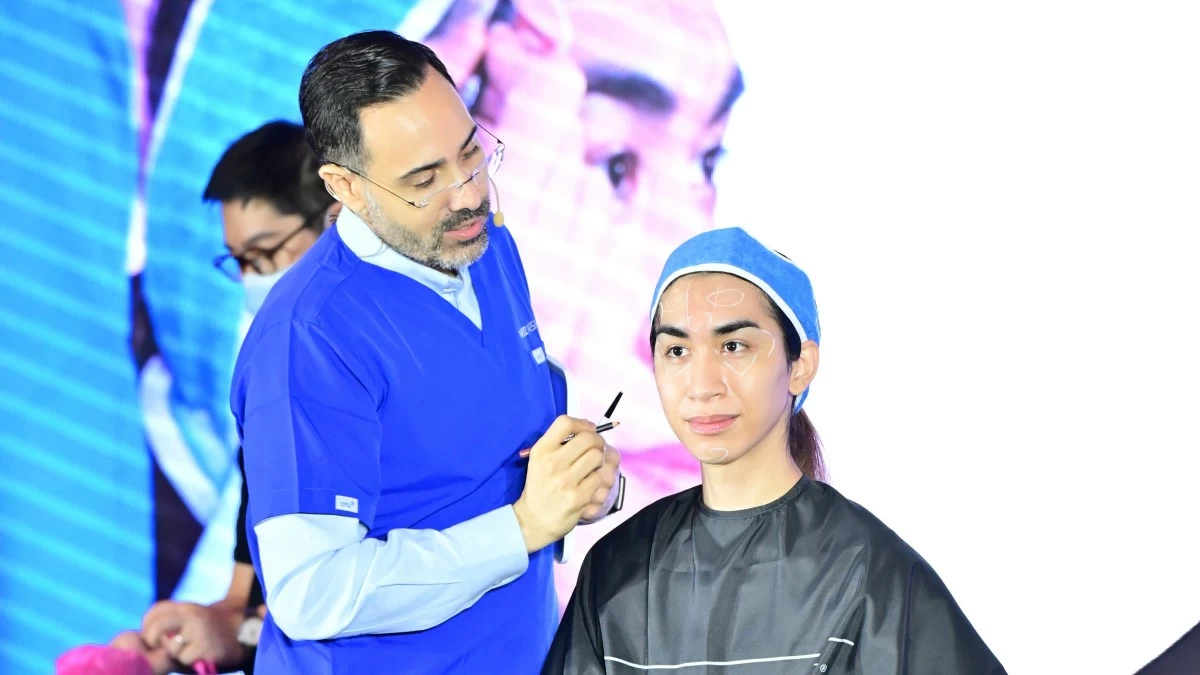
IN THE FLESH Dr. Nabil demonstrating how the filler takes effect
When international pharmaceutical giants invest in Filipino medical education, it signals both confidence in the local market and commitment to elevating Philippine healthcare standards. The collaboration between Vanguard Aesthetics and Merz Pharmaceuticals to bring Dr. Nabil Fakih to Manila represents a significant milestone in the Philippines' aesthetic medicine
landscape, showcasing how strategic partnerships can transform local medical practice while introducing revolutionary techniques that are reshaping global aesthetics.
Dr. Fakih has revolutionized aesthetic medicine with his groundbreaking "hybrid technique" that combines two different types of facial fillers to achieve superior, longer-lasting results. This innovative approach has trained over 31,000 doctors across 46 countries and established new global standards for facial rejuvenation. The investment required to bring internationally renowned experts like Dr. Fakih to Manila—typically ranging from USD 25,000-50,000 for speaker fees and travel alone—underscores the serious commitment these companies have to Filipino medical professionals.
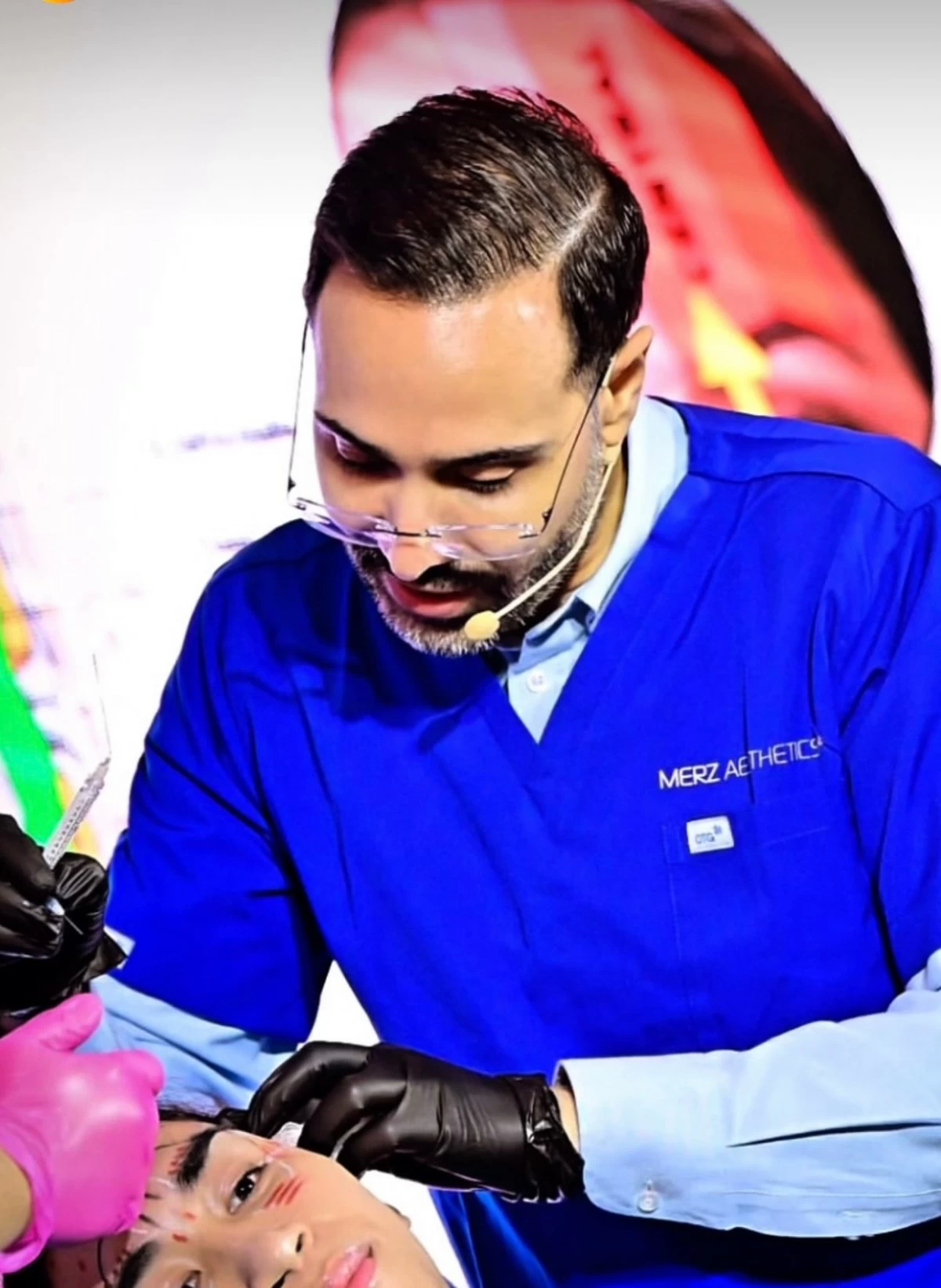
The revolutionary hybrid technique transforming aesthetics
The hybrid technique represents a paradigm shift from traditional single-product treatments to a sophisticated dual-mechanism approach that addresses the complex nature of facial aging. Instead of using one filler type, Dr. Fakih combines calcium hydroxylapatite (Radiesse) with hyaluronic acid fillers (Belotero brand) in carefully calculated ratios to deliver both immediate results and long-term skin improvements. This innovation has proven so successful that major pharmaceutical companies have developed new hybrid products, and the technique is now taught internationally through comprehensive training programs.
The hybrid technique works through a carefully orchestrated two-phase process that outperforms traditional approaches. In the immediate phase (zero to three months), hyaluronic acid provides instant volume and lifting by binding up to six liters of water per gram, while calcium hydroxylapatite microspheres provide structural support. The magic happens in the delayed phase (three to 18+ months), where calcium hydroxylapatite stimulates the patient's collagen production, creating natural, long-lasting improvements as the hyaluronic acid gradually absorbs.
The powerhouse partnership behind the innovation
Vanguard Aesthetics Philippines stands as the authorized distributor of Merz Aesthetics in the country, making this collaboration a natural extension of their established relationship. Based in Ortigas Center and led by CEO Ryan Ng and General Manager Tetet Go, Vanguard has built its reputation on bringing premium medical aesthetic technologies to Southeast Asia while investing heavily in practitioner education.
The company's track record speaks volumes about its commitment to educational excellence. Their annual Tala Awards consistently draw 300+ industry participants, creating the largest aesthetic medicine gathering in the Philippines. Through their Vanguard ACES (Aesthetics Champions & Educators) program, they've recognized 20 distinguished Key Opinion Leaders, including Dr. John Yu, Dr. Irene Roberson-Vista, and Dr. Lindsay Torralba-Garcia, who serve as master trainers advancing the field locally.
Merz Pharmaceuticals brings 115 years of pharmaceutical heritage and the distinction of being the world's largest company dedicated exclusively to medical aesthetics. The German family-owned company generated €1.34 billion (₱86.4B) in revenue globally, with a specific focus on the Asia-Pacific region, where they've achieved 17 percent growth and €95 million (₱6.31B) in regional revenue.
Dr. Nabil Fakih's status as a Key Opinion Leader for Merz Aesthetics makes him an ideal ambassador for their educational mission. The Spanish-Lebanese facial plastic surgeon serves as Vice-President of the Spanish Society of Facial Plastic Surgery and Chairman of Oculoplastics at the European Academy of Facial Surgery. His groundbreaking research has been documented in over 30 published scientific articles and represents the kind of innovation that drives the aesthetic medicine industry forward.
Unprecedented clinical results validate the approach
Dr. Fakih's standardized protocols involve premixing the two substances using a specific 1:1 ratio for most applications, though this can be customized based on treatment goals. The mixture creates a milky-white substance that is injected using specialized cannula techniques in the subcutaneous layer. This combination extends treatment duration to 12 to 18 months compared to just six to 12 months for traditional hyaluronic acid alone, while providing 40 to 60 percent stronger tissue-lifting effects.
The clinical advantages extend beyond longevity. Patients experience improved skin quality and texture, superior facial contouring capabilities, and reduced need for touch-up treatments. Quality of life improvements include documented increases in self-esteem and appearance satisfaction, making this not just a cosmetic enhancement but a confidence-boosting treatment.
Comparative studies demonstrate clear superiority over single-product approaches. The hybrid technique provides enhanced lifting capacity, extended duration, improved skin quality through dual mechanisms, better contouring through higher elastic modulus values, and more stable, longer-lasting results with fewer complications.
Strategic significance for Philippine healthcare
The Philippines already hosts approximately 20,000 international medical students annually across 64 accredited medical schools, establishing the country as a recognized destination for
medical education. Filipino medical graduates consistently rank among the top 10 percent globally in major hospitals, with one in 10 doctors in the world's major hospitals being Filipino graduates.
When international experts like Dr. Fakih share their expertise locally, the benefits multiply exponentially. Each trained Filipino practitioner becomes a multiplier for knowledge transfer, potentially training hundreds of colleagues and treating thousands of patients with improved techniques. The ripple effect extends far beyond the initial investment, creating lasting improvements in patient care and practitioner confidence.
This collaboration positions the Philippines strategically within the broader Asia-Pacific medical aesthetics market, projected to grow from $4.50 billion (₱299B) in 2024 to $12.64 billion (₱840B) by 2032 at a remarkable 13.8 percent CAGR. The country's English-speaking medical workforce, established regulatory frameworks aligned with international standards, and growing middle-class demand for aesthetic services create an ideal environment for such partnerships.
Impact on practitioners and patients
For Filipino aesthetic medicine practitioners, access to international expertise like Dr. Fakih's hybrid technique represents career-defining opportunities. International certifications and advanced technique training translate directly into enhanced income potential, improved patient outcomes, and expanded treatment capabilities.
The patient benefits extend beyond individual treatments to system-wide improvements in safety and quality. When practitioners receive training from internationally recognized experts, complication rates decrease, treatment outcomes improve, and patient satisfaction increases. This creates a virtuous cycle that elevates the entire industry's reputation and accessibility.
The economic multiplier effect is substantial—every Filipino practitioner trained in advanced techniques can potentially serve thousands of patients locally, reducing the need for medical tourism while keeping healthcare spending within the Philippine economy.
A new standard emerges
The collaboration between Vanguard Aesthetics and Merz Pharmaceuticals to bring Dr. Nabil Fakih's revolutionary hybrid technique to Manila represents more than a technical innovation—it embodies a fundamental shift toward evidence-based, scientifically rigorous aesthetic medicine that prioritizes patient safety and superior outcomes. The combination of immediate results with long-term natural enhancement through collagen stimulation addresses patient desires for both instant gratification and lasting improvement.
With over 40,000 patients treated globally using similar hybrid approaches and widespread adoption by leading practitioners worldwide, this technique has established itself as a new
standard of care in facial rejuvenation. The substantial financial investment, strategic coordination, and long-term commitment required for such initiatives demonstrate confidence in Filipino medical professionals and the country's position as a regional healthcare leader.
This partnership model—combining international expertise, local market knowledge, and educational excellence—creates a blueprint for sustainable growth in Philippine healthcare that benefits practitioners, patients, and the broader medical community. As the aesthetic medicine market continues its robust expansion, such collaborations position the Philippines as a destination for both medical excellence and healthcare innovation.