ADVERTISEMENT

Davao District 2 water concerns addressed with landmark surface water project

Published Aug 18, 2025 01:00 pm

Among Davao City's most impactful recent developments is the now fully operational Davao City Bulk Water Supply Project (DCBWSP), the largest private bulk water project in the Philippines, delivering clean and reliable water to communities across the city.

The project, a collaboration between Apo Agua Infrastructura, Inc. (Apo Agua)and the Davao City Water District (DCWD), now delivers over 300 million liters per day (MLD) of treated surface water sourced from the Tamugan River, benefiting more than one million Dabawenyos citywide, including water-stressed communities in Indangan, Cabantian, and Panacan.

“This is a game-changer, especially for the residents in District 2, who for years experienced water challenges,” said Ronnie D. Lim, General Manager of Apo Agua. “By harnessing surface water through sustainable infrastructure, we are solving water issues at the root and delivering supply to DCWD that is safe and reliable.”

Previously, Davao relied heavily on groundwater extracted from wells and aquifers. Recognizing the risk of overextraction and its long-term impact on supply, DCWD began exploring the use of surface water to diversify and protect the city’s sources.

The existing groundwater system struggled to keep pace with rapid urbanization, often leading to rotational supply, rationing, and low water pressure in elevated or densely populated areas. Through conjunctive use, or the strategic integration of both surface water and groundwater systems, the city now benefits from a more resilient and balanced water supply system.

“Surface water now serves as the city’s primary water source, allowing DCWD to rest or reallocate its groundwater. This not only helps preserve underground aquifers but also strengthens the city’s long-term water security,” Lim added.

The improvements are evident in the numbers. In just two years, DCWD has tripled its new water service connections: from 8,600 in 2022 to over 21,000 today– that’s 14,000 more households with clean, reliable water right from the tap.

Back in 2022, areas like Cabantian and Panacan faced frequent water interruptions.  In Cabantian, only 90% of residents had 24/7 service, while Panacan was at 67%, forcing  households to adjust their routines around unpredictable supply and store water in containers.

Today, 95% of DCWD customers enjoy continuous water service, with satisfaction levels at an all-time high of 99.6%, and 99.9% in previously underserved areas like Cabantian and Panacan.

The result is immediately felt by residents. Flora Mae Casa of Emily Homes in Cabantian, recalls the daily struggles of fetching water through rotation water truck deliveries.

Unahan pa sa pila para makakuha ng water and we need to purchase a lot of gallons para pang-ipon namin sa tubig, " Flora shared. (We had to rush to fall in line just to fetch water. We also had to buy many gallons so we could store enough water.)

District 2’s rapid population growth could strain the city’s groundwater-based systems, potentially leading to more frequent water rationing and truck deliveries. Some residents have even had to wake up before dawn just to catch a short trickle of water.

Mumata mi ug kadlawon  mga alas kwatro  sa  buntag para maabtan  namo ang agas, kay pag maabtan  na ug mga 10 am, putol-putol  na  pud ang tubig ana,” said Gerry Dagatan of Upper Panacan.  (We used to wake up at 4 a.m. just to get water. Because by 10 a.m., it would already be limited.)

Today, Gerry shares, that’s no longer the case. “Pero napansin  na  namo run ang dako  gyud  nga kabag-uhan. Wala na mi ga gamit ug water drums kay naa  namay agas ang gripo 24/7.”  (We’ve seen a huge change now. No more water drums, there’s 24/7 water from the tap.)

Beyond addressing water concerns, the project’s conjunctive use of surface and ground water also helps ease pressure on underground aquifers, enhancing Davao’s ability to support economic growth and real estate development in rapidly expanding barangays.
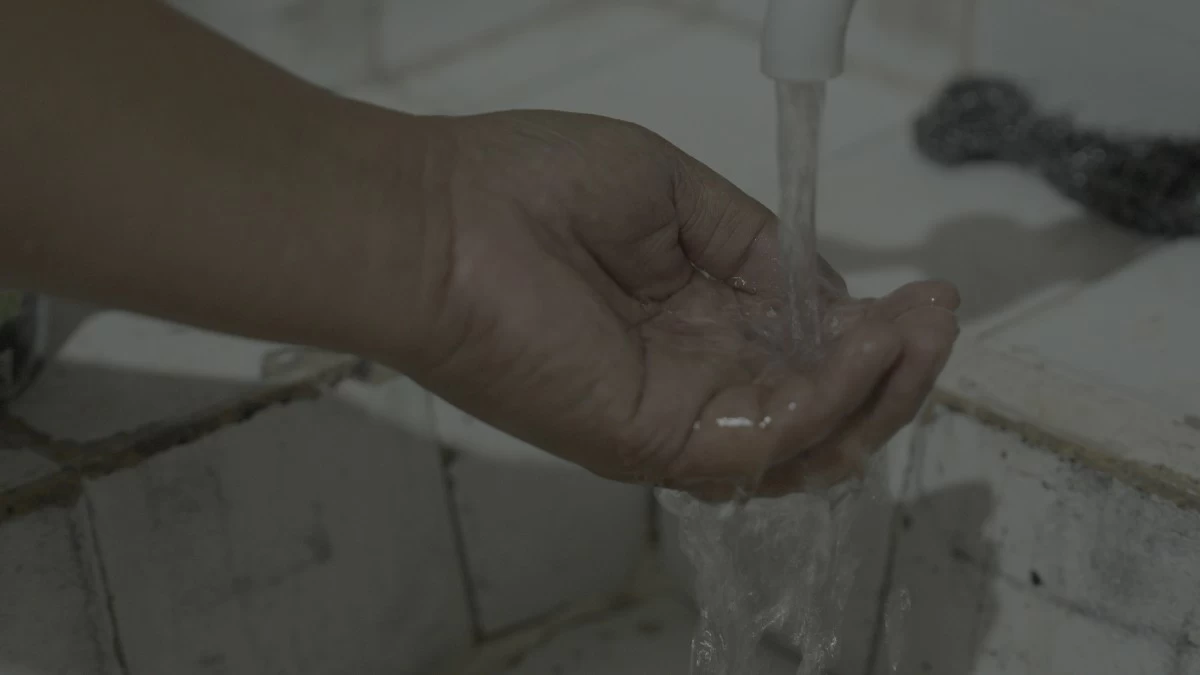
Clean water flows steadily from a tap in Panacan Relocation
ADVERTISEMENT
.most-popular .layout-ratio{ padding-bottom: 79.13%; } @media (min-width: 768px) and (max-width: 1024px) { .widget-title { font-size: 15px !important; } }

{{ articles_filter_1561_widget.title }}

.most-popular .layout-ratio{ padding-bottom: 79.13%; } @media (min-width: 768px) and (max-width: 1024px) { .widget-title { font-size: 15px !important; } }

{{ articles_filter_1562_widget.title }}

.most-popular .layout-ratio{ padding-bottom: 79.13%; } @media (min-width: 768px) and (max-width: 1024px) { .widget-title { font-size: 15px !important; } }

{{ articles_filter_1563_widget.title }}

{{ articles_filter_1564_widget.title }}

.mb-article-details { position: relative; } .mb-article-details .article-body-preview, .mb-article-details .article-body-summary{ font-size: 17px; line-height: 30px; font-family: "Libre Caslon Text", serif; color: #000; } .mb-article-details .article-body-preview iframe , .mb-article-details .article-body-summary iframe{ width: 100%; margin: auto; } .read-more-background { background: linear-gradient(180deg, color(display-p3 1.000 1.000 1.000 / 0) 13.75%, color(display-p3 1.000 1.000 1.000 / 0.8) 30.79%, color(display-p3 1.000 1.000 1.000) 72.5%); position: absolute; height: 200px; width: 100%; bottom: 0; display: flex; justify-content: center; align-items: center; padding: 0; } .read-more-background a{ color: #000; } .read-more-btn { padding: 17px 45px; font-family: Inter; font-weight: 700; font-size: 18px; line-height: 16px; text-align: center; vertical-align: middle; border: 1px solid black; background-color: white; } .hidden { display: none; }
function initializeAllSwipers() { // Get all hidden inputs with cms_article_id document.querySelectorAll('[id^="cms_article_id_"]').forEach(function (input) { const cmsArticleId = input.value; const articleSelector = '#article-' + cmsArticleId + ' .body_images'; const swiperElement = document.querySelector(articleSelector); if (swiperElement && !swiperElement.classList.contains('swiper-initialized')) { new Swiper(articleSelector, { loop: true, pagination: false, navigation: { nextEl: '#article-' + cmsArticleId + ' .swiper-button-next', prevEl: '#article-' + cmsArticleId + ' .swiper-button-prev', }, }); } }); } setTimeout(initializeAllSwipers, 3000); const intersectionObserver = new IntersectionObserver( (entries) => { entries.forEach((entry) => { if (entry.isIntersecting) { const newUrl = entry.target.getAttribute("data-url"); if (newUrl) { history.pushState(null, null, newUrl); let article = entry.target; // Extract metadata const author = article.querySelector('.author-section').textContent.replace('By', '').trim(); const section = article.querySelector('.section-info ').textContent.replace(' ', ' '); const title = article.querySelector('.article-title h1').textContent; // Parse URL for Chartbeat path format const parsedUrl = new URL(newUrl, window.location.origin); const cleanUrl = parsedUrl.host + parsedUrl.pathname; // Update Chartbeat configuration if (typeof window._sf_async_config !== 'undefined') { window._sf_async_config.path = cleanUrl; window._sf_async_config.sections = section; window._sf_async_config.authors = author; } // Track virtual page view with Chartbeat if (typeof pSUPERFLY !== 'undefined' && typeof pSUPERFLY.virtualPage === 'function') { try { pSUPERFLY.virtualPage({ path: cleanUrl, title: title, sections: section, authors: author }); } catch (error) { console.error('ping error', error); } } // Optional: Update document title if (title && title !== document.title) { document.title = title; } } } }); }, { threshold: 0.1 } ); function showArticleBody(button) { const article = button.closest("article"); const summary = article.querySelector(".article-body-summary"); const body = article.querySelector(".article-body-preview"); const readMoreSection = article.querySelector(".read-more-background"); // Hide summary and read-more section summary.style.display = "none"; readMoreSection.style.display = "none"; // Show the full article body body.classList.remove("hidden"); } document.addEventListener("DOMContentLoaded", () => { let loadCount = 0; // Track how many times articles are loaded const offset = [1, 2, 3, 4, 5, 6, 7, 8, 9, 10]; // Offset values const currentUrl = window.location.pathname.substring(1); let isLoading = false; // Prevent multiple calls if (!currentUrl) { console.log("Current URL is invalid."); return; } const sentinel = document.getElementById("load-more-sentinel"); if (!sentinel) { console.log("Sentinel element not found."); return; } function isSentinelVisible() { const rect = sentinel.getBoundingClientRect(); return ( rect.top < window.innerHeight && rect.bottom >= 0 ); } function onScroll() { if (isLoading) return; if (isSentinelVisible()) { if (loadCount >= offset.length) { console.log("Maximum load attempts reached."); window.removeEventListener("scroll", onScroll); return; } isLoading = true; const currentOffset = offset[loadCount]; window.loadMoreItems().then(() => { let article = document.querySelector('#widget_1690 > div:nth-last-of-type(2) article'); intersectionObserver.observe(article) loadCount++; }).catch(error => { console.error("Error loading more items:", error); }).finally(() => { isLoading = false; }); } } window.addEventListener("scroll", onScroll); });

Sign up by email to receive news.