






Manila Bulletin
 Business
The Economy
DA seeks ₱3.5 trillion in public-private investments to transform Philippine agriculture sector
Business
The Economy
DA seeks ₱3.5 trillion in public-private investments to transform Philippine agriculture sector
Business
The Economy
DA seeks ₱3.5 trillion in public-private investments to transform Philippine agriculture sector
DA seeks ₱3.5 trillion in public-private investments to transform Philippine agriculture sector
Published Aug 18, 2025 12:00 am
|
Updated Aug 16, 2025 12:24 pm


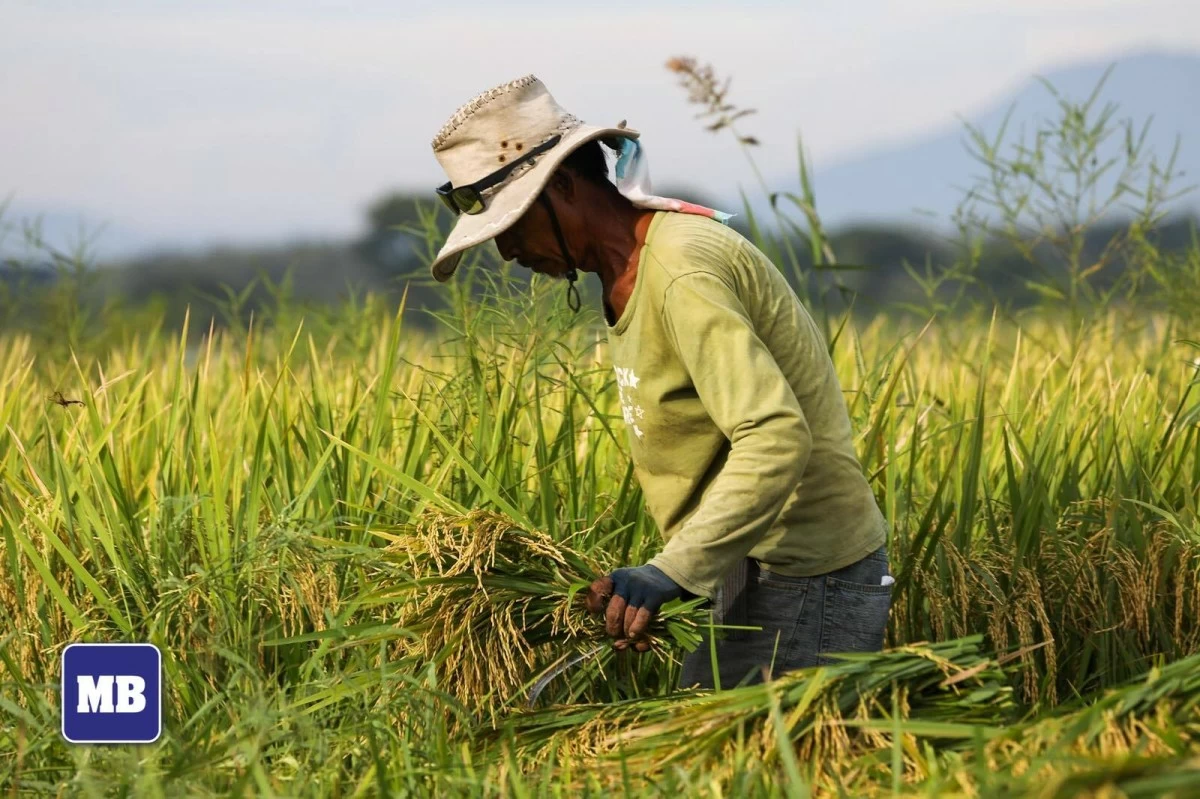
A farmer harvests rice crops in a field in Kalayaan, Laguna on Thursday, May 29. Photo by John Louie Abrina | MB
The Department of Agriculture (DA) is seeking ₱3.5 trillion in total investments—including support from the private sector—to transform the country’s agriculture sector into a more robust, economically viable contributor to national food and economic security.
During the launch of the Public-Private Partnership (PPP) Monitor: Philippines (2025) report at the Asian Development Bank (ADB) headquarters on Friday, Aug. 15, Agriculture Undersecretary for policy, planning, and regulations Asis G. Perez presented the DA’s strategic action plan and PPP initiatives for the agriculture sector.
The investment requirements were divided into key categories: ₱1.8 trillion for the product support system; ₱816.2 billion for infrastructure and logistics; ₱805.8 billion for the commodity sector; ₱85.5 billion for innovation system enablers; and ₱6.3 billion for a sustainable and alternative agriculture system.
“We want to transform the agriculture sector into a robust, vibrant, and economically viable contributor to the food and economic security of this nation of [up to] 118 million people,” said Perez.
He emphasized the need to develop and improve post-harvest infrastructure, noting that while the country has land and water, these resources must be supported by adequate systems.
Perez pointed out that post-harvest losses range between 12 percent and 40 percent by volume, depending on the commodity. More concerning, he said, are the losses in terms of value.
“If I caught a fresh tuna today, I can easily sell it at ₱350. But in the afternoon, the value is down to maybe ₱100. So I already lost about 70 percent of the value simply because I don’t have sufficient post-harvest facilities,” he explained.
He added that developing efficient logistics systems would address such inefficiencies, as “logistics is key to efficiency.”
Perez also emphasized that the government does not produce food—it’s the private sector that does. “Therefore, we need to develop lasting, reasonable, and robust partnerships. We have to maintain that tie with our sector,” he said.
“If we do not do the investments today, we will be incurring losses,” he added.
In 2024, the agriculture, forestry, and fishery sector—which employs about four out of every 10 workers nationwide—saw a 1.6-percent output decline, mainly due to adverse weather conditions, pest infestations, and disease outbreaks.
While agriculture plays a crucial role in ensuring food security, generating rural employment, and reducing poverty, it continues to face challenges in production, infrastructure, and market access.
President Ferdinand R. Marcos Jr. also recognized the sector’s importance, explicitly highlighting agriculture and food security in his latest State of the Nation Address (SONA) last month.
At the same event, Department of Economy, Planning, and Development (DEPDev) Undersecretary Glenda R. Rumohr echoed the call for investment. “We aim to attract investments that can strengthen agricultural value chains, enhance productivity, and improve the livelihoods of our Filipino farmers and fisherfolk,” she said.
Rumohr also underscored the importance of strengthening partnerships in developing robust, bankable, and sustainable PPP projects—not only in traditional infrastructure, but also in sectors that directly impact the well-being of the Filipino people.
From 1990 to 2023, approximately 305 PPP projects were implemented across various sectors such as roads, railways, airports, seaports, energy, water and wastewater, information and communications technology (ICT), agriculture and fisheries, social infrastructure, and solid waste management.
Most PPP projects have been concentrated in the energy and water-wastewater sectors, while those in agriculture and fisheries have primarily been local initiatives.
However, PPP projects in agriculture and fisheries have shown the highest cancellation rate, with 25 percent being discontinued. Despite this, the Philippines advanced its PPP framework by enacting the PPP Code in 2023 and carrying out its implementing rules and regulations (IRR) in 2024.
And for the first time for the Philippines, its PPP Code includes agriculture and fishery.
The Philippine Development Plan (PDP) 2023-2028, which serves as the Marcos Jr.’s medium-term socioeconomic blueprint, highlights the importance of PPP and the role it plays in the agriculture, forestry, and fisheries sector.
The Manila-based ADB is also playing a role in its host country’s PPP push. Specifically, the multilateral lender’s agri-private sector initiative aims to work across the entire food and agriculture value chain—from seed production to supermarket distribution.
The ADB has committed to supporting the country in creating a strong enabling environment for PPPs, advancing green growth, and promoting private sector development—key priorities in its Philippines Country Partnership Strategy (CPS) for 2024-2029.
(Ricardo M. Austria)