ADVERTISEMENT

Unified PWD ID: Restoring integrity, protecting rights, ending abuse

Published Aug 17, 2025 12:05 am  |  Updated Aug 16, 2025 04:00 pm
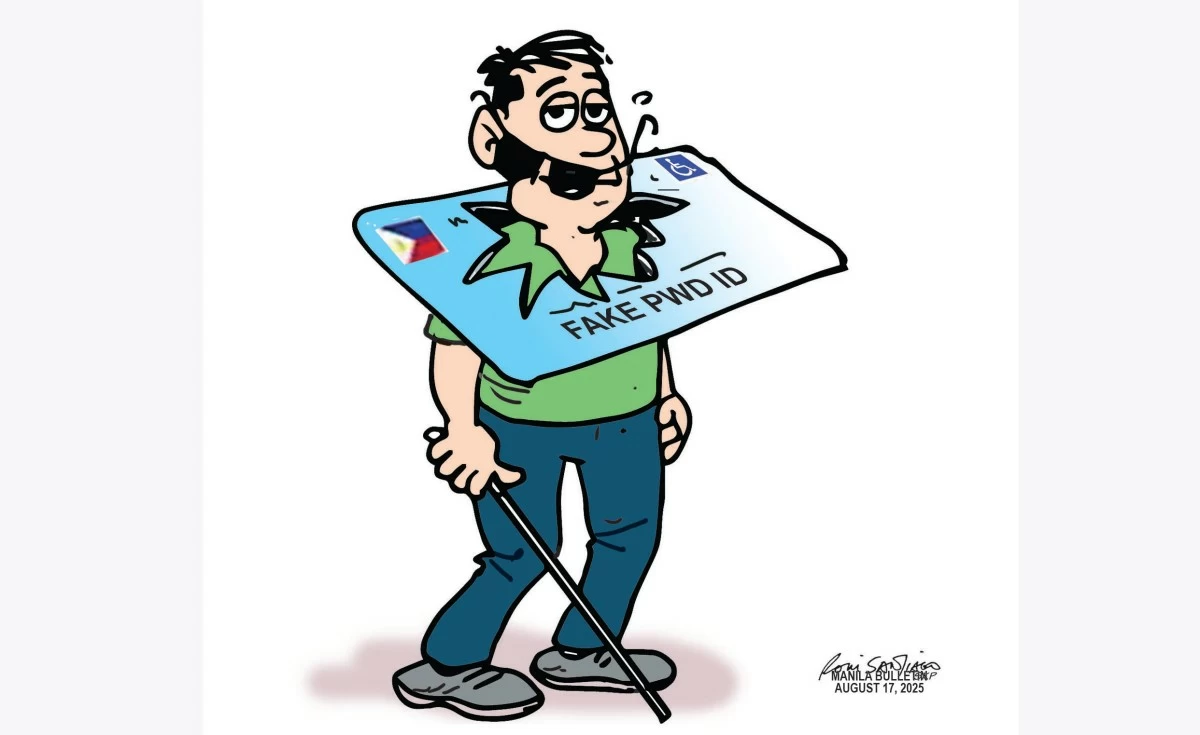
The proliferation of fake Persons with Disabilities (PWD) cards has become a pernicious issue —one that both undermines public trust, inflicts real financial harm on businesses, and reveals a dishonest behavior that should not be tolerated by society.
Restaurants, often operating on thin margins, are shouldering these losses, while genuine PWDs face the indignity of being treated with suspicion. The proposed unified PWD ID system stands out not just as a technical solution but as a moral imperative to restore integrity and fairness.
Restaurant operators across the country have sounded the alarm months ago. It has repeatedly pointed out that the mandated 20 percent discount for PWDs, intended as a support for the marginalized, is instead being exploited by unscrupulous individuals using counterfeit IDs—“every fraudulent discount comes directly out of a restaurant’s pocket,” the group warned.
In extreme cases, entire tables bearing multiple fake PWD IDs inflict devastating losses, threatening survival and prompting tougher measures from legitimate operators. And this case is what is truly appalling and should worry society – for an entire table of dishonest people surrendering fake PWD IDs without feeling shame!
A leader of a restaurant group estimated that fake IDs have reduced sales by as much as 25 percent, translating to up to billions in lost revenues for 2023 alone—a staggering toll. These losses not only jeopardize employees’ livelihoods and food quality but may also translate into higher prices for honest customers.
Worse, the abuse of the PWD discount system inflicts collateral damage on legitimate beneficiaries. House Speaker Martin Romualdez recently underscored how fake PWD IDs have “undermined public trust” and turned PWDs into suspects—forcing them into awkward situations, having to prove their disabilities before receiving rightful discounts.
In response, the Department of Social Welfare and Development (DSWD) and the National Council on Disability Affairs (NCDA) are introducing a unified PWD identification system. Pilot tests rolled out Aug. 12 across some 35 localities starting in Bulacan and covering approximately 200,000 PWDs, which will eventually benefit an estimated two million PWDs nationwide.
The system will include both RFID-equipped physical cards and secure digital IDs accessed through a mobile app or web portal. These IDs will feature biometric data, QR codes, and robust design standards to prevent forgery .
The NCDA has emphasized that with a unified design and single issuing authority, establishments will no longer need to second-guess the ID—“100 percent authentic” will be the new baseline. By end-2025, full nationwide implementation is expected, with safeguards for data privacy in coordination with the National Privacy Commission.
The unified system is not just about plugging loopholes—it’s also about reinstituting dignity. Swift passage of accompanying legislation that would standardize issuance protocols, mandate verification processes, and stiffen penalties against fraudulent users and syndicates will establish a strong system.
The Bureau of Internal Revenue, the Department of Justice, and law enforcement agencies have also intensified efforts to stop the circulation and sale of fake PWD IDs, warning that such acts constitute tax evasion or worse.
At its core, the unified PWD ID system is a necessary reform to reclaim the spirit of Republic Act 10754—which sought to uplift persons with disabilities through legitimate benefits and protections. By applying modern security technology, centralizing issuance, and linking to a verified registry, the system promises to shield businesses from fraud, uphold the rights of genuine PWDs, and preserve public trust in welfare programs.
If correctly implemented, it’s not just an ID—it’s a reaffirmation that empathy and equity must be matched by integrity.
ADVERTISEMENT
.most-popular .layout-ratio{ padding-bottom: 79.13%; } @media (min-width: 768px) and (max-width: 1024px) { .widget-title { font-size: 15px !important; } }

{{ articles_filter_1561_widget.title }}

.most-popular .layout-ratio{ padding-bottom: 79.13%; } @media (min-width: 768px) and (max-width: 1024px) { .widget-title { font-size: 15px !important; } }

{{ articles_filter_1562_widget.title }}

.most-popular .layout-ratio{ padding-bottom: 79.13%; } @media (min-width: 768px) and (max-width: 1024px) { .widget-title { font-size: 15px !important; } }

{{ articles_filter_1563_widget.title }}

{{ articles_filter_1564_widget.title }}

.mb-article-details { position: relative; } .mb-article-details .article-body-preview, .mb-article-details .article-body-summary{ font-size: 17px; line-height: 30px; font-family: "Libre Caslon Text", serif; color: #000; } .mb-article-details .article-body-preview iframe , .mb-article-details .article-body-summary iframe{ width: 100%; margin: auto; } .read-more-background { background: linear-gradient(180deg, color(display-p3 1.000 1.000 1.000 / 0) 13.75%, color(display-p3 1.000 1.000 1.000 / 0.8) 30.79%, color(display-p3 1.000 1.000 1.000) 72.5%); position: absolute; height: 200px; width: 100%; bottom: 0; display: flex; justify-content: center; align-items: center; padding: 0; } .read-more-background a{ color: #000; } .read-more-btn { padding: 17px 45px; font-family: Inter; font-weight: 700; font-size: 18px; line-height: 16px; text-align: center; vertical-align: middle; border: 1px solid black; background-color: white; } .hidden { display: none; }
function initializeAllSwipers() { // Get all hidden inputs with cms_article_id document.querySelectorAll('[id^="cms_article_id_"]').forEach(function (input) { const cmsArticleId = input.value; const articleSelector = '#article-' + cmsArticleId + ' .body_images'; const swiperElement = document.querySelector(articleSelector); if (swiperElement && !swiperElement.classList.contains('swiper-initialized')) { new Swiper(articleSelector, { loop: true, pagination: false, navigation: { nextEl: '#article-' + cmsArticleId + ' .swiper-button-next', prevEl: '#article-' + cmsArticleId + ' .swiper-button-prev', }, }); } }); } setTimeout(initializeAllSwipers, 3000); const intersectionObserver = new IntersectionObserver( (entries) => { entries.forEach((entry) => { if (entry.isIntersecting) { const newUrl = entry.target.getAttribute("data-url"); if (newUrl) { history.pushState(null, null, newUrl); let article = entry.target; // Extract metadata const author = article.querySelector('.author-section').textContent.replace('By', '').trim(); const section = article.querySelector('.section-info ').textContent.replace(' ', ' '); const title = article.querySelector('.article-title h1').textContent; // Parse URL for Chartbeat path format const parsedUrl = new URL(newUrl, window.location.origin); const cleanUrl = parsedUrl.host + parsedUrl.pathname; // Update Chartbeat configuration if (typeof window._sf_async_config !== 'undefined') { window._sf_async_config.path = cleanUrl; window._sf_async_config.sections = section; window._sf_async_config.authors = author; } // Track virtual page view with Chartbeat if (typeof pSUPERFLY !== 'undefined' && typeof pSUPERFLY.virtualPage === 'function') { try { pSUPERFLY.virtualPage({ path: cleanUrl, title: title, sections: section, authors: author }); } catch (error) { console.error('ping error', error); } } // Optional: Update document title if (title && title !== document.title) { document.title = title; } } } }); }, { threshold: 0.1 } ); function showArticleBody(button) { const article = button.closest("article"); const summary = article.querySelector(".article-body-summary"); const body = article.querySelector(".article-body-preview"); const readMoreSection = article.querySelector(".read-more-background"); // Hide summary and read-more section summary.style.display = "none"; readMoreSection.style.display = "none"; // Show the full article body body.classList.remove("hidden"); } document.addEventListener("DOMContentLoaded", () => { let loadCount = 0; // Track how many times articles are loaded const offset = [1, 2, 3, 4, 5, 6, 7, 8, 9, 10]; // Offset values const currentUrl = window.location.pathname.substring(1); let isLoading = false; // Prevent multiple calls if (!currentUrl) { console.log("Current URL is invalid."); return; } const sentinel = document.getElementById("load-more-sentinel"); if (!sentinel) { console.log("Sentinel element not found."); return; } function isSentinelVisible() { const rect = sentinel.getBoundingClientRect(); return ( rect.top < window.innerHeight && rect.bottom >= 0 ); } function onScroll() { if (isLoading) return; if (isSentinelVisible()) { if (loadCount >= offset.length) { console.log("Maximum load attempts reached."); window.removeEventListener("scroll", onScroll); return; } isLoading = true; const currentOffset = offset[loadCount]; window.loadMoreItems().then(() => { let article = document.querySelector('#widget_1690 > div:nth-last-of-type(2) article'); intersectionObserver.observe(article) loadCount++; }).catch(error => { console.error("Error loading more items:", error); }).finally(() => { isLoading = false; }); } } window.addEventListener("scroll", onScroll); });

Sign up by email to receive news.