






Manila Bulletin
 Philippines
National
United we stand: PNPA grads rally behind fellow Lakan Torre vs Napolcom's 'overstepping of authority' on revamp
Philippines
National
United we stand: PNPA grads rally behind fellow Lakan Torre vs Napolcom's 'overstepping of authority' on revamp
Philippines
National
United we stand: PNPA grads rally behind fellow Lakan Torre vs Napolcom's 'overstepping of authority' on revamp
United we stand: PNPA grads rally behind fellow Lakan Torre vs Napolcom's 'overstepping of authority' on revamp
Published Aug 16, 2025 01:01 pm


At A Glance
- The clash between the PNP and the Napolcom appeared to have been triggered by the recent revamp approved by PNP chief Gen. Nicolas Torre involving two ranking police officials.
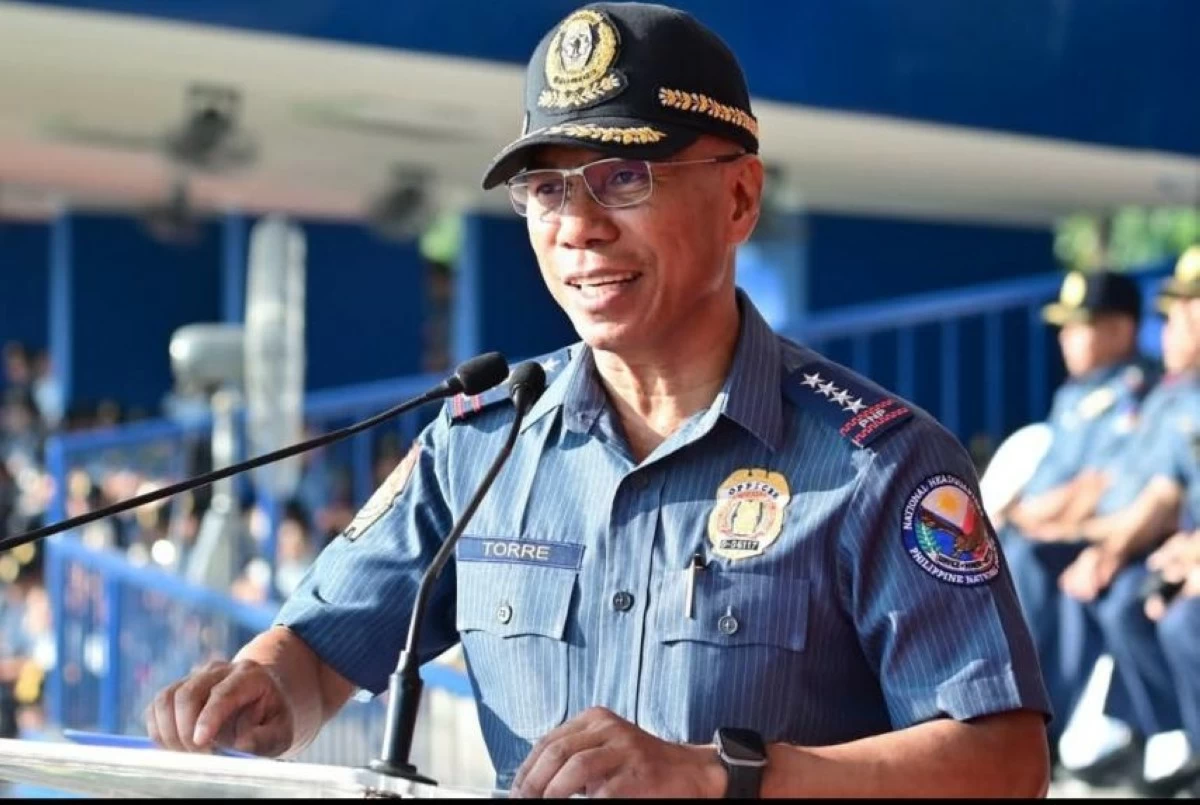
Top police officials and graduates of the Philippine National Police Academy (PNPA) are up in arms against what they described as overstepping of authority of the National Police Commission (Napolcom) on the organization’s chain of command when it issued an order reversing the recent revamp of senior officials.
And the protesting Lakans, or graduates of the PNPA, made it known that they have the balls to stand their ground after 114 of them, almost all of them are ranking police officials and class presidents, convened at the PNP Multi-Purpose Center at Camp Crame in Quezon City on Friday night, Aug. 15, to declare support to Gen. Nicolas Torre III and commit to respect the single line of authority in the police organization.
Torre is the first ever Lakan to hold the position of Chief PNP since the inception of the police organization in 1991.
In a speech, a senior Lakan emphasized the need for the police officers to unite and protect the integrity of the PNP.
“We are here because, for the first time in the history of our organization, a Lakan sits as the Chief of the Philippine National Police, our fellow Lakan Police General Nicolas Torre III. But celebration is not enough. History will remember us not just for who we are today, but for what we do together from this point forward,” the senior Lakan police official said.
“Let us make a commitment tonight: To stand together as one Lakan family, to work for a safer and more peaceful Philippines, and to make sure that this moment in history will be remembered as the time when the Lakan rose together to serve the nation,” it added.
Scalar chain of command
Ranking police officials also signed a manifesto of support to the integrity of the organization leadership and respect for the single line of authority in the PNP, citing Section 26 of Republic Act 6975 as the basis.
“As such, complementary to the Constitutional mandate for the national police force to be civilian in character, the PNP hierarchical structure has a ‘scalar chain of command’, specifying distinct responsibilities and authorities, to ensure order and accountability in a manner that all members of the PNP organization is obliged to follow and respect lawful orders of superior officers,” the manifesto signed by PNP senior officers read.
The scalar chain, or the chain of command, is a hierarchical structure that specifies the
order of authority and communication in an organization—the intention is to have a simple and clear line of reporting and responsibility from the highest ranking down to the rank-and-file.The structure, based on its definition, helps to maintain order, facilitate communication, and assign accountability.
Breaking the chain?
The clash between the PNP and the Napolcom appeared to have been triggered by the recent revamp approved by Torre involving two ranking police officials.
The August 5 order directed the switching of positions between Police Lt. Gen. Jose Melencio Nartatez, Jr. the then number two man of the PNP as Deputy Chief for Administration; and, Police Lt. Gen. Bernard Banac, the then commander of the Area Police Command-Western Mindanao.
Nartatez and Banac are both members of the Philippine Military Academy (PMA) Class 1992, or the last PMA class which was allowed entry to the PNP.
On Thursday, Aug. 14, Napolcom issued an order reversing the decision for Nartatez and Banac to switch places, which means the reinstatement of the two officials to their previous posts.
In the order, it stated that the PNP did not follow the procedure since the movement of third level officers—from colonels to generals— needs the approval of the Napolcom en banc.
Aside from the two officials, also affected by Napolcom order were 10 ranking police officials and involved coveted positions in the PNP, including the Criminal Investigation and Detection Group (CIDG), National Capital Region Police Office (NCRPO), and the Police Regional Office-Calabarzon.
For the Lakans and senior police officials, the Napolcom order undermined the authority of not only Torre but also the future sitting PNP chiefs since any revamp will have to be approved by the Napolcom.
And the worse part, according to them, is that the same order will not only invalidate the authority of the PNP to put the right police official to the right position, but also “authorized” the Napolcom to break the scalar chain of command through the authority to recall, set aside and even modify the revamp of senior police officers.
'Outpour of support'
The directors of 18 police regional offices already issued separate statements expressing support to Torre and the PNP’s chain of command.
“The men and women of NCRPO express unshakeable support to the Chief, Philippine National Police and all of his legally-issued administrative and operational directives pursuant to the lawful exercise of his mandate as the duly-appointed leader of the country’s police force,” the NCRPO statement read.
“NCRPO also commits strong and unwavering adherence to all legal processes undertaken by the Philippine National Police towards the attainment of its objectives of providing peace and security initiatives to the Filipino people,” it added.
In a unified statement, the Philippine National Police Academy Alumni Association, Incorporated (PNPAAAI) said Torre has exemplified the Academy’s core ideals of Justice, Integrity, and Service throughout his career. The PNPAAAI is composed of active and retired officers from the PNP, Bureau of Fire Protection (BFP), and Bureau of Jail Management and Penology (BJMP).
At least 17 classes of the PNPA also issued separate statements expressing full support to Torre.