ADVERTISEMENT

Mexico, Guatemala and Belize to create tri-national nature reserve to protect Mayan jungle

Published Aug 16, 2025 10:16 am
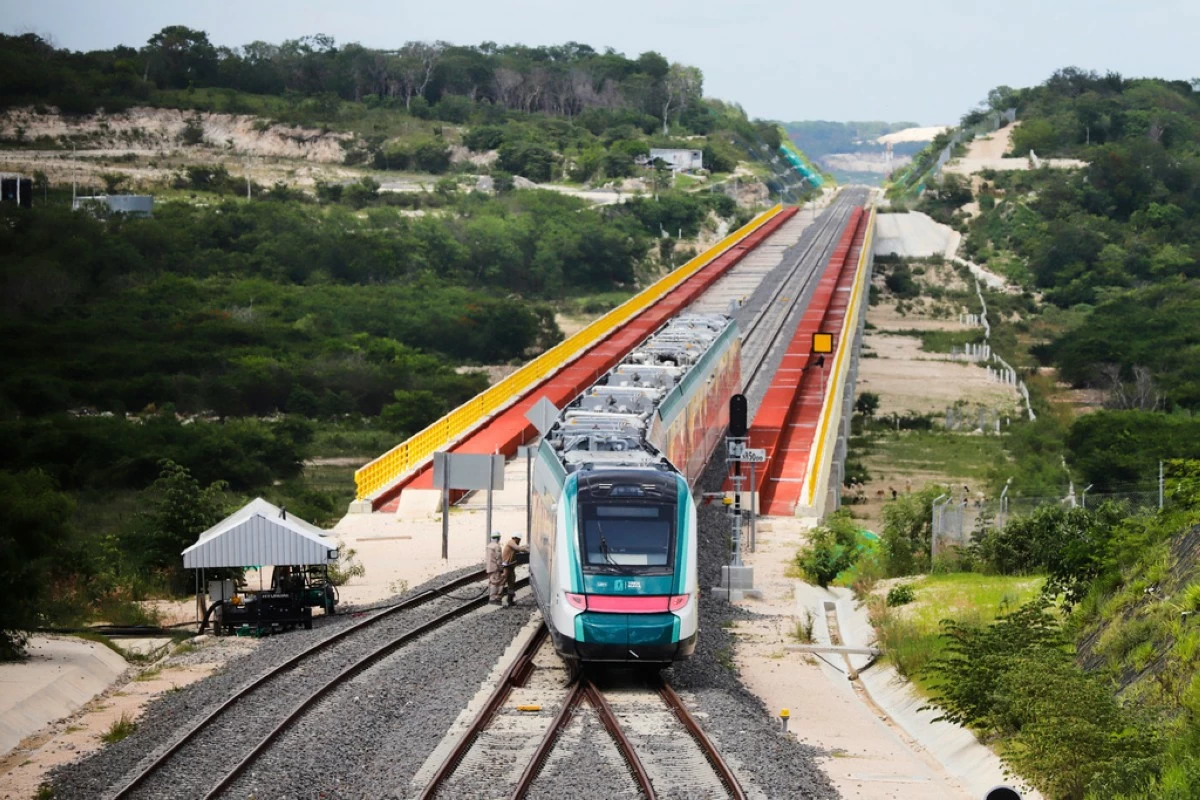
A Maya Train car arrives at a station in Campeche, Mexico, Thursday, Aug. 14, 2025. (AP Photo/Martin Zetina)

GUATEMALA CITY (AP) — The leaders of Mexico, Guatemala and Belize announced on Friday that they were creating a tri-national nature reserve to protect the Mayan rain forest following a meeting during which they also discussed expanding a Mexican train line criticized for slicing through jungle habitat.

The nature reserve would stretch across jungled areas of southern Mexico and northern parts of the two Central American nations, encompassing more than 14 million acres (5.7 million hectares). Mexican President Claudia Sheinbaum called the move “historic” and said it would create the second biggest nature reserve in Latin America, behind the Amazon rain forest.

“This is one of Earth’s lungs, a living space for thousands of species with an invaluable cultural legacy that we should preserve with our eyes on the future,” Sheinbaum said, standing side-by-side with Guatemalan President Bernardo Arévalo and Belize Prime Minister Johnny Briceño.

The announcement was met with cautious celebration by environmental groups like Mexico-based Selvame, who have sharply criticized the Mexican government and Sheinbaum's allies in recent years for environmental destruction wrought by megaprojects like a controversial train line, known as the Maya Train.

The group said in statement that the reserve was a “monumental step for conservation" but that it hoped that the reserve was more than just “symbolic.”

“We’re in a race against the clock. Real estate and construction companies are invading the jungle, polluting our ecosystems, and endangering both the water we consume, and the communities that depend on it,” the group wrote.

It called on Sheinbaum’s government to put an effective monitoring system in place to “stop any destructive activities.”

At the same time, the leaders also discussed a proposal by Mexico to expand the very train line those environmental groups have long fought from southern Mexico to Guatemala and Belize. The thousand-mile train currently runs in a rough loop around Mexico’s Yucatan peninsula, and was created with the purpose of connecting Mexico’s popular Caribbean resorts with remote jungle and Mayan archaeological sites in rural areas.

However, it has fueled controversy and legal battles as it sliced through swathes of jungle and damaged a delicate cave system in Mexico that serves as the area’s main source of water. In a span of four years, authorities cut down approximately 7 million trees, according to government figures.

Sheinbaum’s mentor and predecessor former President Andrés Manuel López Obrador fast-tracked the train project without detailed environmental studies. The populist repeatedly ignored orders from judges to stop construction due to environmental concerns and publicly attacked environmentalists warning about damage done to fragile ecosystems.

López Obrador first proposed the idea of expanding the train to Guatemala, and Sheinbaum has continued to push for the project. On Friday, she said the extension would usher in development in rural areas with few economic opportunities.

But Arévalo was already on record saying Guatemala’s laws would not allow it to be built through protected jungle in the north of the country.

The Guatemalan leader said on Friday he sees the economic potential of the project to the jungle region but remained adamant that the construction should not come with the kind of environmental damage that it inflicted in Mexico.

“Connecting the Maya Train with Guatemala and eventually with Belize is a vision we share,” Arévalo said. But “I’ve made it very clear at all times that the Maya Train will not pass through any protected area.”

He said there would also have to be careful environmental studies and the two presidents looked at an alternative proposal that would have the train loop instead of directly cut through the jungles of Guatemala and Belize.

It remained unclear how the train’s potential route would be affected by the new protected area.

ADVERTISEMENT
.most-popular .layout-ratio{ padding-bottom: 79.13%; } @media (min-width: 768px) and (max-width: 1024px) { .widget-title { font-size: 15px !important; } }

{{ articles_filter_1561_widget.title }}

.most-popular .layout-ratio{ padding-bottom: 79.13%; } @media (min-width: 768px) and (max-width: 1024px) { .widget-title { font-size: 15px !important; } }

{{ articles_filter_1562_widget.title }}

.most-popular .layout-ratio{ padding-bottom: 79.13%; } @media (min-width: 768px) and (max-width: 1024px) { .widget-title { font-size: 15px !important; } }

{{ articles_filter_1563_widget.title }}

{{ articles_filter_1564_widget.title }}

.mb-article-details { position: relative; } .mb-article-details .article-body-preview, .mb-article-details .article-body-summary{ font-size: 17px; line-height: 30px; font-family: "Libre Caslon Text", serif; color: #000; } .mb-article-details .article-body-preview iframe , .mb-article-details .article-body-summary iframe{ width: 100%; margin: auto; } .read-more-background { background: linear-gradient(180deg, color(display-p3 1.000 1.000 1.000 / 0) 13.75%, color(display-p3 1.000 1.000 1.000 / 0.8) 30.79%, color(display-p3 1.000 1.000 1.000) 72.5%); position: absolute; height: 200px; width: 100%; bottom: 0; display: flex; justify-content: center; align-items: center; padding: 0; } .read-more-background a{ color: #000; } .read-more-btn { padding: 17px 45px; font-family: Inter; font-weight: 700; font-size: 18px; line-height: 16px; text-align: center; vertical-align: middle; border: 1px solid black; background-color: white; } .hidden { display: none; }
function initializeAllSwipers() { // Get all hidden inputs with cms_article_id document.querySelectorAll('[id^="cms_article_id_"]').forEach(function (input) { const cmsArticleId = input.value; const articleSelector = '#article-' + cmsArticleId + ' .body_images'; const swiperElement = document.querySelector(articleSelector); if (swiperElement && !swiperElement.classList.contains('swiper-initialized')) { new Swiper(articleSelector, { loop: true, pagination: false, navigation: { nextEl: '#article-' + cmsArticleId + ' .swiper-button-next', prevEl: '#article-' + cmsArticleId + ' .swiper-button-prev', }, }); } }); } setTimeout(initializeAllSwipers, 3000); const intersectionObserver = new IntersectionObserver( (entries) => { entries.forEach((entry) => { if (entry.isIntersecting) { const newUrl = entry.target.getAttribute("data-url"); if (newUrl) { history.pushState(null, null, newUrl); let article = entry.target; // Extract metadata const author = article.querySelector('.author-section').textContent.replace('By', '').trim(); const section = article.querySelector('.section-info ').textContent.replace(' ', ' '); const title = article.querySelector('.article-title h1').textContent; // Parse URL for Chartbeat path format const parsedUrl = new URL(newUrl, window.location.origin); const cleanUrl = parsedUrl.host + parsedUrl.pathname; // Update Chartbeat configuration if (typeof window._sf_async_config !== 'undefined') { window._sf_async_config.path = cleanUrl; window._sf_async_config.sections = section; window._sf_async_config.authors = author; } // Track virtual page view with Chartbeat if (typeof pSUPERFLY !== 'undefined' && typeof pSUPERFLY.virtualPage === 'function') { try { pSUPERFLY.virtualPage({ path: cleanUrl, title: title, sections: section, authors: author }); } catch (error) { console.error('ping error', error); } } // Optional: Update document title if (title && title !== document.title) { document.title = title; } } } }); }, { threshold: 0.1 } ); function showArticleBody(button) { const article = button.closest("article"); const summary = article.querySelector(".article-body-summary"); const body = article.querySelector(".article-body-preview"); const readMoreSection = article.querySelector(".read-more-background"); // Hide summary and read-more section summary.style.display = "none"; readMoreSection.style.display = "none"; // Show the full article body body.classList.remove("hidden"); } document.addEventListener("DOMContentLoaded", () => { let loadCount = 0; // Track how many times articles are loaded const offset = [1, 2, 3, 4, 5, 6, 7, 8, 9, 10]; // Offset values const currentUrl = window.location.pathname.substring(1); let isLoading = false; // Prevent multiple calls if (!currentUrl) { console.log("Current URL is invalid."); return; } const sentinel = document.getElementById("load-more-sentinel"); if (!sentinel) { console.log("Sentinel element not found."); return; } function isSentinelVisible() { const rect = sentinel.getBoundingClientRect(); return ( rect.top < window.innerHeight && rect.bottom >= 0 ); } function onScroll() { if (isLoading) return; if (isSentinelVisible()) { if (loadCount >= offset.length) { console.log("Maximum load attempts reached."); window.removeEventListener("scroll", onScroll); return; } isLoading = true; const currentOffset = offset[loadCount]; window.loadMoreItems().then(() => { let article = document.querySelector('#widget_1690 > div:nth-last-of-type(2) article'); intersectionObserver.observe(article) loadCount++; }).catch(error => { console.error("Error loading more items:", error); }).finally(() => { isLoading = false; }); } } window.addEventListener("scroll", onScroll); });

Sign up by email to receive news.