ADVERTISEMENT

​Hunger, deaths linger in Gaza despite Israel's aid distribution

Published Aug 16, 2025 01:10 pm
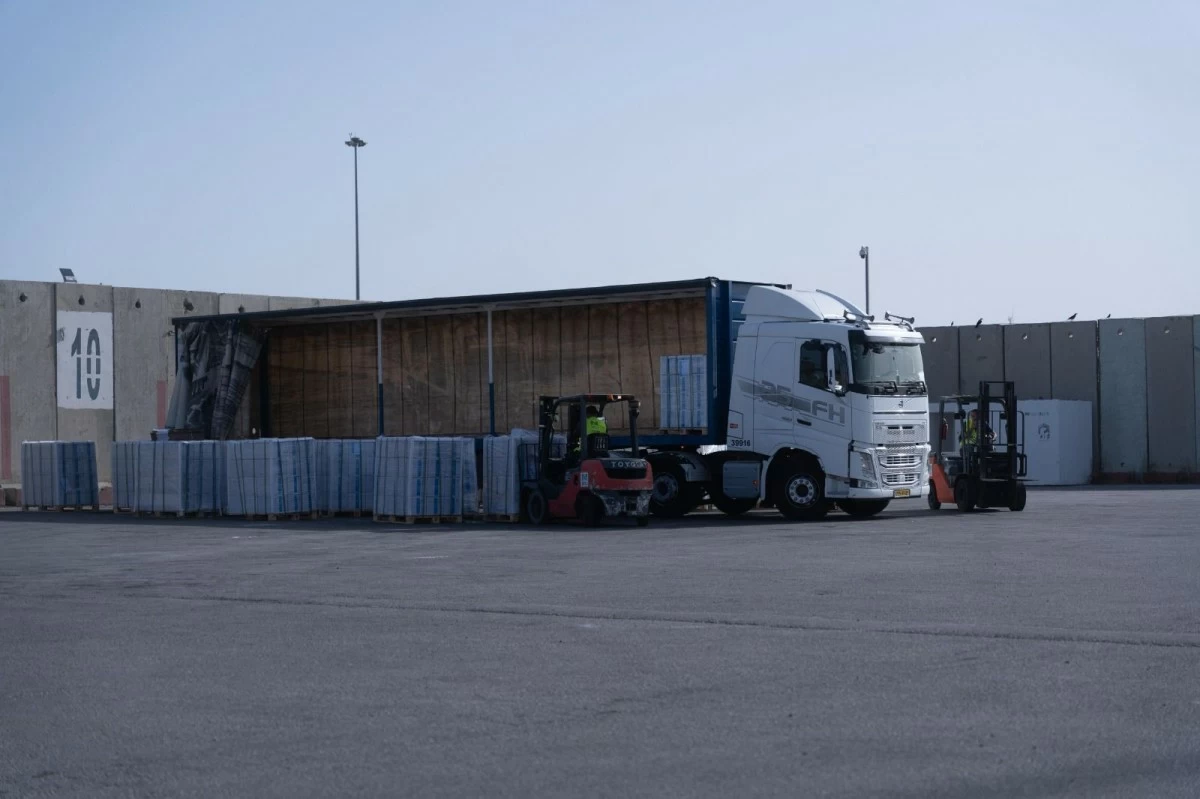
KEREM SHALOM CROSSING, Israel—Dozens of trucks are parked at a huge cemented lot as they await clearance to cross into the border’s other side.
They are bound for Gaza to transport food aid to the war-torn strip, where many Palestinians get sick and die due to starvation.
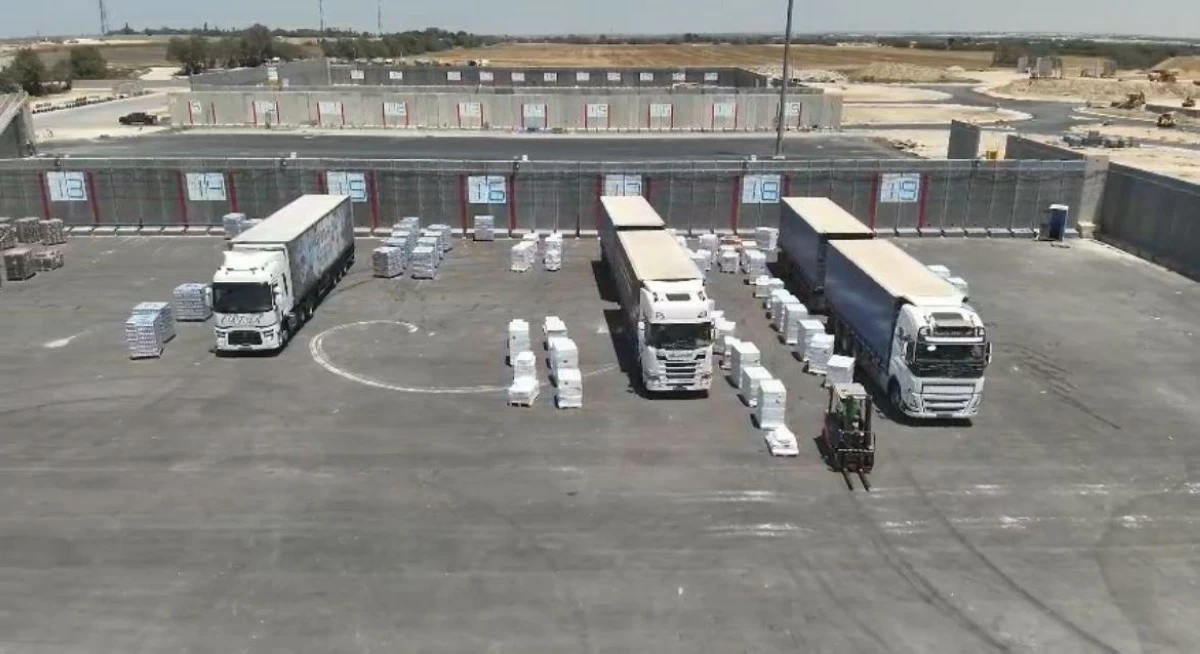
This crossing sits south of Israel, at its border with Gaza and Egypt.
It is also the main entry point of humanitarian goods ​from Israel​ as the Erez border crossing in the nort​h has no technology necessary to ​scan contrabands coming in.
A group of Filipino journalists was given access into this border crossing, where diplomats and foreign government officials also visit to see Israel’s efforts to provide aid for Palestinians affected by the ongoing war.
With a size of 400 dunams or around 100 acres, the Kerem Shalom Crossing accommodates every day up to 700 trucks ​carrying goods from various agencies, such as World Food Programme, UAE AID, and Khalifa Bin Zayed Al Nahyan Foundation.
Before crossing into Gaza, trucks pass through a barrier for a checkpoint. Only permitted drivers are allowed.
Then, they proceed to ​what the Israeli military calls a "cell" to unload their truck for manual inspection. No cigarettes, no drugs and no materials that can be used for creating weapons are allowed.
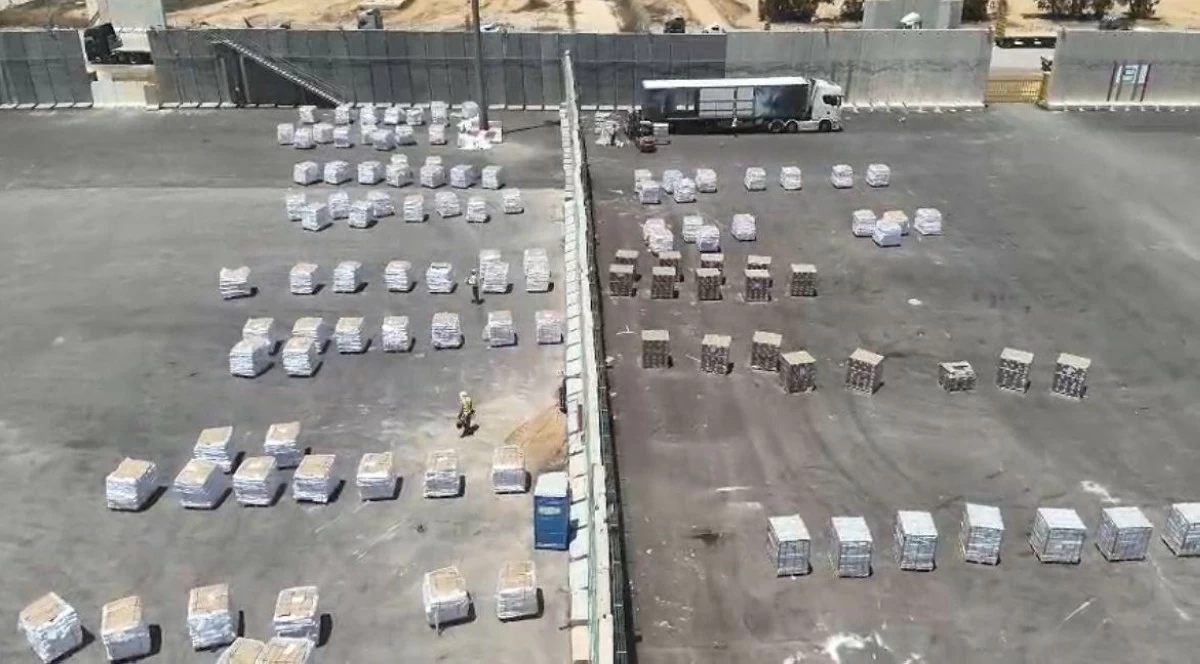
Once cleared, they pass through another gate, travel a hundred more meters and reach Gaza, before the problem starts.
Palestinians still starving
​People in Gaza still face "hunger and malnutrition," according to the United Nations Relief and Works Agency for Palestine Refugees in the Near East​ (UNRWA) in its Aug. 15 report.
​It said 100 children have already died there due to starvation since 2023, adding that one in five children are also malnourished.
Many international media reports also showed tons of disturbing photos and footage from Gaza, where people scramble in food distribution centers and scream for food.
Palestinians carry sacks of flour unloaded from a humanitarian aid convoy that reached Gaza City from the northern Gaza Strip, Saturday, July 26, 2025. (AP Photo/Jehad Alshrafi)
A coalition of 111 international humanitarian organizations​ said supplies in the enclave are now "totally depleted" as it also alleged Israel of blocking the entries of aid.
“As the Israeli government’s siege starves the people of Gaza, aid workers are now joining the same food lines, risking being shot just to feed their families,” the coalition composed of Médecins Sans Frontières (MSF), Amnesty International, and the Norwegian Refugee Council, among others, said.
But Israel denied such an accusation, with Prime Minister Benjamin Netanyahu saying it was only an exaggeration. He said there was "deprivation" there, arguing "no one in Gaza would have survived after two years of war" if Israel was implementing a "starvation policy."
​Multiple sources told Manila Bulletin that looting is really the problem.
The United Nations Office for Project Services ​(UNOPS) reported that ​only 88 percent of aid trucks collected by the UN actually reached their intended destination.
​This was due to trucks being “intercepted either peacefully by hungry people or forcefully by armed actors during transit in Gaza.​"
​Air drops became another option, the sources said. But they were costly and not efficient.
Palestinians rush to collect humanitarian aid airdropped by parachutes into Zawaida in the central Gaza Strip, Monday, Aug. 4, 2025. (AP Photo/Abdel Kareem Hana)
​The media office of the Gaza government, which Israel also accused of being controlled by Hamas, said at least 23 Palestinians were already killed by air drops while 124 were wounded.
ADVERTISEMENT
.most-popular .layout-ratio{ padding-bottom: 79.13%; } @media (min-width: 768px) and (max-width: 1024px) { .widget-title { font-size: 15px !important; } }

{{ articles_filter_1561_widget.title }}

.most-popular .layout-ratio{ padding-bottom: 79.13%; } @media (min-width: 768px) and (max-width: 1024px) { .widget-title { font-size: 15px !important; } }

{{ articles_filter_1562_widget.title }}

.most-popular .layout-ratio{ padding-bottom: 79.13%; } @media (min-width: 768px) and (max-width: 1024px) { .widget-title { font-size: 15px !important; } }

{{ articles_filter_1563_widget.title }}

{{ articles_filter_1564_widget.title }}

.mb-article-details { position: relative; } .mb-article-details .article-body-preview, .mb-article-details .article-body-summary{ font-size: 17px; line-height: 30px; font-family: "Libre Caslon Text", serif; color: #000; } .mb-article-details .article-body-preview iframe , .mb-article-details .article-body-summary iframe{ width: 100%; margin: auto; } .read-more-background { background: linear-gradient(180deg, color(display-p3 1.000 1.000 1.000 / 0) 13.75%, color(display-p3 1.000 1.000 1.000 / 0.8) 30.79%, color(display-p3 1.000 1.000 1.000) 72.5%); position: absolute; height: 200px; width: 100%; bottom: 0; display: flex; justify-content: center; align-items: center; padding: 0; } .read-more-background a{ color: #000; } .read-more-btn { padding: 17px 45px; font-family: Inter; font-weight: 700; font-size: 18px; line-height: 16px; text-align: center; vertical-align: middle; border: 1px solid black; background-color: white; } .hidden { display: none; }
function initializeAllSwipers() { // Get all hidden inputs with cms_article_id document.querySelectorAll('[id^="cms_article_id_"]').forEach(function (input) { const cmsArticleId = input.value; const articleSelector = '#article-' + cmsArticleId + ' .body_images'; const swiperElement = document.querySelector(articleSelector); if (swiperElement && !swiperElement.classList.contains('swiper-initialized')) { new Swiper(articleSelector, { loop: true, pagination: false, navigation: { nextEl: '#article-' + cmsArticleId + ' .swiper-button-next', prevEl: '#article-' + cmsArticleId + ' .swiper-button-prev', }, }); } }); } setTimeout(initializeAllSwipers, 3000); const intersectionObserver = new IntersectionObserver( (entries) => { entries.forEach((entry) => { if (entry.isIntersecting) { const newUrl = entry.target.getAttribute("data-url"); if (newUrl) { history.pushState(null, null, newUrl); let article = entry.target; // Extract metadata const author = article.querySelector('.author-section').textContent.replace('By', '').trim(); const section = article.querySelector('.section-info ').textContent.replace(' ', ' '); const title = article.querySelector('.article-title h1').textContent; // Parse URL for Chartbeat path format const parsedUrl = new URL(newUrl, window.location.origin); const cleanUrl = parsedUrl.host + parsedUrl.pathname; // Update Chartbeat configuration if (typeof window._sf_async_config !== 'undefined') { window._sf_async_config.path = cleanUrl; window._sf_async_config.sections = section; window._sf_async_config.authors = author; } // Track virtual page view with Chartbeat if (typeof pSUPERFLY !== 'undefined' && typeof pSUPERFLY.virtualPage === 'function') { try { pSUPERFLY.virtualPage({ path: cleanUrl, title: title, sections: section, authors: author }); } catch (error) { console.error('ping error', error); } } // Optional: Update document title if (title && title !== document.title) { document.title = title; } } } }); }, { threshold: 0.1 } ); function showArticleBody(button) { const article = button.closest("article"); const summary = article.querySelector(".article-body-summary"); const body = article.querySelector(".article-body-preview"); const readMoreSection = article.querySelector(".read-more-background"); // Hide summary and read-more section summary.style.display = "none"; readMoreSection.style.display = "none"; // Show the full article body body.classList.remove("hidden"); } document.addEventListener("DOMContentLoaded", () => { let loadCount = 0; // Track how many times articles are loaded const offset = [1, 2, 3, 4, 5, 6, 7, 8, 9, 10]; // Offset values const currentUrl = window.location.pathname.substring(1); let isLoading = false; // Prevent multiple calls if (!currentUrl) { console.log("Current URL is invalid."); return; } const sentinel = document.getElementById("load-more-sentinel"); if (!sentinel) { console.log("Sentinel element not found."); return; } function isSentinelVisible() { const rect = sentinel.getBoundingClientRect(); return ( rect.top < window.innerHeight && rect.bottom >= 0 ); } function onScroll() { if (isLoading) return; if (isSentinelVisible()) { if (loadCount >= offset.length) { console.log("Maximum load attempts reached."); window.removeEventListener("scroll", onScroll); return; } isLoading = true; const currentOffset = offset[loadCount]; window.loadMoreItems().then(() => { let article = document.querySelector('#widget_1690 > div:nth-last-of-type(2) article'); intersectionObserver.observe(article) loadCount++; }).catch(error => { console.error("Error loading more items:", error); }).finally(() => { isLoading = false; }); } } window.addEventListener("scroll", onScroll); });

Sign up by email to receive news.